← Kilroy’s Daily Briefings
🎥 Slop Recon

🎥 Slop Network Recon — Friday, June 5, 2026 at 7:15 AM

🎥 Slop Recon6/5/2026🕐 7:15 AMInternet odditiesRecon

Top stories, ranked by relevance.

Story cards stay below the sticky dock while audio, chapters, date, and brief navigation remain accessible.

#1YouTube Auto-Labels AI Video Starting May 2026 — Platform

Starting May 27, YouTube began automatically applying AI disclosure labels to photorealistic AI-generated video — even if the creator never manually flags it. The label moved to above the channel icon on long-form and bottom-left on Shorts. Critically: disclosing AI content has no effect on monetization eligibility and no algorithm penalty, but the auto-label system means you no longer control the timing of that disclosure.

#2Kling 3.0 Drops Native 4K/60fps With AI Director Mode — Pipeline

Kling 3.0 launched February 4 with true 4K at 60fps, clips up to 15 seconds, and an AI Director feature that generates up to 6 distinct shots within a single clip — each with its own camera angle and duration — while the model maintains spatial continuity automatically. Omni Native Audio adds lip-synced dialogue in five languages plus environmental soundscapes generated in-context. This is the biggest single production upgrade for short-form AI video this year and it directly replaces what used to require a full post-production pipeline.

#3Shorts RPM Reality Check: Finance Niche Hits $15-$30+ Per Thousand — Revenue

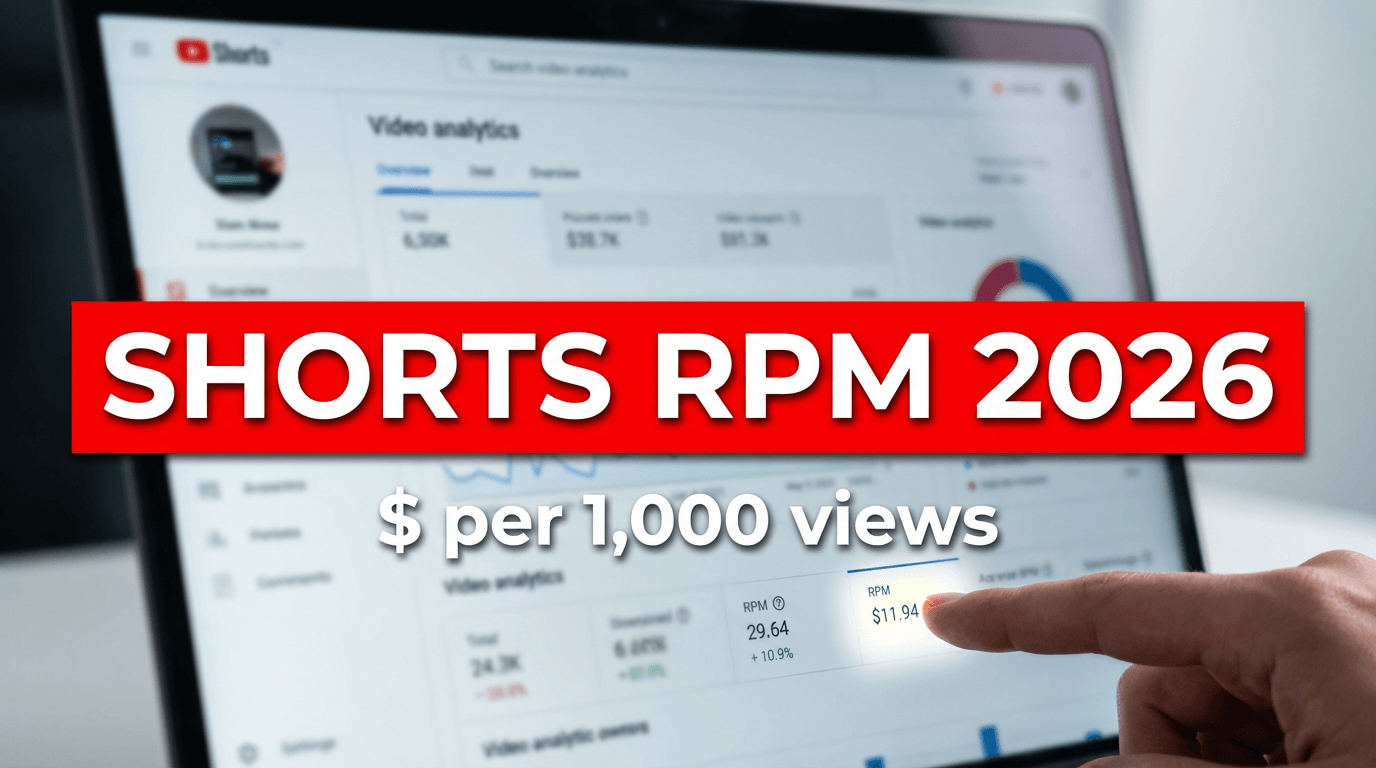
Standard Shorts RPM sits at $0.03 to $0.10 per 1,000 views — meaning 1M views pays roughly $30 to $100 in ad revenue alone. However, niche selection changes the math dramatically: finance, self-improvement, and tech explainer channels on Shorts clock $15 to $30-plus RPM on long-form companions, which is why top operators run Shorts strictly as discovery funnels. Reaching $5K per month from Shorts ads alone requires 40 to 100 million monthly views — achieved by only about 3% of monetized channels — so the real money remains in the attach rate to long-form, affiliates, and sponsorships.

#4Wan 2.2 Has 18 Free ComfyUI Workflow Templates Right Now — Pipeline

Alibaba's Wan 2.2 — a Mixture-of-Experts architecture available in 5B and 14B variants — has 18 free community workflow templates live on comfy.org and an official native workflow in ComfyUI's Browse Templates panel under Video. Low-VRAM operators have a dedicated GGUF community build on HuggingFace. The 14B model handles complex motion generation and film-level aesthetic control, and early community reports put it competitive with paid API alternatives at local-run cost.

#5TikTok Bakes Seedance 2.0 Into Symphony Suite — Platform

ByteDance folded Dreamina Seedance 2.0, its next-generation AI video model, directly into TikTok Symphony in April 2026 alongside AI-generated avatars and script-to-video tools. TikTok does not ban AI content and does not algorithmically penalize labeled AI videos — the platform only requires disclosure on realistic AI-generated or significantly edited material. The Symphony integration means operators can now prototype TikTok-native AI video without leaving the platform's ad ecosystem, which has real implications for paid distribution testing.

#6Runway Gen-4 Generates Native Audio and Video in a Single Pass — Pipeline

Runway Gen-4, announced May 3, synthesizes soundscapes, dialogue, and environmental audio frame-by-frame alongside video in one generation pass — not added in post. Clips run up to 10 seconds with reference-consistent characters and precise camera motion control. This closes the gap between rough AI footage and broadcast-ready output, and it directly competes with Kling 3.0's Omni Native Audio — meaning operators now have two production-grade native-audio options to benchmark against each other.

#7Faceless Channels Are 38% of New Monetization Ventures; AI Cuts Cost to $3 Per Video — Revenue

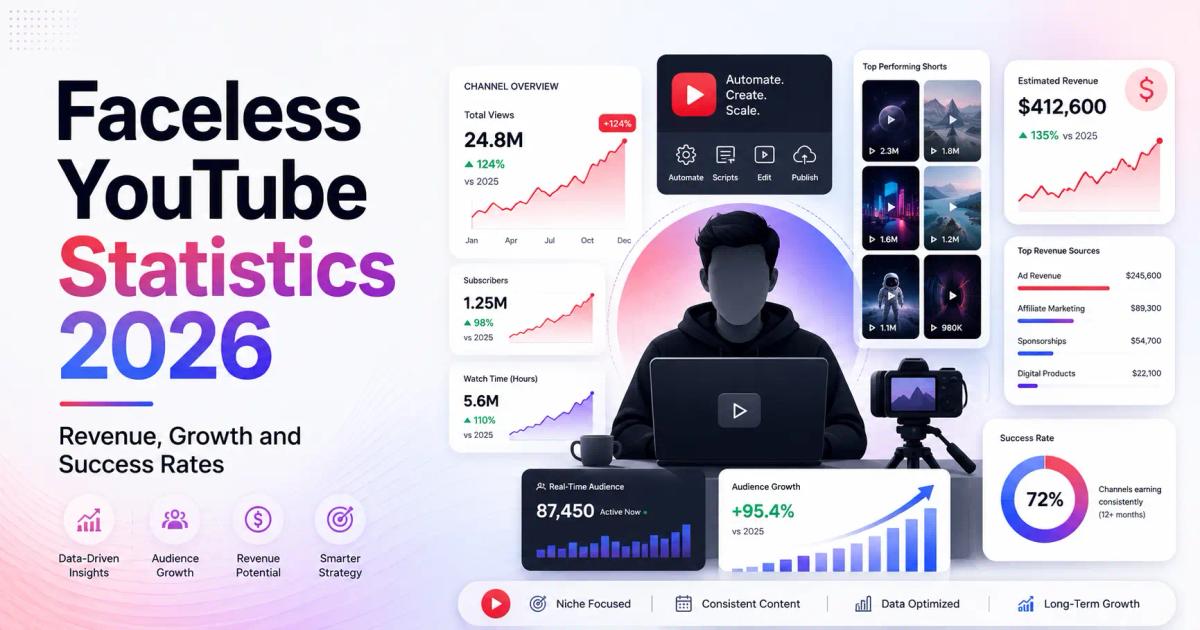
Faceless channels now represent 38% of all new creator monetization ventures, up from 12% in 2022, and AI has pushed average production cost below $3 per video for operators running their own toolchain. Documented high earners include channels pulling $40K to $300K per month, though the creator economy median sits under $5K per year — the distribution is extremely top-heavy. Ad revenue is typically 30 to 50% of total income for diversified operators; a channel doing $10K per month in AdSense commonly reaches $25K to $40K per month once affiliates, sponsorships, and digital products are layered in.

#8AI Money-Making Content and Micro-Health Are the Hot Untapped Niches — Niche

Two faceless niches are flagged as dramatically underserved right now: AI tools and money-making tutorials ($10 to $25 RPM, among the highest for faceless channels) and micro-health content — short explainers on specific physiological quirks like why you twitch when falling asleep. New-tool-drop tutorial videos routinely hit 100K-plus views within days of a model release, making this a reliable traffic play for operators already inside the production toolchain. Micro-health clips carry strong save-and-share behavior, which the updated YouTube satisfaction algorithm rewards over raw watch time.

#9YouTube Rebuilt Its Algorithm With Gemini — Satisfaction Over Watch Time — Platform

In January 2026, YouTube integrated Gemini into its core recommendation architecture and formally shifted the optimization target from maximizing watch time to maximizing viewer satisfaction and return visits. The algorithm now analyzes video frame-by-frame and audio to assess quality and originality — meaning low-effort repetitive AI content faces greater suppression risk than before, while novel formats and strong save and return-view signals get amplified. Shorts-specific changes to search filters and popularity sorting rolled out in the same January update.

#10MiniMax Hailuo 02 Plus Music 2.6 Creates a Cheap Full A/V Stack — Competitive

MiniMax released Hailuo 02, positioned as world-class quality at record-breaking cost efficiency, alongside MiniMax Music 2.6 — the most significant audio generation update since the original model — entering global beta on April 10. Pairing Hailuo 02 for video with Music 2.6 for original soundtracks gives operators a low-cost full audio-visual production stack that stays within one vendor's API. The M2.7 model rounding out the MiniMax suite also adds advanced TTS, making this a competitive watch for operators looking to reduce per-clip API spend.