← Kilroy’s Daily Briefings
📡 HN Briefing AM

📡 Hacker News Briefing — Friday, June 5, 2026 at 9:00 AM

📡 HN Briefing AM6/5/2026🕐 9:00 AMDev pulseMorning

Top stories, ranked by relevance.

Story cards stay below the sticky dock while audio, chapters, date, and brief navigation remain accessible.

#1Fine-tuning an LLM to write docs like it's 1995

A developer fine-tuned small language models (7–8B parameters) on digitized Microsoft manuals from the 1990s sourced from Bitsavers, generating 192,000+ training examples via QLoRA on Runpod. The strongest resulting model produces output that could pass for genuine period technical documentation — bureaucratic, step-numbered, warning-box-laden prose intact. The author cautions these tools cannot replace human writers and require careful tuning to avoid hallucinations.

#2Changing how we develop Ladybird

The Ladybird browser project is ending public pull requests and restricting code contributions to project maintainers only, citing AI-generated code as a primary driver — the team says a PR no longer reliably signals anything about the person behind it. Since browsers process untrusted content from the entire internet, accountability is non-negotiable. The project stays open source, but external involvement is now limited to bug reports, testing, and technical feedback.

#3Redis 8.8: New array data structure, rate limiter, performance improvements

Redis 8.8 ships a new array data type — index-addressable, dynamic, supporting sparse indices and server-side numeric aggregation — and a native window counter rate limiter via the new INCREX command, finally making Lua scripts unnecessary for that common pattern. Performance gains are substantial: up to 83% faster XREADGROUP for streams, 74% faster sorted set operations, and 68% faster MGET. The release also adds streams message NACKing, subkey notifications for hash fields, and explicit JSON numeric precision control.

#4databow: a Rust CLI to query any database with an ADBC driver

databow is an open-source Rust CLI that delivers a single interactive SQL shell across 30+ databases — PostgreSQL, DuckDB, Snowflake, BigQuery, and more — using Apache Arrow's ADBC standard for efficient columnar data transfer. It features syntax highlighting, query export to CSV, JSON, and Arrow formats, and clean integration with automation scripts. A practical "one interface for your whole data stack" tool for engineers who live across multiple database systems.

#5Cooldown Support for Ruby Bundler

Bundler 4.0.13 introduces an opt-in cooldown feature that refuses to resolve gems published less than a specified number of days ago, targeting supply-chain injection attacks by reading the created_at timestamp from rubygems.org's compact index. Teams declare a cooldown window (e.g., 7 days) in their Gemfile, and anything published more recently simply doesn't get pulled in. It layers quietly on top of existing defenses like mandatory 2FA and trusted publishing.

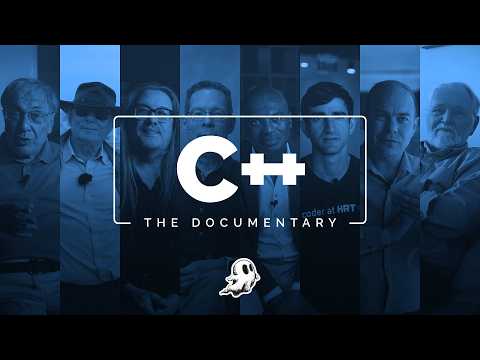
#6C++: The Documentary

Released June 4, 2026, this full-length documentary traces four decades of C++ from its Bell Labs origins through its current standing as one of the fastest-growing top-four programming languages. It features creator Bjarne Stroustrup, STL designer Alexander Stepanov, and other key contributors, covering milestones from C with Classes through C++98 to modern C++. The film also explores C++'s deep footprint in gaming, finance, and physics simulation.

#7Mouseless – keyboard-driven control of macOS/Linux/Windows

Mouseless is a cross-platform utility that lets you control your entire desktop using only the keyboard — no mouse or trackpad required — targeting power users who want to eliminate hand-switching entirely. It supports macOS, Linux, and Windows, and scored 157 points on HN with a lively debate about whether this is liberation or productive masochism. The site requires JavaScript, so details are sparse outside the HN thread.

No image

#8ESP32 Bit Pirate, a Hardware Hacking Tool with WebCLI That Speaks Every Protocol

ESP32 Bit Pirate is open-source firmware that turns an ESP32 microcontroller into a versatile hardware debugging and protocol analysis tool, supporting I2C, UART, SPI, 1-Wire, Bluetooth, Wi-Fi, Sub-GHz, and RFID. It's accessible via serial connection, a WiFi-hosted web CLI, or standalone on devices like the M5 Cardputer. Essentially a modern wireless successor to the Bus Pirate, at ESP32 price points.

#9Tracing a powerful GNSS interference source over Europe

Researchers have traced a series of powerful GPS/GNSS jamming events over continental Europe, Greenland, and Canada — occurring since 2019 — to a constellation of Russian early-warning satellites in Molniya orbits. Using received-power and timing measurements from terrestrial reference stations, they built detection methods and identified the orbital signature of the source. The findings raise serious concerns about space-based interference, which has vastly greater geographic reach than ground-based jammers.

#10Entanglement Builds Space-Time. Now "Magic" Gives It Gravity

Physicists have extended holographic theories of gravity: quantum entanglement builds space-time's structure, but a property called "magic" — measuring quantum complexity via non-Clifford gates — gives space-time the ability to curve and flex. Charles Cao and colleagues developed new quantum error-correcting codes showing magic is the key to enabling matter and space to interact gravitationally, as Einstein's equations require. The work suggests gravity fundamentally emerges from quantum properties rather than being a classical feature of the universe.