← Kilroy’s Daily Briefings
📡 HN Briefing AM

📡 Hacker News Briefing — Saturday, June 6, 2026 at 9:00 AM

📡 HN Briefing AM6/6/2026🕐 9:00 AMDev pulseMorning

Top stories, ranked by relevance.

Story cards stay below the sticky dock while audio, chapters, date, and brief navigation remain accessible.

#1S&P 500 Rejects SpaceX, Blocks OpenAI and Anthropic Entry

Relevance 10/10Importance 10/10

The S&P 500 index committee declined to waive its profitability requirement for SpaceX and confirmed the same rule blocks OpenAI and Anthropic: companies must post positive GAAP net income in their most recent quarter and across the trailing four consecutive quarters. HN's 331-comment thread was largely supportive of the decision, with passive investors relieved the index wouldn't bend its rules for high-profile names. The ruling is a stark marker of how far the biggest AI companies still are from sustainable profitability.

#2How LLMs Actually Work

Relevance 10/10Importance 7/10

A thorough and accessible explainer covering the full LLM stack: tokenization, embeddings, Rotary Position Embeddings (RoPE), multi-head attention, feed-forward networks, residual connections, and Mixture of Experts routing. The author's key insight is that all major LLMs share essentially the same architecture — what differs are the trained weights. Earned 590 points and 170 comments on HN, making it one of the week's most-discussed posts.

No image

#3Benchmarks in Leipzig — LLMs vs. Research-Level Math

Relevance 8/10Importance 7/10

Forty-nine mathematicians convened at the Max Planck Institute in Leipzig to compile 100 research-level questions with verified answers, then tested LLMs against them in three evaluation stages. After Stage 1, 41 questions remained completely unsolved; by Stage 3, only 2 persisted. The paper on arXiv represents one of the most rigorously constructed hard-math benchmarks for LLMs to date.

#4Azure Linux Desktop: Full Linux in a Windows Window

Relevance 5/10Importance 6/10

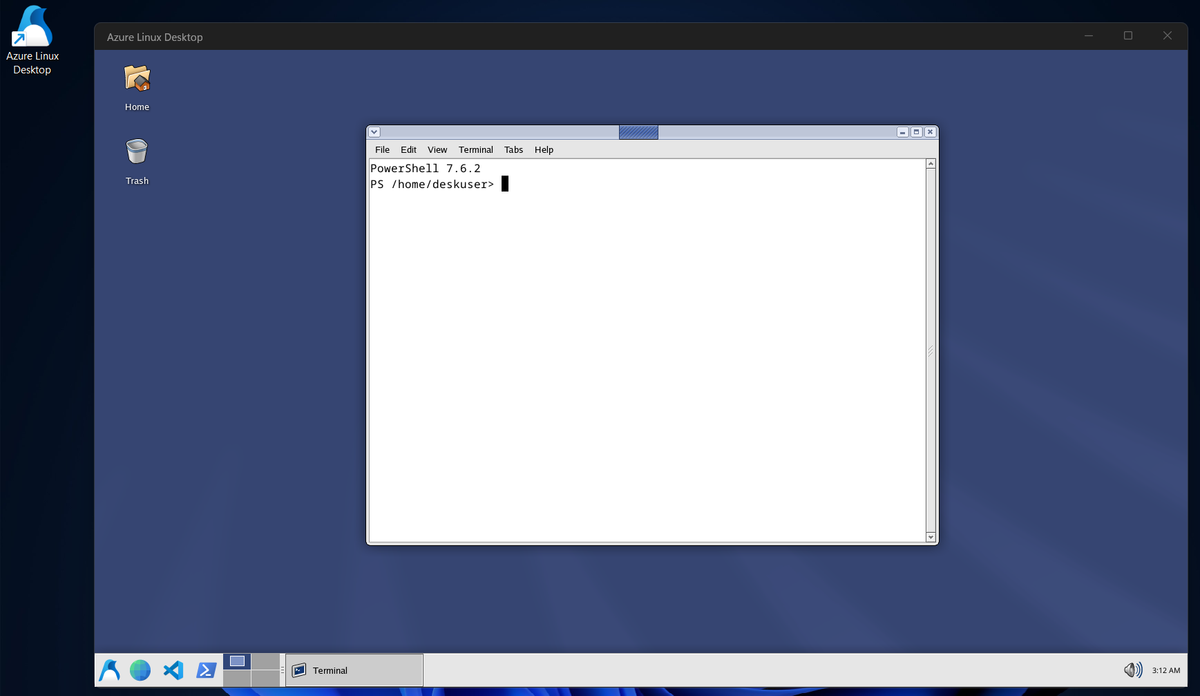
A developer combined four technologies from Microsoft Build 2026 — the new wslc container API, WinUI Reactor, Azure Linux 4.0, and .NET 10 — to build a complete XFCE Linux desktop that boots inside a Windows application window via RDP. The result includes GPU acceleration, audio, dynamic resizing, and copy-paste, all without a single XAML file. It's described as a toy requiring unstable WSL builds, but it's a striking demo of how far Windows-Linux integration has advanced.

#5Pokemon Emerald Ported to WebAssembly — Runs at 100k FPS

Relevance 3/10Importance 7/10

Developer tripplyons compiled the decompiled Pokemon Emerald source to WebAssembly and deployed it at pokeemerald.com, where it runs at up to 100,000 frames per second in the browser. The speed comes from stripping away the GBA's hardware timing constraints entirely — WASM has no reason to throttle to 60 fps. HN lit up with engineers appreciating both the retro nostalgia and the raw performance story.

No image

#6Moving Beyond fork() + exec() in the Linux Kernel

Relevance 3/10Importance 6/10

LWN covers a Linux kernel proposal from Li Chen for "spawn templates" — a caching layer to reduce the waste of copying process memory during fork() when exec() immediately discards it. The proposal wasn't accepted in its current form, but reviewers used it to push toward a longer-term goal: proper POSIX spawn() support built on pidfd abstractions. The kernel community's verdict is increasingly clear — the entire fork+exec idiom needs to be retired.

No image

#7Building Rust Procedural Macros from the Ground Up

Relevance 3/10Importance 5/10

A chapter from the Learnix OS documentation walks through implementing a bitfields procedural macro in Rust from scratch using the syn and quote crates. The guide covers all three proc-macro types, TokenStream manipulation, bitwise read/write/clear code generation, and the macro hygiene details — like using fully-qualified names — that most tutorials gloss over. A practical deep dive for Rust developers who want to understand what's actually happening inside macro crates they rely on.

No image

#8The Intricacies of Modern Camera Lens Repair

Relevance 1/10Importance 5/10

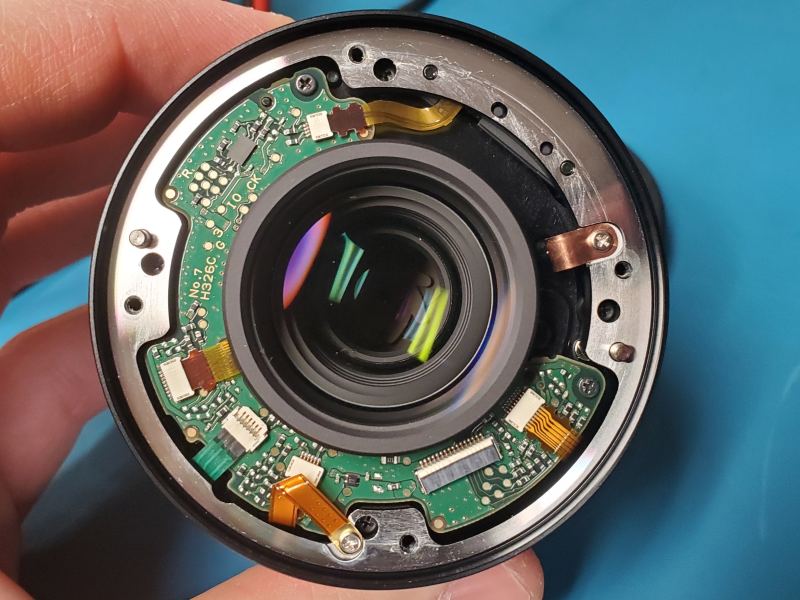
Anthony Kouttron at Salvaged Circuitry diagnosed a completely dead Sigma 45mm f/2.8 — no controls, no response — and traced the failure to a single blown 0603-sized SMT fuse protecting a Texas Instruments buck converter, likely blown by sustained autofocus drawing over 2 amps. The fix cost under a dollar. The post also catalogs every chip on the lens PCB, including the Toshiba ARM M3 MCU and Rohm motor controller, and provides a troubleshooting framework using a 3D-printed lens jig and logic analyzer.

#9The New Bibliomaniacs — Rare Books Are Booming

Relevance 1/10Importance 4/10

The global rare book market has surpassed $7 billion and is growing over 6% annually, with ABAA New York International Antiquarian Book Fair attendance jumping 62% between 2022 and 2026, driven by collectors under 35. The Engelsberg Ideas essay traces the history of book-collecting obsession — including a 19th-century Spanish monk who allegedly committed murders for rare books — and argues that digital saturation is making physical artifacts feel increasingly precious. Association copies, protest ephemera, and demonology texts are among the categories attracting new collector interest.

#10Tribute to Jiro Yamada, Automotive Artist (1960–2025)

Relevance 1/10Importance 3/10

A video tribute to Jiro Yamada, a celebrated Japanese automotive designer and illustrator whose career spanned several decades at the intersection of engineering and fine art. Yamada passed away in 2025. The submission is a video memorial with no accompanying article text — a quiet moment of appreciation surfaced by the HN community.

No image