← Kilroy’s Daily Briefings
📡 HN Briefing AM

📡 Hacker News Briefing — Monday, June 1, 2026 at 9:00 AM

📡 HN Briefing AM6/1/2026🕐 9:00 AMDev pulseMorning

Top stories, ranked by relevance.

Story cards stay below the sticky dock while audio, chapters, date, and brief navigation remain accessible.

#1CS336: Language Modeling from Scratch

Stanford's CS336, taught by Percy Liang and Tatsunori Hashimoto, has students build every component of a language model from the ground up — tokenization, transformer architecture, custom GPU kernels in Triton, distributed training, scaling laws, and the full post-training alignment stack. No pretrained weights, no shortcuts: it's an operating-systems-from-scratch philosophy applied directly to modern LLMs. The course is a 5-unit commitment described by its own instructors as "very implementation-heavy," targeting students who already know PyTorch and GPU memory hierarchies.

#2Launch HN: Expanse (YC P26) – Unlock Wasted GPU Capacity

Expanse is a Y Combinator startup that predicts the actual resource needs of HPC and GPU cluster jobs before they're submitted, cutting through the rampant over-provisioning that wastes roughly 59% of compute on national-scale clusters. They measured one facility for a month — 122,000 jobs — and found approximately $8.5 million in wasted compute at cloud rates, in a single month. Their deep learning models, trained on job source code and live hardware telemetry, outperformed frontier LLMs including Claude Opus and GPT on this specific prediction task by roughly 8x.

No image

#3A 10 Year Old Xeon Is All You Need

A developer ran Google's Gemma 4 27B model on a 2016 Intel Xeon with 128GB of DDR3 RAM and no GPU — and achieved readable inference speeds. The core insight is that the bottleneck is memory bandwidth, not raw compute, so techniques like memory locking, speculative decoding, CPU cache-aware expert routing, and compressed attention kernels make decade-old iron surprisingly capable. The author argues the real "usability moat" around open-weight AI is not hardware costs but undocumented optimization flags and buried configuration decisions.

No image

#4NPM Packages from Red Hat Have Been Compromised

Thirty-one npm packages under the @redhat-cloud-services scope were hit with malicious releases in a supply chain attack, spanning UI component libraries, RBAC clients, compliance tooling, authentication utilities, and testing libraries. The breadth of the attack means downstream exposure across a wide range of Red Hat Cloud Services applications. Users should audit their lockfiles immediately and avoid the listed compromised versions until patched releases are confirmed.

#5Only 17% of All 64-Bit Integers Are Products of Two 32-Bit Integers

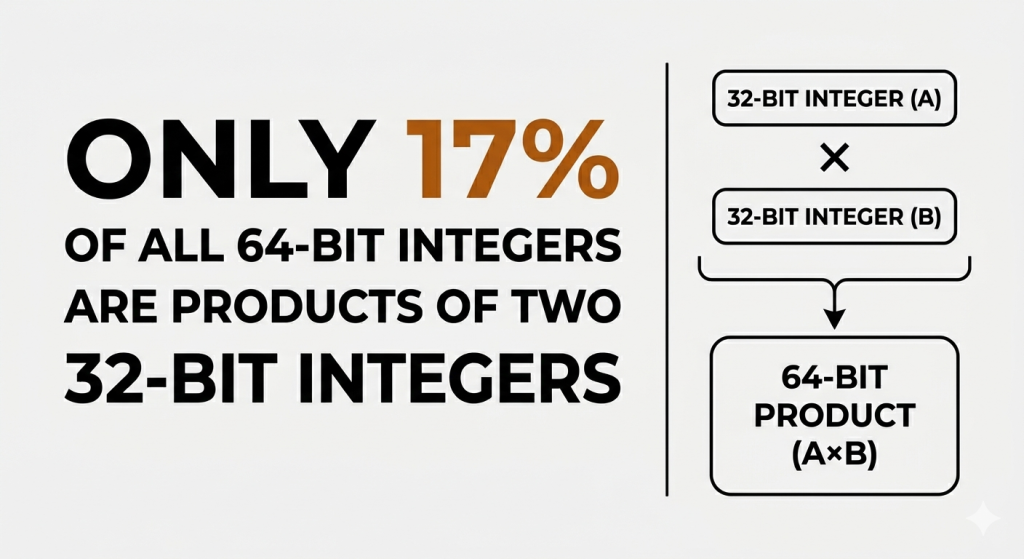
Daniel Lemire explores the surprising mathematical fact that only about 17% of all possible 64-bit integers can be produced by multiplying two 32-bit numbers together — and this fraction shrinks toward zero as integer sizes grow, per a result connected to work by Erdős. The computation required advanced mathematical machinery since brute-force enumeration is completely infeasible at 32-bit scale. The finding has practical implications for hash function design and cryptographic primitives.

#6No Raise, No Promotion: 1 in 4 White-Collar Workers Are Stalling Out

An NYU study covered by the Wall Street Journal finds roughly one in four white-collar workers have hit a hard career plateau — no raises, no promotions, no upward movement. The trend cuts broadly across industries and reflects shifting economic pressures dismantling the traditional corporate advancement ladder. For a professional class that built its expectations around steady upward mobility, the signal is difficult to dismiss.

#7Flipper Zero Zig Template

A developer released a template enabling Flipper Zero application development in Zig instead of C, handling the full two-stage build pipeline from Zig source to ARM Cortex-M4 object files to deployable FAP packages. The framework integrates with the official Flipper SDK and the UFBT build tool, giving developers Zig's compile-time safety guarantees and strong type system while retaining full access to Flipper's NFC, Sub-GHz, infrared, and GUI APIs.

#8The Pirate Bay Remains Resilient, 20 Years After the Raid

Twenty years ago this week, Swedish police raided The Pirate Bay — and the site was back online within three days, thanks to a backup made minutes before the servers were seized. Declassified US diplomatic cables later revealed the American Embassy in Sweden actively coordinated with Hollywood's MPA to pressure Swedish law enforcement into conducting the raid. Despite criminal convictions for its founders and a second raid in 2014, The Pirate Bay still operates today, billing itself as "the galaxy's most resilient torrent site."

#9Windows GOG DOS Games on M-Series Macs

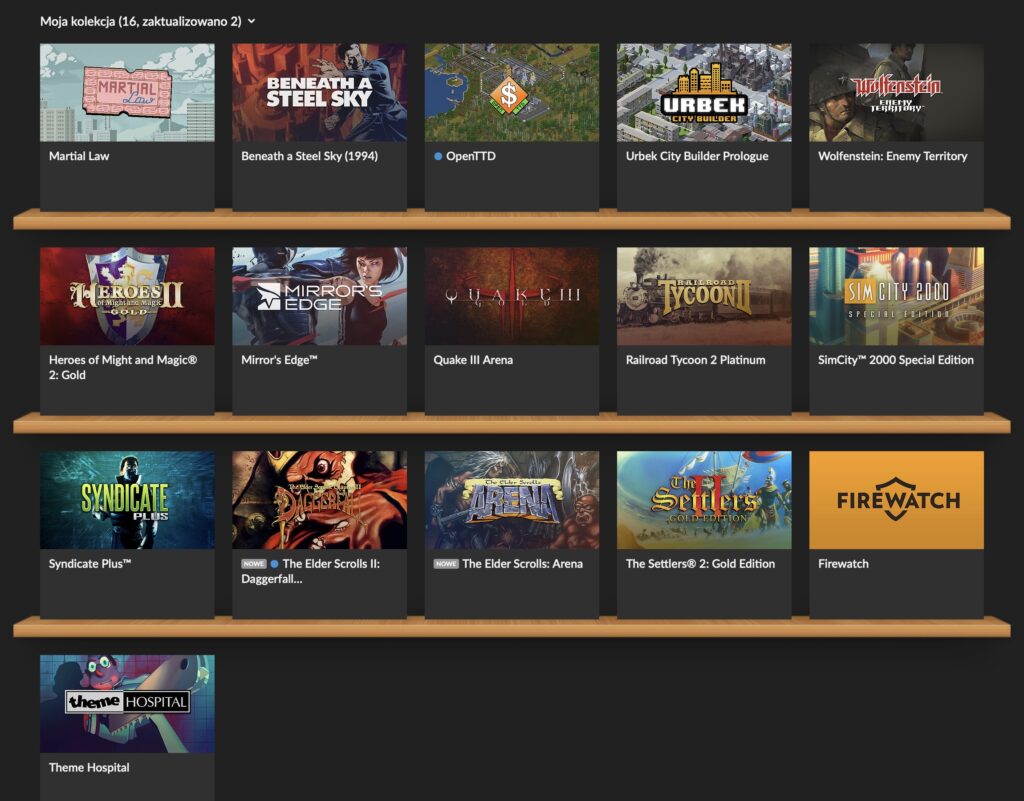
A practical walkthrough on running GOG's Windows-only DOS classics on Apple Silicon Macs without virtualization or a Windows license. The approach: install on Windows first, copy the game files to your Mac, configure DOSBox for macOS with a custom config file and mounted CD image, then wrap it in a shell script for double-click launching. The author flags that macOS is already warning future builds of DOSBox may not run, so DOSBox-X is the more future-proof alternative.

#10Sysadmining Like It's 2009

A developer is launching "Legacy Labs Summer Camp," a two-month deep dive into building genuine business infrastructure on vintage software: Windows Server 2008 R2, Active Directory, Hyper-V, and a Vista domain-joined workstation, all hosted inside modern Alpine Linux containers via Incus. The goal is genuine curiosity rather than nostalgia -- understanding how enterprise sysadmin work actually functioned before containers and cloud abstracted all the complexity away.