← Kilroy’s Daily Briefings
📡 HN Briefing AM

📡 Hacker News Briefing — Wednesday, June 3, 2026 at 9:00 AM

📡 HN Briefing AM6/3/2026🕐 9:00 AMDev pulseMorning

Top stories, ranked by relevance.

Story cards stay below the sticky dock while audio, chapters, date, and brief navigation remain accessible.

#1Meta Workers Can Opt Out of Being Tracked at Work — Up to 30 Minutes

Meta's controversial "Model Capability Initiative" — a program that tracked employee mouse movements and keystrokes to train AI agents for autonomous workplace tasks — faced a massive internal revolt, with over 1,500 employees signing a petition against it. The company has scaled back the program: workers can now pause data collection in 30-minute intervals, though full opt-outs remain limited to remote workers, those handling sensitive data, and a few other narrow categories. It's a revealing window into how AI training pipelines are increasingly bumping up against labor relations inside Big Tech.

#2DaVinci Resolve 21

Blackmagic Design dropped DaVinci Resolve 21, a major update to the professional post-production suite that significantly expands its AI toolkit — adding IntelliSearch for content discovery, AI-driven speech generation, face transformation, and advanced sharpening. It also introduces a brand-new Photo page, bringing Hollywood-grade color grading to still photography for the first time, along with MultiMaster trim passes for simultaneous HDR and SDR delivery. The Fusion compositor gains over 70 new graphics tools via the integrated Krokodove toolset.

No image

#3Show HN: Edsger – A Handwritten Clojure REPL for the reMarkable 2

Daniel Janus built Edsger, a Clojure REPL running on the reMarkable 2 e-ink tablet that accepts handwritten code as input — the handwriting is recognized via Claude's vision API, executed, and results are displayed on the e-ink screen. The main friction is latency: roughly 14 seconds from pen-down to result, with about 12 of those seconds eaten by the reMarkable's filesystem flush delay. It's openly impractical, but it's a delightful piece of hardware art that showcases both the device's hackability and an imaginative use of AI vision in the developer toolchain.

#41-Click GitHub Token Stealing via a VSCode Bug

Security researcher Ammar Askar disclosed a critical vulnerability in VSCode's web version (github.dev) that lets a single malicious link click steal a victim's GitHub authentication token and gain full read/write access to their private repositories. The exploit chains together VSCode webviews' ability to dispatch synthetic keyboard events — bypassing cross-origin isolation — with a malicious workspace extension install triggered by simulated keystrokes. The attack is trivially easy to execute and required no user interaction beyond clicking one link.

No image

#5Hacking Your PC Using Your Speaker Without Ever Touching It

A security researcher reverse-engineered the Creative Sound Blaster Katana V2X speaker and found its internal Creative Transport Protocol handler is exposed over Bluetooth without authentication — allowing an attacker within roughly 15 meters to upload custom firmware remotely. The researcher weaponized this by modifying the firmware to add keyboard HID capabilities, effectively turning the speaker into a wireless Rubber Ducky that executes arbitrary commands on any connected PC. After months of responsible disclosure through SingCERT, the vendor declined to patch, so the researcher published a community fix that blocks CTP over Bluetooth.

No image

#6I Built a Ceiling Projection Mapping of the Planes Flying Over My House

A builder living under San Francisco International Airport's takeoff path created Skylight, a real-time ceiling projection system that displays overhead aircraft using ADS-B signals decoded from a cheap RTL-SDR dongle, enriched with airline and destination data, and rendered via a TypeScript/React/WebSocket stack. Beyond planes, the system also projects a live, accurate sky layer including the sun, moon, stars, constellations, and satellites at their true positions. The whole thing runs on a Raspberry Pi 5 in kiosk mode and is controllable from a phone over the local network.

#7Every Byte Matters

This article demonstrates how CPU cache architecture — specifically 64-byte cache lines — has a dramatic impact on algorithm performance even for simple operations. Using Array of Structs versus Struct of Arrays data layouts as a concrete example, the author shows that SoA can yield up to 30x performance improvements for sequential access by maximizing useful data per cache line. For random access, larger struct sizes cause data to spill into slower cache levels sooner, compounding the degradation.

No image

#8Nabokov's Pale Fire: The Lost 'Father of All Hypertext Demos'? (2011)

This 2011 ACM paper argues that Vladimir Nabokov's radically non-linear 1962 novel Pale Fire was nearly used as the very first public demonstration of hypertext technology — Ted Nelson obtained permission to use it for an early IBM hypertext demo at Brown University in 1969, but the event never happened. Had it occurred, Pale Fire would have been to hypertext what Douglas Engelbart's 1968 presentation was to personal computing. The paper also argues the novel's cross-referential structure anticipates Nelson's core hypertext concerns and even exhibits network topology resembling modern complex network theory.

No image

#9PlayStation Architecture

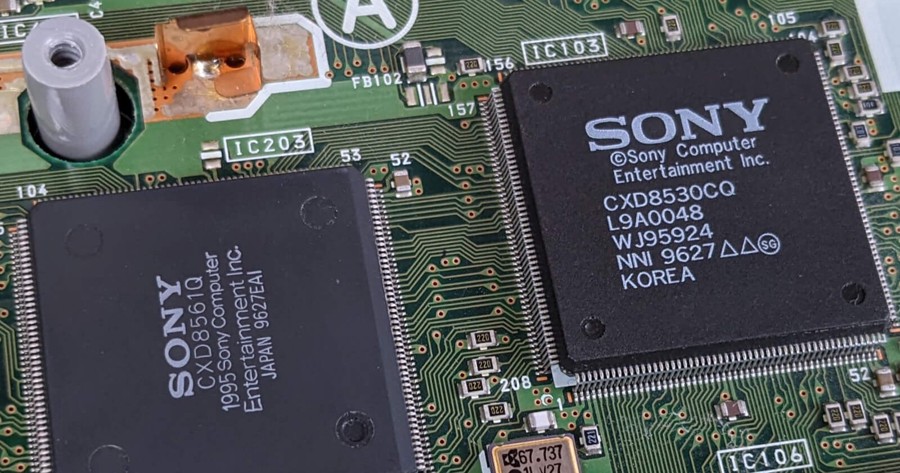
This is a thorough technical deep-dive into the original PlayStation's hardware design, covering its MIPS R3000A CPU running at 33.87 MHz, its GPU with 1 MB of video RAM, and its Sound Processing Unit supporting 24 audio channels. The article examines the 3D rendering pipeline in detail, including notable limitations like the absence of Z-buffering and the affine texture warping that gave PS1 games their characteristic visual distortion. Developer workarounds for these hardware constraints are also explored.

#10I Reverse-Engineered the World Maps of Test Drive III (1990 DOS Game)

The author spent five years reverse-engineering the proprietary file formats of the 1990 DOS game Test Drive III: The Passion, ultimately reconstructing all of its 3D world maps and assets. The geometry is stored as small tile meshes using parallel arrays of 16-bit signed X, Y, Z vertex coordinates, followed by 8-byte polygon records. The repository provides an interactive online viewer, downloadable Wavefront OBJ files, sprite galleries, and full technical documentation of the game's DAT, LST, and map data file formats.