← Kilroy’s Daily Briefings
📡 HN Briefing PM

📡 Hacker News Afternoon Briefing — Wednesday, June 3, 2026 at 3:30 PM

📡 HN Briefing PM6/3/2026🕐 3:30 PMDev pulseAfternoon

Top stories, ranked by relevance.

Story cards stay below the sticky dock while audio, chapters, date, and brief navigation remain accessible.

#1Gemma 4 12B: A unified, encoder-free multimodal model

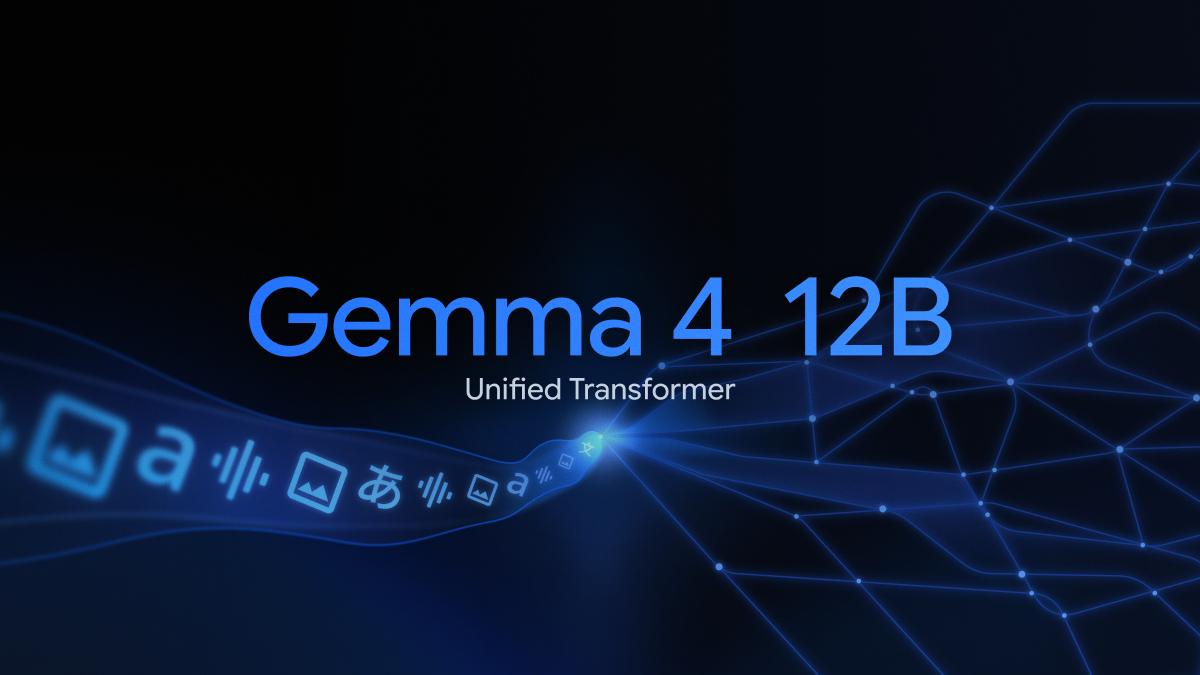
Google released Gemma 4 12B, an open-weight multimodal model that processes both images and text without a separate encoder — a notable architectural choice that simplifies deployment. It's designed to run on consumer-grade hardware for local inference, putting serious vision-language capability in reach for developers without cloud budgets.
#2Uber's $1,500/month AI limit is a useful signal for AI tool pricing

Uber blew through its entire 2026 AI tooling budget in just four months — spending heavily on Claude Code, Cursor, and similar coding agents — and responded by capping employee usage at $1,500 per month. Simon Willison analyzes this as a rational market signal: at roughly 11% of median engineer salary, it tells us what enterprises actually think these tools are worth. The era of unlimited developer AI access may be winding down.

No image

#3ESP32-S31

Espressif announced the ESP32-S31, a dual-core RISC-V microcontroller running at up to 320 MHz with Wi-Fi 6, Bluetooth 5.4 LE Audio, Thread, Zigbee, and Ethernet all on one chip. It adds hardware accelerators for camera, image processing, and edge AI — a substantial generational leap for IoT and embedded AI applications.

No image

#4DaVinci Resolve 21

Blackmagic Design released DaVinci Resolve 21, adding a dedicated Photo page that brings Hollywood color grading to still photography alongside AI-powered face transformation and blemish removal tools. The Color page gains MultiMaster trim passes for managing multiple simultaneous delivery formats, rounding out a release that deepens Resolve's pitch as an all-in-one creative suite.

No image

#5Elixir v1.20: Now a gradually typed language

Elixir 1.20 ships automatic type inference and checking across all programs with zero required annotations, catching bugs guaranteed to fail at runtime while using a dynamic() escape hatch to keep false positives minimal. User-defined type signatures are coming in a future release once the team finishes recursive and parametric type support — this is a significant evolution for a language already beloved in the startup world.

#6A Post-Quantum Future for Let's Encrypt

Let's Encrypt is adopting Merkle Tree Certificates as its post-quantum strategy, targeting a staging environment by late 2026 and production rollout in 2027. MTCs are more compact than conventional PQC algorithms and bake transparency into the issuance process itself, putting Let's Encrypt on track with industry timelines targeting full post-quantum migration by 2030 to 2035.

#7Gooey: A GPU-accelerated UI framework for Zig

Gooey is a cross-platform GPU-accelerated UI framework for Zig with zero external dependencies — Metal on macOS, Vulkan on Linux, WebGPU in the browser. It blends immediate and retained rendering modes with declarative components, pure state management, built-in animations, and accessibility support, making it a serious entry in Zig's still-maturing GUI ecosystem.

#8Hacking your PC using your speaker without ever touching it

A researcher uncovered unpatched critical vulnerabilities in the Creative Sound Blaster Katana V2X that let an attacker upload malicious firmware over Bluetooth from roughly 15 meters away — no pairing required. Once compromised, the speaker can be turned into a keystroke injector to execute arbitrary commands on the connected PC, or repurposed as a covert microphone. The manufacturer was notified and declined to issue a patch.

No image

#9Stop Killing Games

A detailed essay argues the Stop Killing Games movement is fighting the wrong battle: games die because they're proprietary software, not just because servers get shut down. The author contends that California's AB 1921 and similar preservation laws are insufficient half-measures, and that what gamers should really be demanding is full software freedom — the right to run, study, modify, and redistribute.

No image

#10I was recently diagnosed with anti-NMDA receptor encephalitis

Andrew Gallant, author of ripgrep and the BurntSushi Rust libraries, shared a deeply personal account of battling anti-NMDA receptor encephalitis — a rare autoimmune disorder that attacked his brain and escalated from flu-like symptoms to psychosis before a correct neurological diagnosis was finally made. He's recovered significantly and wrote the post to explain his absence from open-source work and to thank his wife and employer for their support through the ordeal.

No image