← Kilroy’s Daily Briefings
🎬 AI Video Intel

🎬 AI Video Intel — Wednesday, June 3, 2026 at 6:45 AM

🎬 AI Video Intel6/3/2026🕐 6:45 AMVideo modelsVisual AI

Top stories, ranked by relevance.

Story cards stay below the sticky dock while audio, chapters, date, and brief navigation remain accessible.

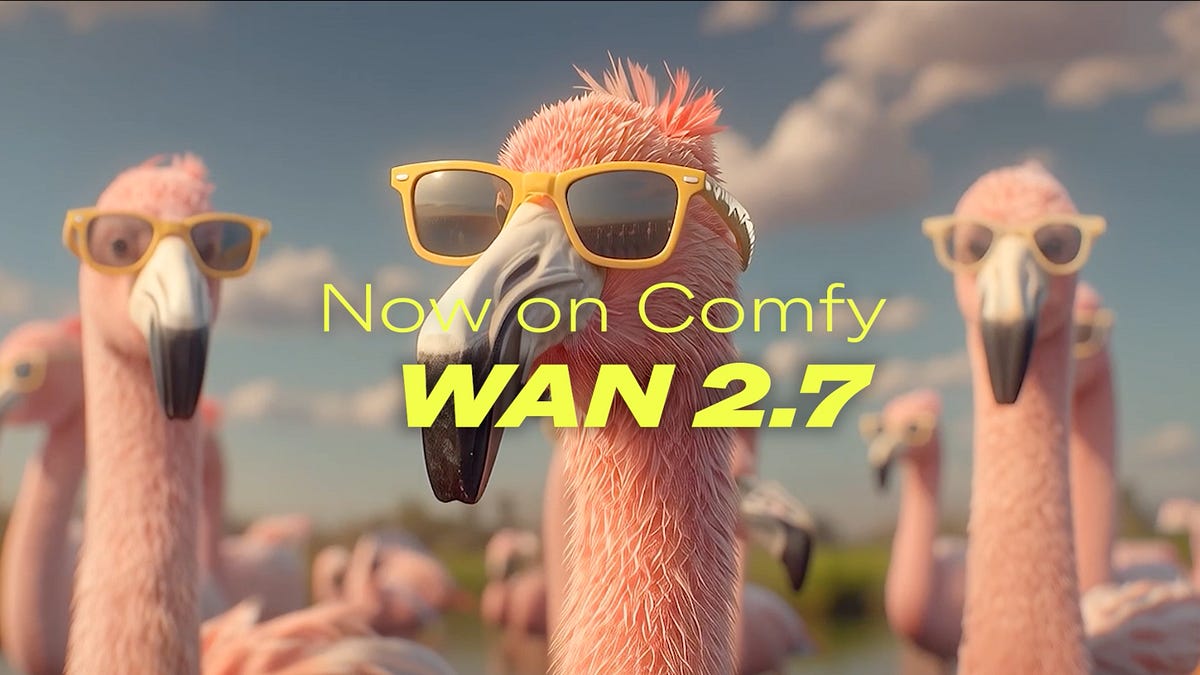
#1Wan 2.7 Is Live in ComfyUI — 9-Grid Input and First/Last Frame Control Drop

Alibaba's Wan 2.7 is now available in ComfyUI via partner nodes, and the headline features are the 9-image grid input for multi-angle character consistency and true first/last frame keyframing — exactly what product and ad creators have been begging for. It's Apache 2.0, 27B total parameters with 14B active via MoE, supports 5,000-character prompts, and already has 67 adapters and 49 fine-tunes on HuggingFace. If you're running RTX 50 hardware, NVFP4 quantization cuts VRAM by 60% and runs 2.5x faster than FP16.

#2Multi-Model Shot Routing Is the 2026 Pro Workflow — Kling/Veo/Seedance by Shot Type

The dominant production approach among professional creators right now is building a full shot list, then routing each shot to the model it's best at: Kling 3.0 for cinematic long-form, Veo 3.1 for synchronized dialogue, Seedance 2.0 for character consistency, and Pika for fast social cutaways. Creators using this approach report cutting wasted regenerations from roughly 10 attempts to 2 or 3. The "5-Minute Rule" is circulating widely — spend 5 minutes planning for every 1 minute of final output.

No image

#3LTX-2.3 Adds Desktop Editor, Redesigned VAE, and Native Portrait Video

Lightricks shipped LTX-2.3 in March alongside a standalone desktop video editor, making it the only open-weights audio-video model with a full editing suite. The new release brings a redesigned VAE for sharper textures, a gated attention text connector for better prompt adherence, native 1080x1920 portrait output for Reels and Shorts, and cleaner audio with silence and noise artifacts scrubbed from training data. Full weights and training code remain public — first production-ready open-source model to combine audio and video in a single pass.

#4YouTube Inauthentic Content Enforcement Is Escalating — AI-as-Tool Survives, AI-as-Everything Doesn't

YouTube's July 2025 "inauthentic content" policy — which renamed "repetitious content" and explicitly targets mass-produced template-based AI videos — is being actively enforced with increasing aggression through H1 2026. The key distinction YouTube is enforcing: AI used as a creative tool within a human-directed production is monetizable; AI as the entire creative process is not. Channels uploading 10 or more structurally similar Shorts per day are being algorithmically suppressed before any human review. AI disclosure labels do not affect distribution or monetization eligibility.

#5HappyHorse-1.0 — Alibaba's Anonymous Chart-Topper Is Now on fal API

Alibaba's HappyHorse-1.0 debuted anonymously on the Artificial Analysis Video Arena in early April, hit the highest Elo score in AI video history within 72 hours, then Alibaba claimed it three days later. It's a 15B single-stream Transformer generating native 1080p clips up to 10 seconds with integrated audio-video sync across 50-plus styles. Developer and enterprise API access launched on fal on April 27. It currently holds the number-one overall spot on Artificial Analysis combining text-to-video and image-to-video scores.

#6Kling 3.0 Ships Native 4K/60fps and 6-Cut Storyboards — With Caveats

Kuaishou's Kling 3.0 is the first model to output native 4K at 60fps in a single pass with no upscaling required, plus 6-cut storyboard generation per prompt and integrated lip-synced audio in five languages. Curious Refuge rates it 8.1 out of 10 and it sits at 1,243 Elo on Artificial Analysis. The caveat worth knowing: 4K Professional Mode takes 5 to 10 minutes per clip at high credit cost, and 40 to 60 percent of generations reportedly need rerenders — so budget for iteration time.

#7TikTok C2PA Auto-Detection Is Live — Unlabeled AI Posts Are Auto-Removed Platform-Side

TikTok is now auto-detecting AI content via C2PA Content Credentials and removing unlabeled realistic depictions of people, places, or events without any human review step — unlike Meta's self-declaration model. AI-assisted text (scripts, hashtags) is explicitly exempt. A notable stat putting the scale in context: an estimated 38 percent of all TikTok ad creatives now incorporate some AI-generated content. If your pipeline doesn't embed C2PA metadata, get ahead of this now.

#8Veo 3.1 Lite at $0.05/Second — The Budget Entry Point for Native Dialogue Video

Google's Veo 3.1 Lite landed on Vertex AI in late March at five cents per second, making it the cheapest path to native 48kHz synchronized dialogue in AI video — a capability no other model in its price tier offers. It tops out at 720p, but Veo 3.1's 4K upscaling pipeline is available separately on Vertex AI. Vertical video for YouTube Shorts is supported natively. At that price point, dialogue-driven content that previously required expensive API calls is now genuinely budget-accessible.

No image

#9YouTube Terminated 16 Channels — 35M Subs and 4.7B Views Erased in One Wave

YouTube's largest single AI enforcement action removed 16 channels totaling 35 million subscribers and 4.7 billion lifetime views, with an estimated $9.8 million in annualized ad revenue wiped out. Largest removed: CuentosFacianantes at 5.95M subscribers for AI-animated Dragon Ball content, Imperiodejesus at 5.87M for AI-narrated biblical content, and Super Cat League at 4.21M. The policy trigger was existing spam and deceptive practices rules — not a new AI-specific rule — which means there is no safe harbor in compliance theater.

#10Sora 2 API Shutdown Confirmed — Migration Deadline Is September 24, 2026

OpenAI confirmed Sora 2 is shutting down completely, with the API end-of-life set for September 24, 2026. The stated reason is compute economics: $8 to $12 million per month in costs against under $2 million in subscription revenue. Top recommended migration targets are Seedance 2.0 and Veo 3.1 for quality parity, and Wan 2.7 or Kling 3.0 for open-source or cost-controlled alternatives. If you have any production pipelines calling the Sora 2 API, the clock is running.