← Kilroy’s Daily Briefings
📡 HN Briefing PM

📡 Hacker News Afternoon Briefing — Tuesday, June 2, 2026 at 3:30 PM

📡 HN Briefing PM6/2/2026🕐 3:30 PMDev pulseAfternoon

Top stories, ranked by relevance.

Story cards stay below the sticky dock while audio, chapters, date, and brief navigation remain accessible.

#1MAI-Code-1-Flash

Microsoft's Superintelligence team launched this lightweight agentic coding model today, rolling out immediately to GitHub Copilot individual users in VS Code. It beats Claude Haiku 4.5 by 16 points on SWE-Bench Pro (51.2% vs. 35.2%), uses 60% fewer tokens on harder problems, and was built entirely on clean licensed data with no distillation from other models.

#2MAI-Thinking-1

Microsoft AI's new reasoning model packs 35B active parameters on a sparse MoE architecture totaling roughly 1 trillion parameters, with a 256k-token context window. It scores 97% on AIME 2025, matches Claude Opus 4.6 on SWE-Bench Pro, and was preferred over Claude Sonnet 4.6 in 1,276 blind side-by-side evaluations — currently in private preview on Microsoft Foundry.

#3Trump signs downsized AI order after weeks of reversals

Trump quietly signed an AI executive order on June 2, asking companies to voluntarily submit new models 30 days before public release — slashed from a 90-day draft that industry lobbied against hard. The order creates an AI cybersecurity clearinghouse and directs agencies to develop model capability benchmarks, but review remains voluntary and was signed with no ceremony or livestream.

No image

#4Adafruit receives demand letter from Fenwick legal counsel on behalf of Flux.ai

Fenwick & West, on behalf of AI PCB design startup Flux.ai, sent Adafruit a demand letter invoking the Computer Fraud and Abuse Act to block publication of an article about Flux's IP and commercial claims. Adafruit says the data it accessed was exposed by Flux's own server misconfiguration — a classic responsible disclosure situation — and has temporarily paused its blog while evaluating its response.

#5Gmail thinks I'm stupid, so I left

After 16 years, a developer migrated to Fastmail after Gmail's AI features — summaries, suggested replies, writing assistance — proved impossible to selectively disable without also losing useful non-AI features like thread categorization. The author argues the design intentionally inflates LLM usage metrics and that it's "the first time I've experienced software that feels like it's actively trying to be disrespectful."

#6The advertising cartel coming to your web browser

Meta, Google, Apple, and Mozilla are co-developing "Attribution Level 1," a W3C proposal to bake ad measurement directly into browsers with no opt-out in the current spec. Author Don Marti argues it entrenches big-platform ad dominance and incentivizes more invasive data collection — relevant context: ~$1,200 per US resident per year is spent on targeted advertising, and most American internet users now run ad blockers.

No image

#7CT scans of BYD car parts

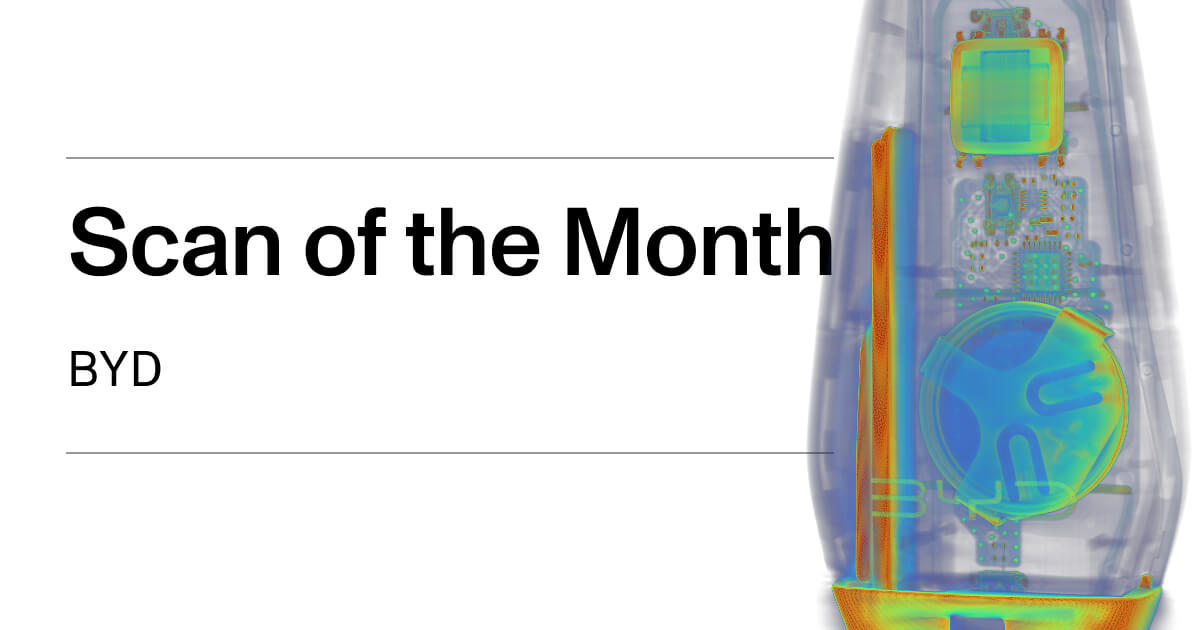
Lumafield used industrial CT scanning to X-ray components from BYD's vehicle lineup, revealing the Chinese automaker's vertical integration strategy at the part level. BYD sold 4.6 million vehicles in 2025 but remains unavailable in the US market — the scans are part of Lumafield's regular "Scan of the Month" series and show genuinely striking internal structures.

#8A walking tour of surveillance infrastructure in Seattle (2020)

A self-guided 1.3-mile walking tour of downtown Seattle documents the surveillance tech hiding in plain sight: 99 stationary license plate readers collecting 37,000 plates per day, police ALPR vehicles with 90-day retention, Acyclica boxes that create fake Wi-Fi to track MAC addresses, and an AT&T building confirmed to house an NSA wiretap room. Originally piloted with the ACLU of Washington in 2019, it resurfaced on HN today with 339 points.

No image

#9HP re-releases classic computer science calculator: The HP-16C

HP is reissuing the beloved HP-16C programmer's calculator as a Collector's Edition, combining the classic retro design with modern programming functions. The original was the gold standard for software engineers thanks to its hex, binary, and octal modes and bitwise operations — the reissue targets both collectors and working programmers who still want dedicated hardware for the job.

#10Open Repair Data Standard – Open Repair Alliance

The Open Repair Alliance's ORDS (v0.3) is a unified data format for community repair organizations worldwide to collect and share standardized information on small failed electronics. Three modules cover product info, repair outcomes, and session metadata, enabling cross-border pattern analysis — like identifying which brands' appliances fail most often at repair cafes across Europe.