← Kilroy’s Daily Briefings
📈 AI Stocks

📈 AI Stock News Briefing — Saturday, June 6, 2026 at 6:15 AM

📈 AI Stocks6/6/2026🕐 6:15 AMMarket watchAI equities

Top stories, ranked by relevance.

Story cards stay below the sticky dock while audio, chapters, date, and brief navigation remain accessible.

#1AVGO — Broadcom AI Guidance Miss Triggers Historic Chip Selloff

Broadcom's Q2 FY2026 results beat on the headline — AI chip revenue surged 143% year-over-year to $10.8 billion, total revenue up 48% to $22.2 billion — but its Q3 AI revenue guidance of $16 billion landed below Wall Street's $17.2 billion estimate, and the market revolted. AVGO shed roughly 12% Thursday and kept sliding Friday, dragging the Nasdaq down 4% on June 5 and wiping an estimated $1 trillion from chip stock market caps. The iShares Semiconductor ETF (SOXX) fell 10%, its worst single-session drop since March 2020.

#2MRVL/MU/AMD/NVDA — The "Parabolic 7" Unwinds; Worst Chip Day in Six Years

The Broadcom-triggered selloff swept through every AI-adjacent semiconductor name: Marvell lost 16%, Micron plunged 13%, AMD fell 6.3%, and Nvidia dropped roughly 5%, while Intel joined the rout. Analysts are calling it a coordinated unwind of the "Parabolic 7," a crowded basket of AI chip stocks that had accumulated enormous gains in 2026. The Philadelphia Semiconductor Index dropped over 6%, the S&P fell 0.63%, and the Dow barely held positive as the Nasdaq bore the full weight of the rotation.

No image

#3ARM — Surged 15% on Nvidia Computex News, Then Swept Into the Wreckage

ARM Holdings jumped as much as 15% this week after Nvidia unveiled a new AI chip for Windows PCs built on ARM's architecture at Computex, adding meaningful royalty upside to an already red-hot story. The CEO told Bloomberg on June 2 that ARM's $15 billion AI chip revenue target could arrive ahead of schedule, prompting RBC to raise their price target to $260 and Mizuho to set a Street-high of $360. The stock is up over 250% in 2026 but couldn't escape the Broadcom-driven selloff — even the week's standout winner got dragged down.

No image

#4CRWD — CrowdStrike Beats Q1, Announces 4-for-1 Split, Falls 9% Anyway

CrowdStrike reported Q1 FY2027 revenue of $1.39 billion, up 26% year-over-year, with adjusted EPS of $1.10 (beat vs. $1.07 expected), record net new ARR of $256 million (up 32%), and raised full-year guidance by 520 basis points at the midpoint. The company also announced a 4-for-1 stock split with a June 25 record date and split-adjusted trading beginning July 2. Despite the clean beat and the split announcement, shares fell 9% as a billings shortfall overshadowed the headline — a recurring theme this earnings season where expectations are simply very high.

No image

#5AAPL — WWDC Starts Monday; Morgan Stanley Eyes $440 on Siri 2.0

Apple's Worldwide Developers Conference opens Monday, June 8, and Morgan Stanley called it a "key catalyst" for the stock's AI positioning, with a scenario where Siri 2.0 and a clear agentic AI vision push valuation from the bank's current $330 price target to as high as $440. The firm cited the 20-point outperformance that followed WWDC 2024 as historical precedent and argued that Apple Intelligence 2.0 could become a consumer-level agentic AI platform at lower cost than incumbents. Apple has been conspicuously absent from the AI winner narrative in 2026 — Monday could change that quickly.

#6PLTR — Palantir Bucks the Selloff on Deepening Defense Wins; Insider Selling Rises

Palantir gained roughly 2% on June 4 while the rest of AI tech sold off, supported by news that AIP and Gotham have landed multi-year program-of-record roles across U.S. and allied militaries — funded, long-duration contracts that structurally reduce revenue cyclicality. The company had already raised its FY2026 revenue growth guidance to 71%, backed by Q1's 104% U.S. revenue growth year-over-year. One watchout: insider selling has been accelerating sharply alongside the bullish fundamentals, a dynamic worth monitoring.

No image

#7ORCL — Oracle Up 16% Pre-Earnings on $553B Backlog; Reports June 16

Oracle reports Q4 FY2026 on June 16 after the close, with analyst consensus at $1.95 EPS, and the stock has already run 16% in the run-up on the AI data center infrastructure theme. Cloud infrastructure revenue grew 84% to $4.9 billion in Q3, and remaining performance obligations hit $553 billion — up 325% year-over-year. The critical question analysts are asking: can Oracle build enough capacity to convert that extraordinary backlog into revenue without compressing cloud margins?

#8MDB — MongoDB Q1 Beat Sparks Analyst Upgrade Wave in Early June

MongoDB reported Q1 FY2027 results on May 28: revenue of $687.6 million, up 25% year-over-year, beating the $663.8 million consensus, with adjusted EPS of $1.32 versus $1.18 expected. The beat triggered a wave of analyst upgrades in early June, with the bull case centered on Atlas — MongoDB's cloud database platform — gaining genuine enterprise traction as AI application workloads scale. It's the quieter story of the week, but the fundamentals are clean.

No image

#9AMD — Up 138% in 2026 — Is It the Best AI Chip Play After Nvidia?

The Motley Fool today weighed AMD against Broadcom as the best AI chip alternative to Nvidia — timely given the sector-wide selloff. AMD's Q1 data center revenue grew 57% year-over-year to $5.8 billion; the stock peaked at $527 in May (up 138% in 2026) before pulling back 6.3% in Thursday's rout alongside the broader chip sector. CEO Lisa Su recently raised the server CPU total addressable market forecast from $60 billion to over $120 billion, growing at more than 35% annually by 2030 — a bold call that, if validated, gives AMD a long runway independent of AVGO's narrative.

#10TSLA — FSD Hits 1.28M Subscribers; v15 Confirmed Compatible With Hardware 4

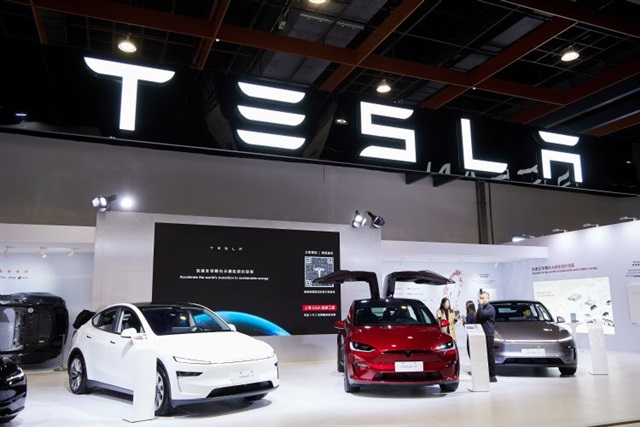
Tesla's Full Self-Driving software now has 1.28 million active subscribers, up 51% year-over-year, following launches in China and nine additional international markets this spring. CEO Musk confirmed on the Q1 earnings call that FSD v15 will run on current Hardware 4 computers, ending months of community speculation about whether owners would need new hardware. With monthly fees between $99 and $199, FSD alone could generate $1.3 to $2.6 billion in annual high-margin software revenue, keeping the AI narrative alive for Tesla even in a rough week for the broader sector.