Anthropic's restricted Claude Mythos Preview has now identified more than 10,000 high- or critical-severity vulnerabilities across every major operating system and browser, all responsibly disclosed through Project Glasswing, a consortium anchored by Apple, Google, Microsoft, and AWS. Access to Mythos remains tightly controlled at $25/$125 per million tokens for vetted partners only, with Anthropic committing $100 million in model credits to the effort. This is the clearest real-world demonstration yet that frontier AI can accomplish security work at a scale and speed no human team could replicate.
Anthropic filed a confidential S-1 with the SEC on June 1, following a $65 billion Series H that placed it ahead of OpenAI in valuation for the first time. Analysts now treat a public debut above $1 trillion as the base case if markets cooperate, making this potentially the defining AI listing of the decade. The valuation has nearly tripled since February 2026, jumping from $380 billion to just under a trillion in four months.
At today's San Francisco keynote, Microsoft unveiled Office 365 Copilot Agent Mode, embedding persistent AI agents directly inside Word, Excel, Teams, and Outlook, while repositioning GitHub Copilot as a "peer programmer" capable of independently owning bugs and features. Windows Local AI, a system-level runtime for on-device agent deployment across Snapdragon, Intel, and AMD chips, ships June 9. Nadella's framing was blunt: agents are not just a feature, they're the new operating system for work.
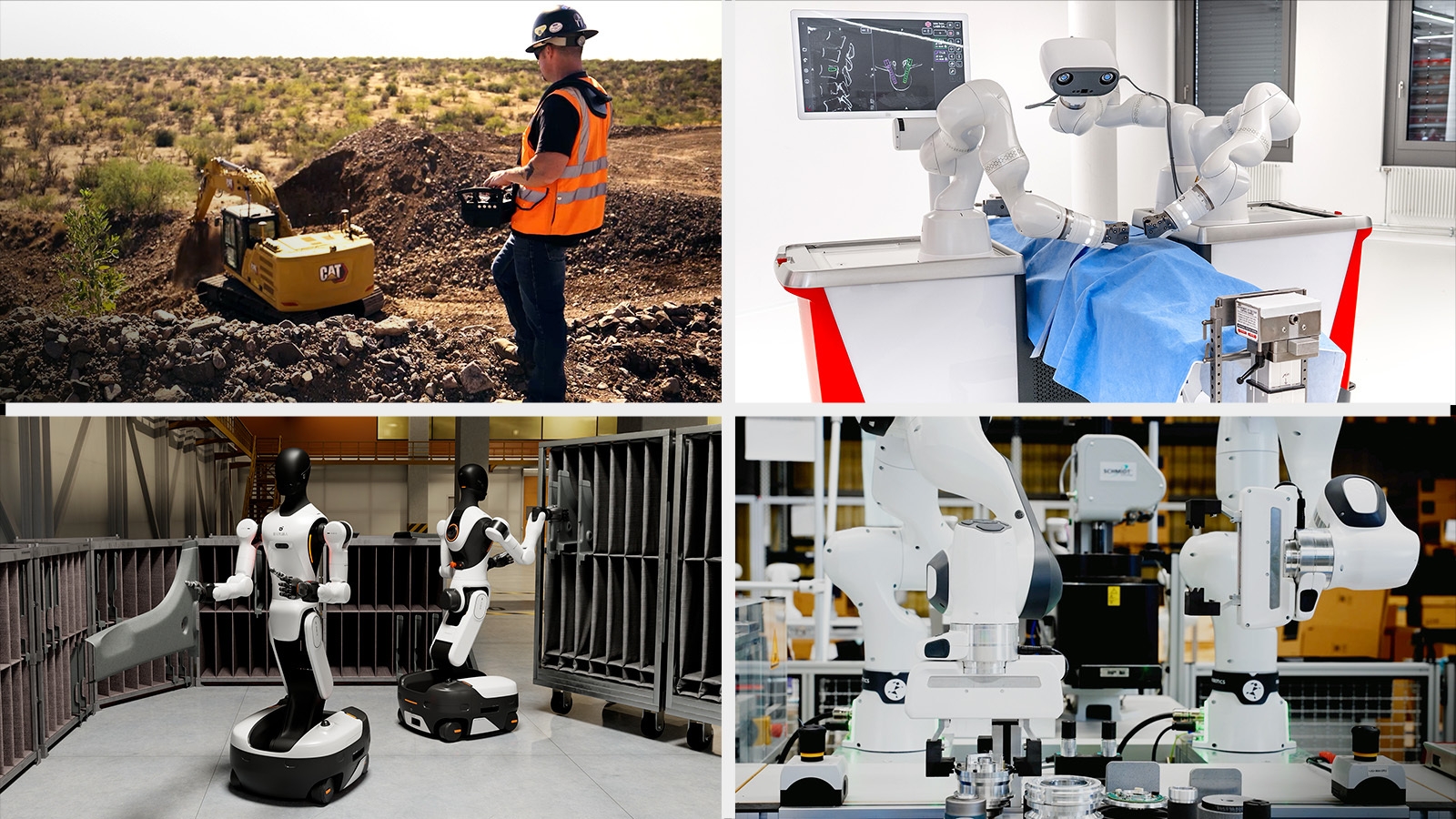
NVIDIA announced the Isaac GR00T Reference Humanoid, a six-foot, 75-degree-of-freedom open research robot pairing Unitree's H2 Plus body, Sharpa's five-fingered dexterous hands, and NVIDIA Jetson AGX Thor compute, available to Stanford, ETH Zurich, UC San Diego, and other research institutions. New open Cosmos and GR00T models for robot learning shipped alongside the hardware. The selection of Chinese startup Unitree as the reference body drew immediate attention amid ongoing US-China tech tensions, with Unitree reportedly eyeing its own IPO.
Gemini 3.5 Flash, generally available since May 19, becomes the non-optional default for all Google Enterprise users this coming Monday and cannot be disabled by admins. The model delivers frontier-level intelligence at four times the speed of comparable models, priced at $1.50 per million input tokens with a 90 percent discount on cached inputs. Gemini 3.5 Pro, the flagship announced at Google I/O, is still targeting general availability later this month.
OpenAI opened GPT-Rosalind, its frontier reasoning model for the life sciences, to vetted government agencies, academic labs, and nonprofits via the new Rosalind Biodefense Program, targeting disease surveillance, epidemiological modeling, and countermeasure development. The Johns Hopkins Applied Physics Laboratory is already on board, using it to accelerate therapeutic enzyme screening and biological threat analysis. This is OpenAI's most direct move into national security-adjacent AI applications to date.
New analysis puts 30 to 50 percent of 140 planned U.S. data center projects, representing 16 gigawatts of targeted capacity, at risk of missing 2026 timelines or outright cancellation, with only 5 GW actually under construction. Power transformers now carry three-to-five year delivery windows, switchgear is sold out through 2028, and grid interconnection queues run three to seven years in major utility territories. The emerging workaround is bring-your-own-power, with developers pursuing onsite generation to bypass the grid entirely until infrastructure catches up.
Researchers spotted a routing entry for GPT-5.6 in OpenAI's Codex rollout logs before it quietly disappeared, while some ChatGPT Pro users are reporting context window behavior consistent with a 1.5 million token limit, roughly 43 percent above GPT-5.5. OpenAI has made no official announcement and there is no model card, API entry, or published benchmarks as of this morning. Prediction markets are pricing an 80 to 89 percent probability of a public release by June 30.
NVIDIA's Ising family is the first open-source AI model suite purpose-built for quantum computing, led by a 35 billion-parameter vision-language model for quantum processor calibration. The models achieve up to 2.5x faster and 3x more accurate quantum error correction while cutting processor setup time from days to hours. Early adopters include Fermilab, Harvard, and Lawrence Berkeley National Laboratory.
Global venture capital hit $297 billion in Q1 2026, a new record, with AI claiming 81 percent of the total. The biggest checks are no longer going to software applications but to physical infrastructure: power, networking, robotics, and defense tech, reflecting a market that's chasing AI's constraints rather than its promises. Eclipse-backed hard-tech companies alone have raised $14 billion in 2026 so far.