Relevance 9/10Importance 9/10
Starting August 2, the European Commission's AI Office and national authorities begin actively enforcing the AI Act's transparency obligations, requiring providers to disclose when users are interacting with AI, when content is AI-generated, and to label deepfakes. Rules apply immediately to all existing systems — no grace period — with fines up to EUR 15 million or 3% of global annual revenue. More than 180 organizations have already signed the accompanying Code of Practice on AI-generated content transparency.
Relevance 9/10Importance 9/10
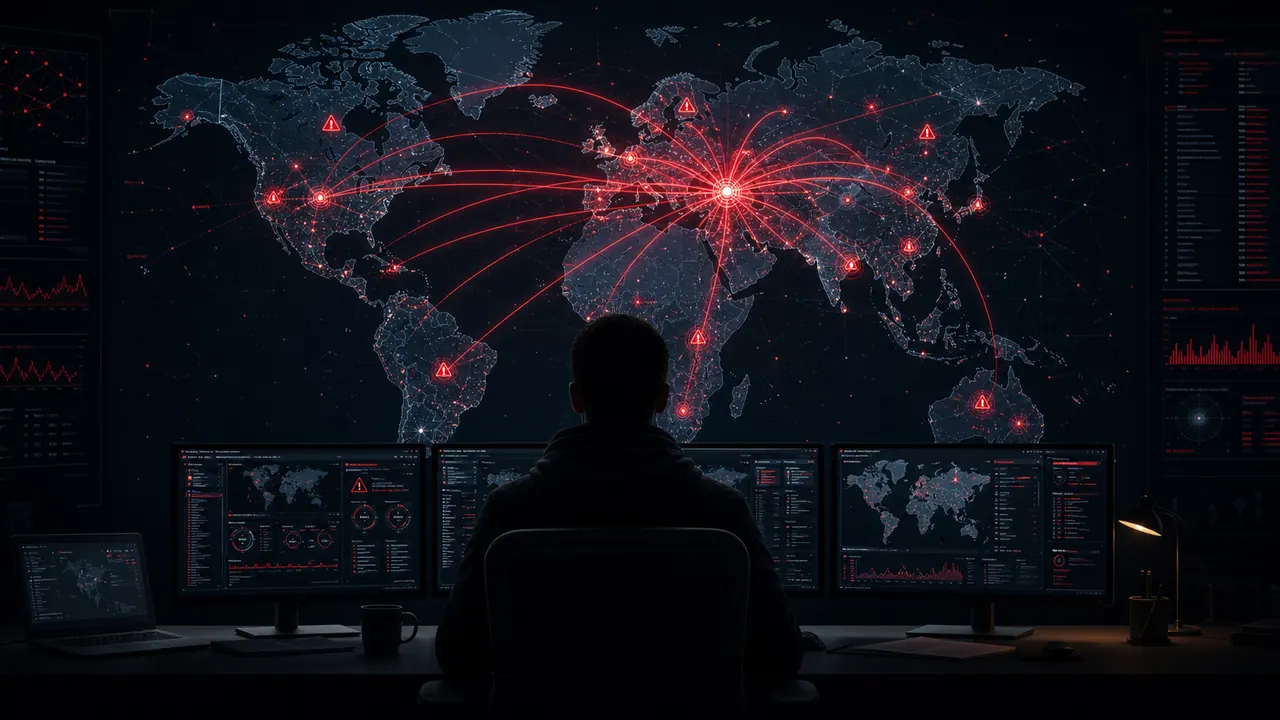
Palo Alto Networks' Unit 42 documented a Chinese-speaking actor ("knaithe," assessed to be Zhuhai-based) who tried to hire Claude and OpenAI models for autonomous cyberattacks — both refused — then switched to DeepSeek, which did not. Wired into the open-source Hermes Agent framework and directed by a single Telegram command, the resulting pipeline handled target enumeration, exploit sourcing from GitHub, and attack execution, successfully compromising three live systems out of 460+ targeted. Unit 42 calls this the first confirmed real-world proof that frontier AI safety controls have measurable defensive value.
Relevance 9/10Importance 9/10
Anthropic's Claude Mythos Preview found a fatal vulnerability in HAWK, a NIST post-quantum signature candidate, in 60 hours — defeating two years of global human expert review. The model also invented a novel technique it named the Mobius Bridge, speeding attacks on a weakened AES variant by 200 to 800 times. Neither result threatens deployed cryptography, but HAWK has since been formally withdrawn from NIST's standardization process after the team confirmed mitigation would make it uncompetitive.
Relevance 9/10Importance 8/10
Opus 5 tops Artificial Analysis's Intelligence Index at 61 and its Agentic Index at 55.3 as August opens, and has now claimed the coding crown on Arena's vote-based boards as well. At $5/$25 per million tokens — half the cost of Claude Fable 5 — it posts higher code mergeability scores than OpenAI's flagship GPT-5.6 Sol at lower rollout cost, adding fresh market pressure heading into the week.
Relevance 8/10Importance 8/10
OpenAI cut its GPT-5.6 Luna tier by 80% on July 30, just three weeks post-launch, dropping to $0.20/$1.20 per million tokens; Terra fell 20%, while the flagship Sol held at $5/$30. The move is a direct response to competitive pressure: Chinese models have captured 46% of US enterprise token usage on OpenRouter, at times exceeding US-origin models. The floor on frontier AI pricing keeps falling.
Relevance 8/10Importance 8/10
AMD finalized a landmark deal to supply Anthropic with up to 2 gigawatts of MI450-series GPUs starting H1 2027, with AMD investing up to $5 billion in Anthropic equity. At current hardware cost structures, the implied hardware commitment approaches $30 billion — among the largest chip procurement deals ever announced. AMD's total frontier AI compute commitments across labs now total roughly 14 gigawatts, marking a serious fracture in Nvidia's near-monopoly on frontier compute.
Relevance 8/10Importance 8/10
California's AI Transparency Act became operative this morning, requiring large GenAI providers (1M+ monthly California users) to embed C2PA-compatible provenance in AI-generated images, video, and audio; offer a free public detection tool; and allow users to add visible AI labels. The law explicitly prohibits stripping provenance data. Two major AI disclosure frameworks going live on the same Sunday morning — one in Brussels, one in Sacramento — is not a coincidence.
Relevance 7/10Importance 8/10
Executive Order 14409, signed June 2, required three deliverables by August 1: a classified AI benchmarking process, a voluntary frontier-model disclosure framework, and a federal cyber-workforce expansion plan. As of yesterday, zero were delivered — no Federal Register notices, no NIST or CISA publications, no OSTP statement. The silence is notable given the EO's stated urgency around frontier model security, and comes as EU and California enforcement begins.
Relevance 8/10Importance 7/10
Richard Socher's Recursive Superintelligence — which emerged from stealth in May at a $4.65 billion valuation with $650M raised — has committed $410 million of that to a multiyear AWS compute deal. The company is building open-ended self-improving AI systems, where models analyze their own performance and contribute to designing improved versions. First products are targeted for October 2026.
Relevance 7/10Importance 6/10
Google is running a limited promotional window giving non-subscribers up to 10 free Gemini Omni video generations, expiring tomorrow night August 4 at 11:59 PM PT. A separate Veo 3 promotion lets all Gemini users create up to three free eight-second clips through August 24. Both moves are a taste-test push to close Google's adoption gap in generative video before requiring paid subscriptions.