Relevance 10/10Importance 9/10
A researcher demonstrates a lossless compression technique for LLM key-value caches achieving up to 4x compression using a lightweight predictor model. The method encodes only the residual differences between predicted and actual KV values using arithmetic coding. Stacked with existing FP8 quantization, total compression reaches 6–8x — a potentially significant efficiency gain for LLM inference infrastructure.
Relevance 9/10Importance 8/10
A developer argues that American AI companies like Anthropic are riding parasocial hype rather than genuine technological superiority, with Chinese models like Qwen 3.7 Max now delivering comparable performance at a fraction of the cost. Developers on platforms like OpenRouter are increasingly voting with their wallets for cheaper alternatives, suggesting the premium for frontier US models may no longer be justified. The piece frames AI subscriptions as brand loyalty economics, not performance moats.
Relevance 9/10Importance 8/10
Netlify CTO Dana Lawson argues that software engineering is fundamentally shifting from code authorship to AI orchestration, with engineers becoming "agent experience engineers" who direct, verify, and curate AI-generated work. The new skill set centers on systems thinking, effective prompting, and ensuring AI outputs meet product requirements. The piece contributes to a growing industry debate about how developer roles will evolve as LLM-powered coding agents go mainstream.
Relevance 9/10Importance 7/10
A 10-year engineering veteran describes how LLMs have systematically dismantled the three pillars of their professional value: domain expertise in finance and payments, distributed systems debugging skills, and code architecture instincts. Their conclusion is that specialized knowledge once requiring years to develop is now "promptable," reducing them to a generalist competing in an oversaturated market. The post surfaced widespread anxiety in the HN engineering community about long-term employability.
Relevance 8/10Importance 6/10
A GitHub issue requests that Anthropic publish an official signed Claude Desktop build for Linux, as macOS and Windows users get full desktop support including Claude Code plugins, computer use, and Cowork while Linux developers are locked out. The author notes that 27.7% of professional developers use Ubuntu as their primary OS per the Stack Overflow 2025 survey, and Anthropic already distributes signed Linux binaries via Claude Code CLI. Linux users currently rely on risky unofficial third-party repackages to get any desktop functionality at all.
Relevance 8/10Importance 6/10
Lathe is a Go CLI tool that uses LLMs to generate on-demand, hands-on technical tutorials for niche topics where good human-written resources don't yet exist. It spins up a local web app where learners actively read and type code by hand, complete exercises, and follow cited sources — preserving the engaged learning experience of classic tutorials. The author built it to fill gaps in material for domains like building a 3D slicer from scratch or embedded Zig programming.
Relevance 5/10Importance 5/10
Kyushu is an open-source CLI tool that lets developers write JavaScript or TypeScript handlers, compile them into self-contained WebAssembly binaries, and execute them anywhere with a single command. It offers a Cloudflare Workers-style API while eliminating dependencies on Node.js, Bun, or Docker — making it suitable for self-hosted deployment with WebAssembly sandbox isolation. It's designed as a self-hostable alternative to managed edge-worker platforms.
Relevance 4/10Importance 4/10
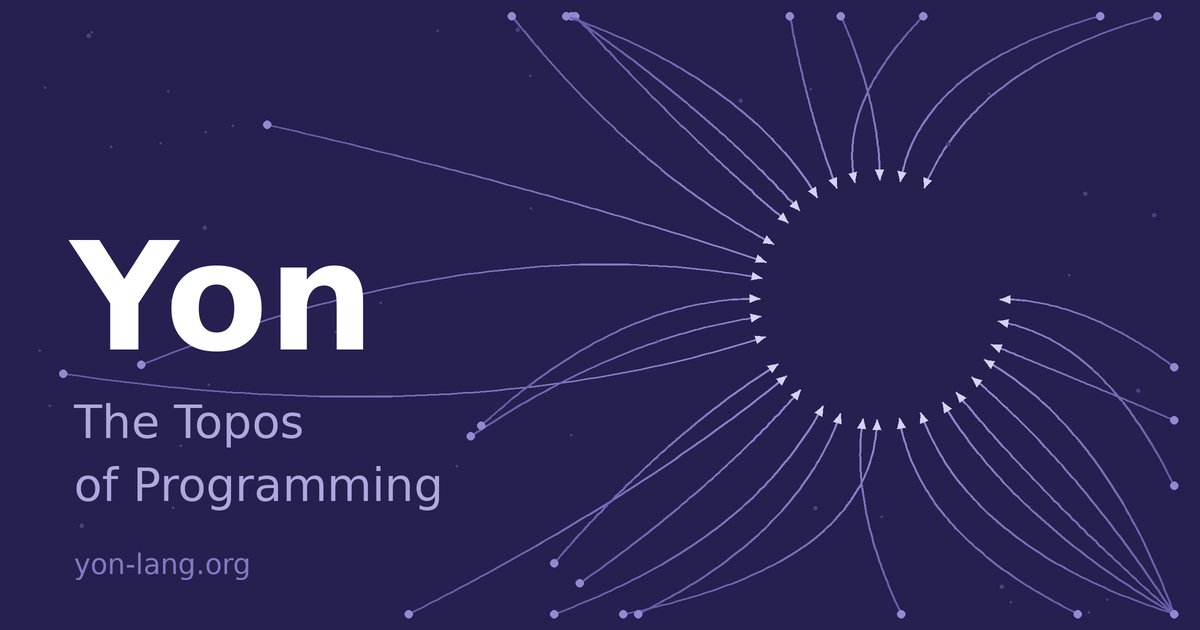
Yon is an experimental compiled programming language inspired by category theory and the Yoneda lemma, featuring a content-addressed heap built on the Leech lattice — meaning identical content always maps to the same memory address, making equality checks O(1) regardless of value size. The compiler pipeline runs through a custom MLIR dialect down to LLVM IR and native binaries, with the runtime using process isolation via "Spaces" instead of threads or shared mutable state. It includes 112 regression tests verified on Linux x86-64 and macOS Apple Silicon.
Relevance 2/10Importance 3/10
The 2025 IOCCC announced 22 winning entries, with organizers noting near-historic heights in submission volume and quality. Notable winners include a GameBoy emulator, a quine that plays pong, and an ocean sound generator — all written in deliberately cryptic C that nevertheless compiles and runs correctly. It's a beloved annual tradition in the C community celebrating creative code obfuscation at its most spectacular.
Relevance 1/10Importance 2/10
This deep-dive explains how 16-bit Windows managed memory through a sophisticated segment-based system requiring significant programmer discipline, since the 8086 processor lacked hardware memory protection. Windows used handles instead of direct segment addresses, requiring developers to carefully lock and unlock memory segments and include special prologs in exported functions. The piece draws illuminating comparisons to OS/2's protected-mode approach, which leveraged 286 processor hardware to automate many of these complex tasks.

 HN Briefing AM