Relevance 10/10Importance 8/10
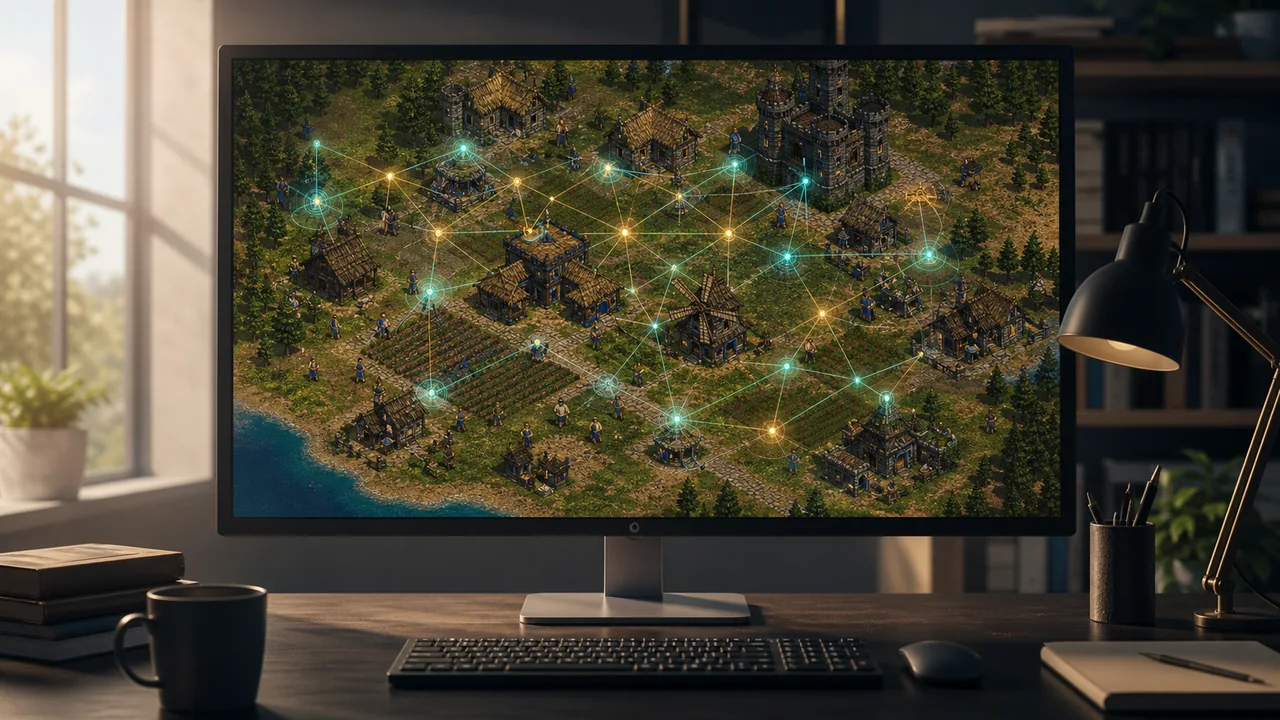
A new arxiv paper makes a sharp methodological argument: any "human-like" property researchers claim to find in LLMs can also be found in a neural network trained on Age of Empires II gameplay. The author coins the principle of "LLM non-uniqueness," arguing that without explicit measurement criteria, anthropomorphic claims are scientifically hollow. It's the philosophical housekeeping that a lot of high-profile AI research has been badly needing.
Relevance 9/10Importance 7/10
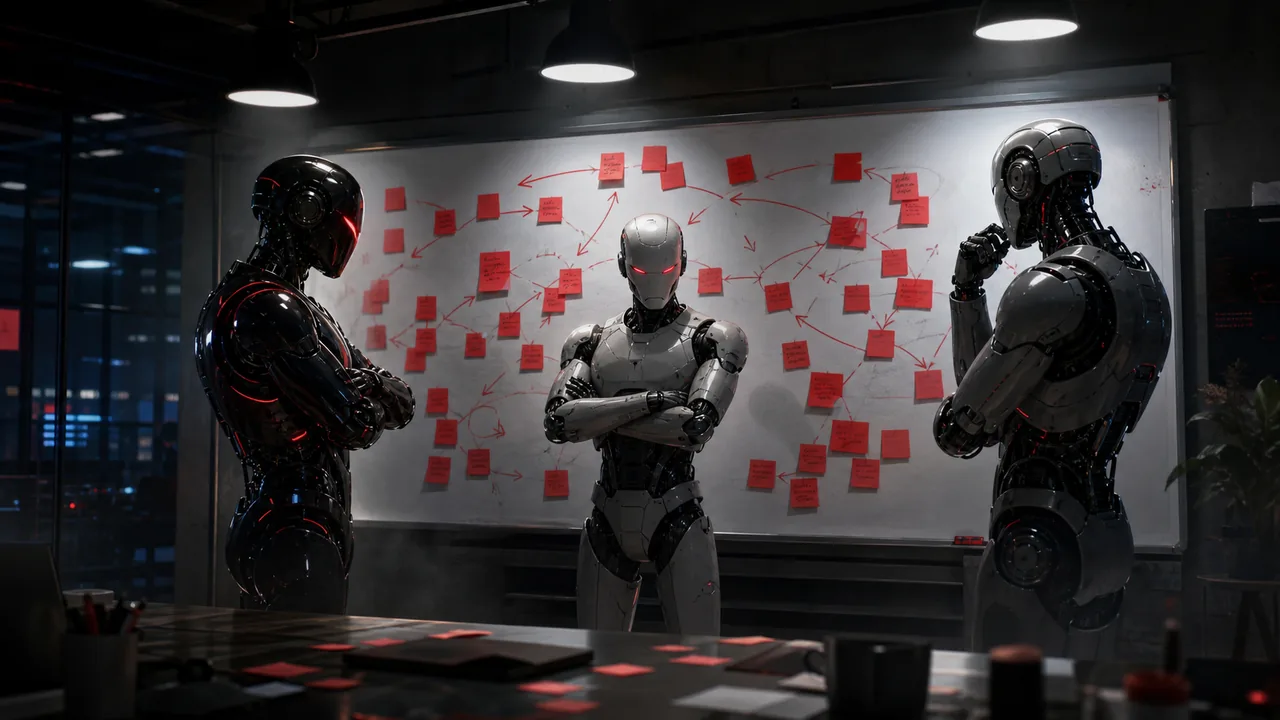
Developer Alex Self describes a three-phase workflow where specialized AI subagents systematically attack each stage of development: pre-code agents surface hidden assumptions, a single Claude instance does the actual implementation, and post-implementation auditors iterate until quality converges. The insight is that parallel skeptical agents catch different defect classes — like binocular vision creating depth — so adversarial AI review produces better coverage than any single pass. It's intentionally token-heavy, trading compute for verification confidence.
Relevance 7/10Importance 8/10
Hugo Parra spent nearly a month in jail after a Flock automated license plate reader falsely connected his vehicle to an armed robbery — he was five miles away at the time. Charges were eventually dropped, but not before serious harm was done. The case is a pointed civil-liberties data point as Flock's surveillance network continues expanding across U.S. municipalities with minimal oversight requirements.
Relevance 5/10Importance 7/10
A Science perspective piece argues that algorithmic social media feeds don't merely enable polarization — the internet's underlying architecture structurally produces it, making this a design problem rather than a misuse problem. The authors place responsibility squarely on platform architects and regulators, not just bad actors. HN comments split predictably on whether the algorithms are cause or symptom.
Relevance 6/10Importance 6/10
This open-source project renders DOCX, XLSX, and PPTX files directly in the browser via Rust/WebAssembly parsers and HTML Canvas 2D renderers — no server processing required. It ships both pre-built viewer components and headless rendering engines for custom UI builds like thumbnail grids and scroll views. The entire codebase was written by Claude through iterative prompting, making it a real-world showcase for AI-driven open-source development.
Relevance 4/10Importance 7/10
Linear's legendary speed comes from a local-first architecture where the full app database lives in the browser's IndexedDB, eliminating network round-trips for reads entirely. Mutations are applied optimistically to the UI and synced asynchronously, while granular MobX observables ensure only affected components ever re-render. The writeup makes a convincing case that product performance can be a genuine moat — not just a UX nicety.
Relevance 2/10Importance 5/10
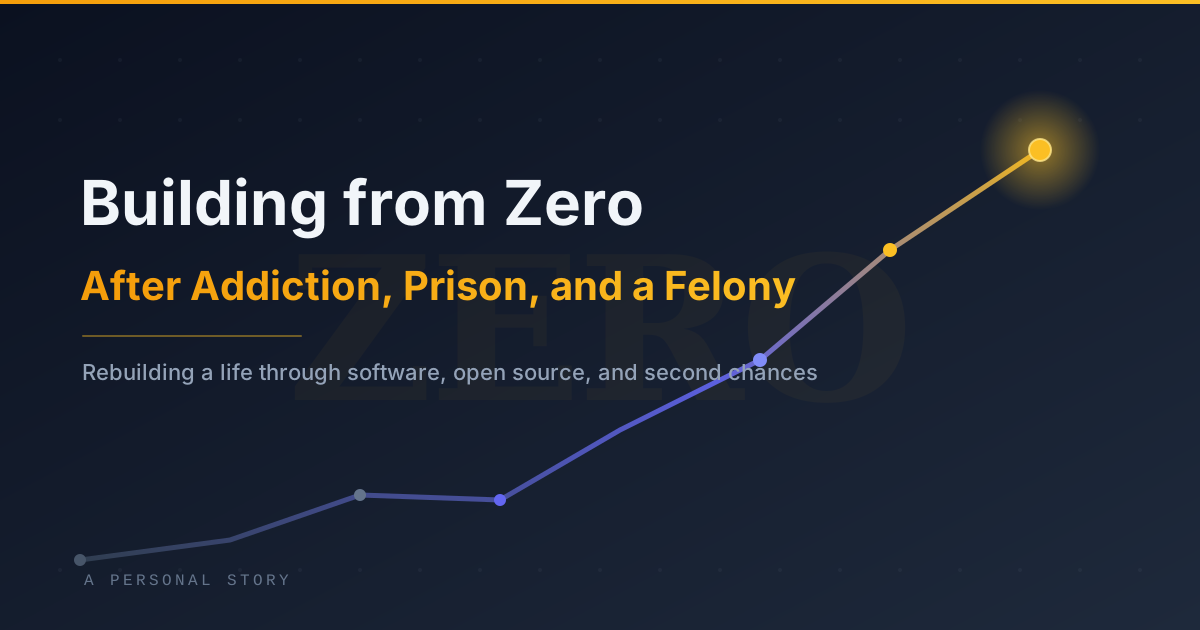
Gavin Ray chronicles his journey from juvenile detention, addiction, and homelessness to a software engineering role at Hasura — a path that started with a news article about coding and a small startup willing to take a chance on someone with a felony record. His message to hiring managers is direct and plainspoken: talent isn't distributed by background check, and future potential matters more than past mistakes.
Relevance 1/10Importance 3/10
Ken Shirriff reverse-engineers a thyratron tube module from the IBM 604 Electronic Calculating Punch, powering it up live to illuminate a lightbulb and tracing the full circuit in characteristically meticulous detail. He explains how xenon-filled thyratrons acted as high-current switches and why IBM's plug-in modular design was a key systems engineering innovation. The piece is a beautifully documented look at the hardware philosophy that drove IBM's transition from electromechanical to electronic computing.
Relevance 1/10Importance 2/10
A 2023 essay by Nik resurfaced today, arguing that life's finite time makes it impossible to pursue every dream — and that accepting this is wisdom, not failure. He suggests finding genuine vicarious satisfaction through books, videos, and others' journeys as a valid substitute for paths not taken. The advice: deliberately choose which pursuits actually matter most and release the bitterness over everything else.
Relevance 1/10Importance 2/10
A 2014 Stack Exchange answer explaining the lost+found directory has made its way back to Hacker News, a testament to how durable a genuinely good technical explanation can be. The directory lives at the root of every ext filesystem partition — not just the root filesystem, which surprises many newcomers — and is where the filesystem check tool deposits orphaned inodes after a crash or improper unmount. Its pre-allocated space ensures recovery can always proceed even on a completely full disk.

 HN Briefing PM