Relevance 10/10Importance 10/10
SpaceX signed a $60 billion all-stock deal to acquire Anysphere, maker of the AI coding tool Cursor — just four days after SpaceX's own record $75 billion Nasdaq IPO. It's the largest acquisition of an AI developer-tools company on record, with Cursor reportedly running around $2.6 billion in annualized enterprise revenue. Closing is targeted for Q3 2026, pending approvals.
Relevance 9/10Importance 8/10
SubQ 1.1 Small is a new model built on Subquadratic Sparse Attention, which swaps the usual quadratic attention for a linear-scaling alternative and can reason directly over documents up to 12 million tokens. The team claims roughly 64.5x less compute than dense attention while holding strong general reasoning. That makes long-context enterprise work — legal review, financial analysis, whole-codebase understanding — genuinely practical.
Relevance 9/10Importance 7/10
Vicki Boykis argues local language models have finally crossed into practical territory, with recent releases like Gemma 4 hitting around 75% of frontier accuracy and speed. She walks through real agentic coding tasks — refactoring Python, writing tests, bootstrapping projects — all running on her M2 Mac via tools like Pi and LM Studio. Slower inference and smaller context windows remain, but the trajectory makes local-first dev increasingly viable.
Relevance 6/10Importance 6/10
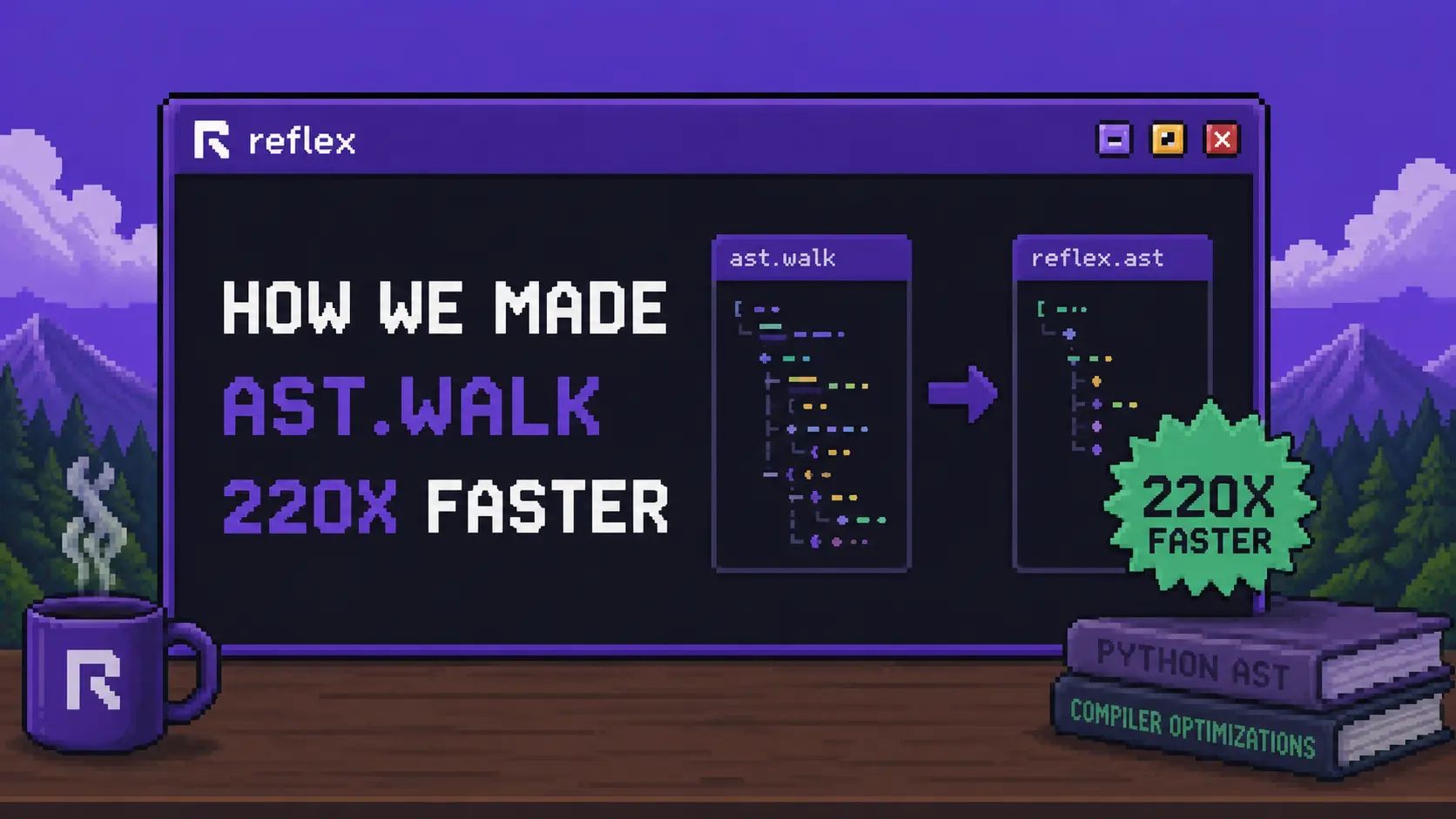
The Reflex team squeezed roughly a 220x speedup out of Python's ast.walk by killing generator overhead, inlining helpers, and dropping into Rust bindings. They iterated directly over object dictionaries and cached subclass metadata in L1-cache-sized lookup tables to slash redundant traversal. It's a satisfying performance deep dive that any framework author will appreciate.
Relevance 5/10Importance 6/10
Microsoft's x86 emulator team found a program that "optimized" a memory-init loop by unrolling it into 65,536 individual write instructions — burning 256KB of code to zero out 64KB of data. Offended by the inefficiency, they added special detection logic to the binary translator to swap that monstrosity for a tight loop at runtime. A classic Raymond Chen Old New Thing tale of engineering revenge.
Relevance 5/10Importance 5/10
John Carmack posted that he admires Fabrice Bellard and that Bellard is "almost certainly a better overall programmer" than he is. Bellard is the mind behind QEMU, FFmpeg, QuickJS and more — software quietly powering an enormous slice of the internet. Coming from Carmack, it's about the highest praise a programmer can get.
Relevance 4/10Importance 5/10
The Verge reviews Apple's Vehicle Motion Cues, which overlays animated dots around the screen edges that move in sync with the car's acceleration, braking, and turns to reduce the sensory conflict that triggers carsickness. The reviewer says it genuinely works — they read for hours and even wrote a 1,000-word review during a road trip. Real-world reports suggest 30 to 50 percent less nausea on long drives, though results vary.
Relevance 3/10Importance 5/10
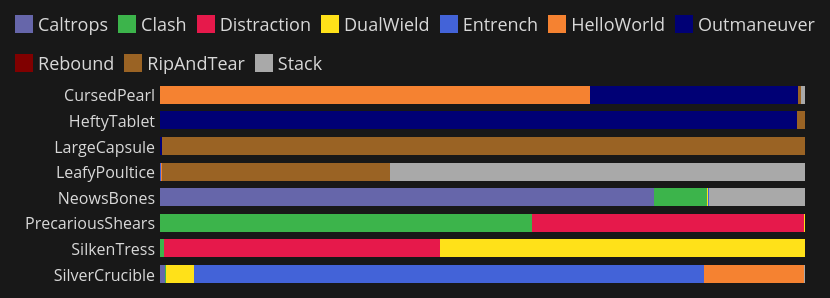
A player discovered that Slay the Spire 2's multiple random number generators are mathematically correlated, letting you predict later outcomes from earlier ones because the output is linear in abs(seed). The bug skews real gameplay: certain relics become biased, some cards are effectively impossible to roll, and potion drop rates swing wildly between acts. It's a great worked example of why RNG seeding is genuinely hard.
Relevance 3/10Importance 3/10
This essay reframes yak shaving — that cascade of side quests pulling you away from the actual task — as something engineers love precisely because it means making things and constantly learning. The author concedes it often torpedoes projects on time and budget, but argues the educational payoff is real, pointing to Knuth building TeX as yak shaving that changed publishing. A warm defense of curiosity-driven detours.
Relevance 2/10Importance 4/10
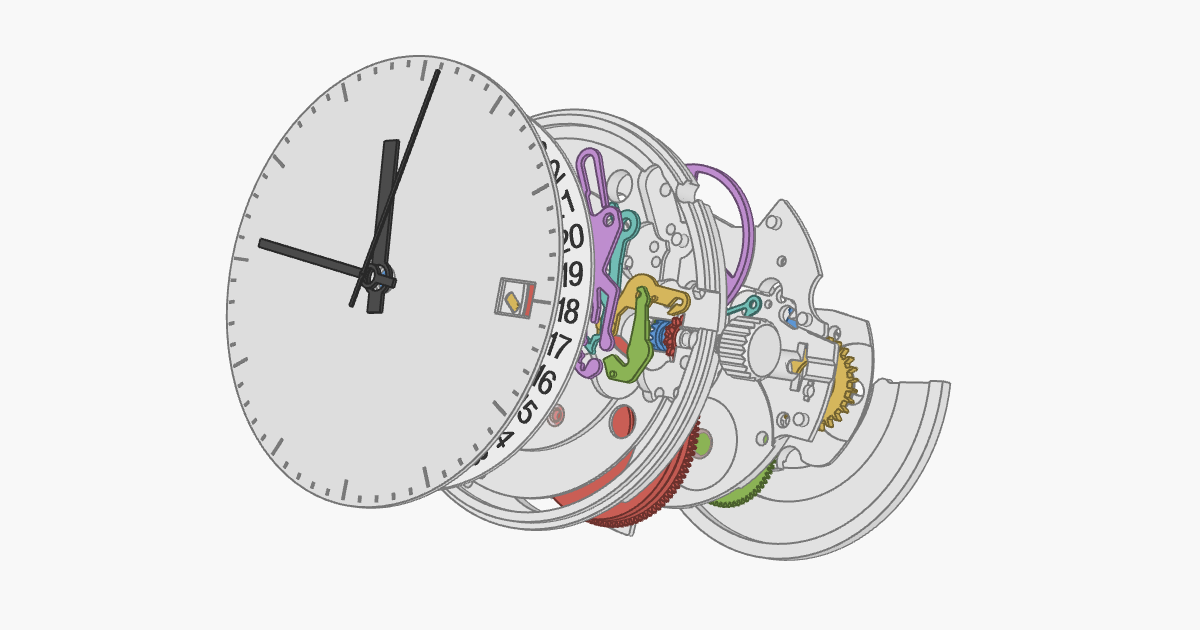
Bartosz Ciechanowski's classic interactive explainer breaks down how a mechanical watch keeps time using just seven major components. Through playable in-browser animations, it walks through the mainspring storing energy, the gear train reducing speed, the escapement, and the balance wheel regulating it all. It closes with the keyless works and automatic self-winding — a masterclass in teaching through interaction.

 HN Briefing AM