Relevance 10/10Importance 9/10
Alibaba's Qwen team dropped Qwen3.8-Max, positioning it as a frontier coding and collaboration model. The community is most excited about the pending open-weights 27B dense release — the previous Qwen3.6-27B had already become a go-to for local coding inference. If the 3.8 generation maintains that trajectory, the gap between frontier commercial models and locally runnable alternatives keeps shrinking.
Relevance 9/10Importance 9/10
JFrog Security researchers exposed a batch of fabricated SQLite CVEs published as AI-generated LLM slop — the advisories cited functions that don't exist, had impossible line numbers, and included PoC payloads that crashed nothing. Despite being entirely fabricated, NVD and CISA initially flagged them as critical before they were downgraded. The real vulnerability is systemic: MITRE's CVE submission form has no identity verification, and NIST reduced manual review in early 2024, making it trivial to push unvetted AI-generated advisories into the official record.
Relevance 10/10Importance 8/10
AirLLM is an inference framework that runs very large language models on consumer GPUs by loading one layer at a time from disk rather than holding the full model in VRAM. It enables running a 70B parameter model on a 4GB GPU with no quantization, distillation, or pruning. Throughput is slower due to repeated disk I/O, but the memory ceiling drops dramatically — a meaningful step toward democratizing large-model inference on modest hardware.
Relevance 8/10Importance 8/10
The most-upvoted story on HN this morning (1,184 points) argues against mindlessly relaying AI-generated responses without personal engagement. Instead of acting as a pass-through layer, people should interact with AI themselves, synthesize the output, and communicate it in their own words to add genuine value. It's a short, pointed critique of a habit that's rapidly becoming normalized as LLM use spreads.
Relevance 9/10Importance 7/10
A developer argues for typing out LLM-generated code by hand rather than copy-pasting it as a discipline to maintain genuine comprehension of your codebase. Blindly accepting AI output creates cognitive debt — code you don't understand and can't debug. The slower retyping process forces engagement with the logic, catches errors, and builds accurate mental models of what's actually in the project.
Relevance 9/10Importance 7/10
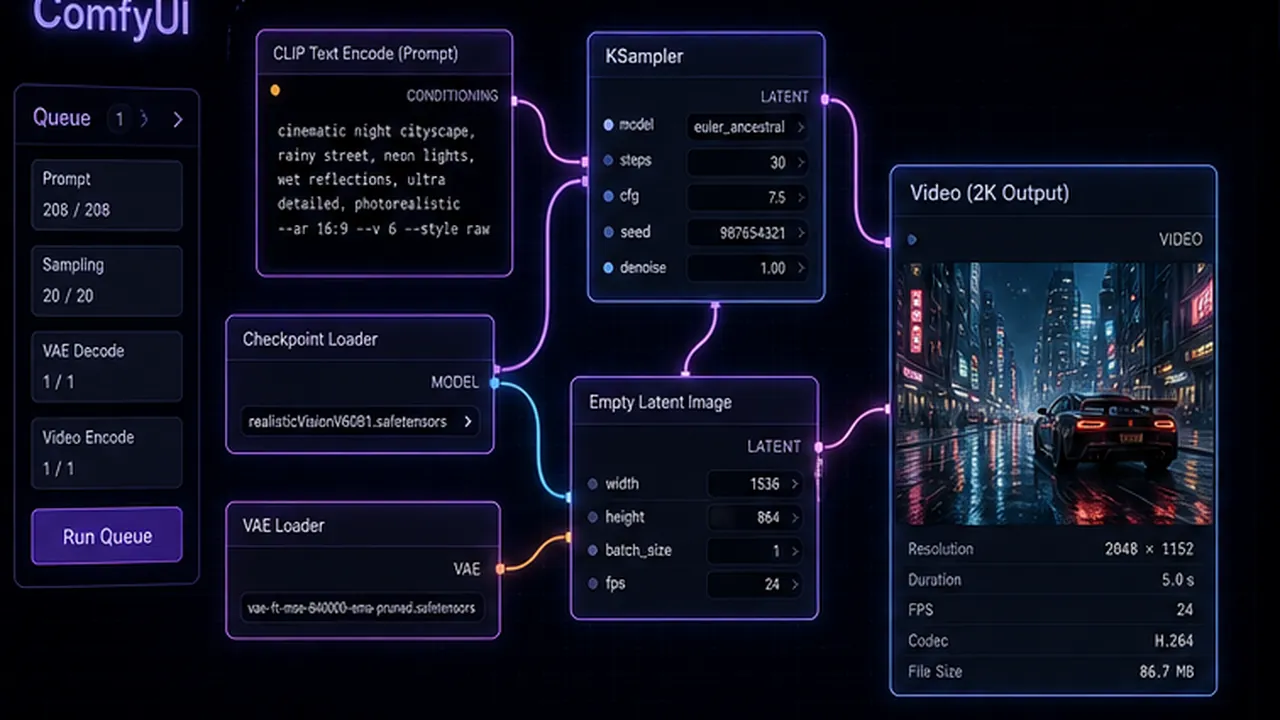
ComfyUI shipped day-zero support for MiniMax H3, an open-weights video generation model capable of producing up to 2K resolution video with native stereo audio. Through weight pruning and quantization the team cut memory requirements by 66%, making it runnable locally on consumer GPUs like the RTX 3060. The model accepts text, image, audio, and video reference inputs — a significant step in making open-weights video generation accessible without a cloud API.
Relevance 7/10Importance 6/10
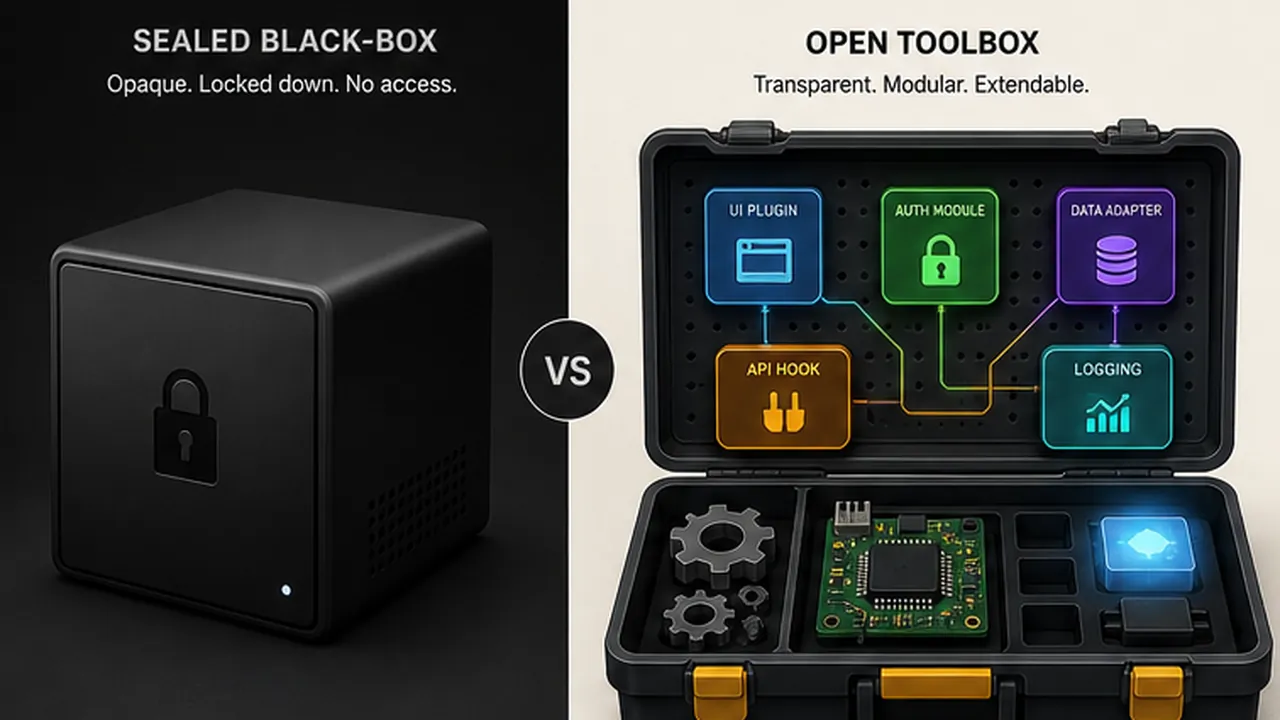
The author argues that AI agents have fundamentally shifted the economics of software customization — agents can now trivially fork and personalize any open-source tool by modifying source code and managing upstream diffs automatically. This makes closed-source developer tools structurally inferior to open alternatives, because what was once impractically expensive individual customization is now nearly frictionless. The cost of forking has collapsed.
Relevance 3/10Importance 6/10
Jane Street open-sourced Bonsai, their internal OCaml framework for building reactive web applications inspired by Elm's architecture. It emphasizes composable state machines, incremental computation, and full-stack OCaml — same language front and back — with comprehensive testing support built in. The framework also extends to terminal UIs, and represents a rare look at production-grade functional UI tooling from one of the most influential OCaml shops in the world.
Relevance 2/10Importance 4/10
A comprehensive RFC 7208 reference covering the eight SPF mechanisms, four qualifier types, two modifiers, and eleven macros used to build SPF DNS TXT records. The guide highlights the ten DNS lookup limit that causes PermError failures — a misconfiguration affecting roughly 4.8% of domains and silently breaking email delivery. Essential reading for any mail admin constructing or auditing SPF records.
Relevance 1/10Importance 3/10
Defector interviews food scientist Bryan Quoc Le about 900,000 liters of fish sauce that has been fermenting, abandoned, in a defunct Canadian factory for over 20 years. The piece explores the chemistry of extreme long-fermentation — amines, aldehydes, and compounds that develop over decades — and speculates on what flavor profile such forbidden fish sauce might have if it were safe to consume. Equal parts science explainer and absurdist food writing, and proof that HN is still a link aggregator run by curious humans.

 HN Briefing AM