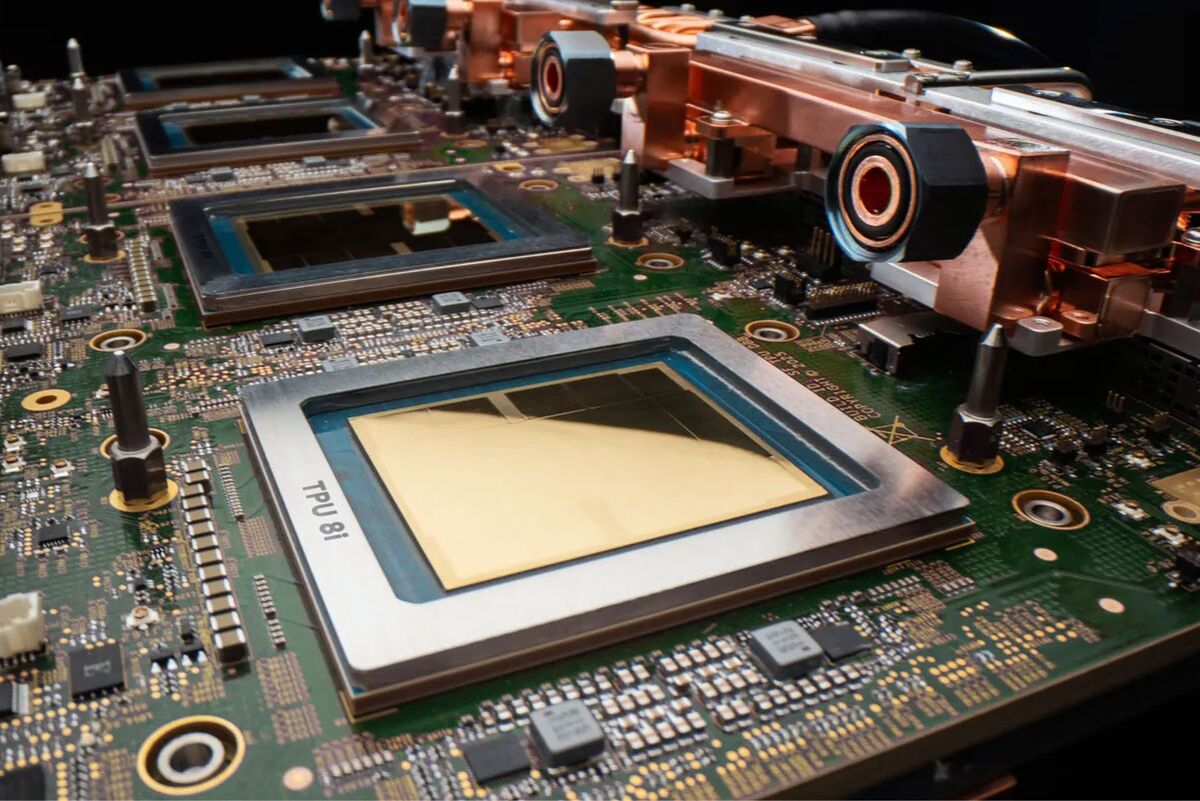
Bloomberg and The Information reported that Alphabet's Google contracted Intel Foundry to manufacture approximately 3 million custom AI accelerators (TPUs) for delivery in 2028, sending Intel shares up 11.2% to $110.27 — its largest single-session gain in over a year. The SOXX semiconductor ETF jumped 5.9% on the news. Wells Fargo raised its Intel price target from $85 to $110; Barclays lifted from $65 to $100, both maintaining neutral-equivalent ratings.
Broadcom cratered 14–15% on June 4–5 after guiding for $16B in Q3 AI chip revenue versus the $17.2B analyst consensus, despite posting record Q2 revenue of $22.2B and an earnings beat. The selloff cascaded across the sector: AMD fell 10.86%, the Philadelphia Semiconductor Index dropped over 5%, and the Nasdaq slid 1.8%. The chip complex has been in recovery mode since, with the Intel-Google deal doing heavy lifting this morning.
ASML shares rose 5.57% on June 8 to €1,733, pushing the company's market cap to a record $674B — the highest ever for a European firm. CEO Christophe Fouquet confirmed direct talks with Elon Musk about supplying EUV lithography equipment for Musk's proposed $119B TeraFab semiconductor fab in Texas (a SpaceX/Tesla/Intel joint venture), calling Musk "very serious." Musk is scheduled to appear at ASML's private annual technology conference this week.
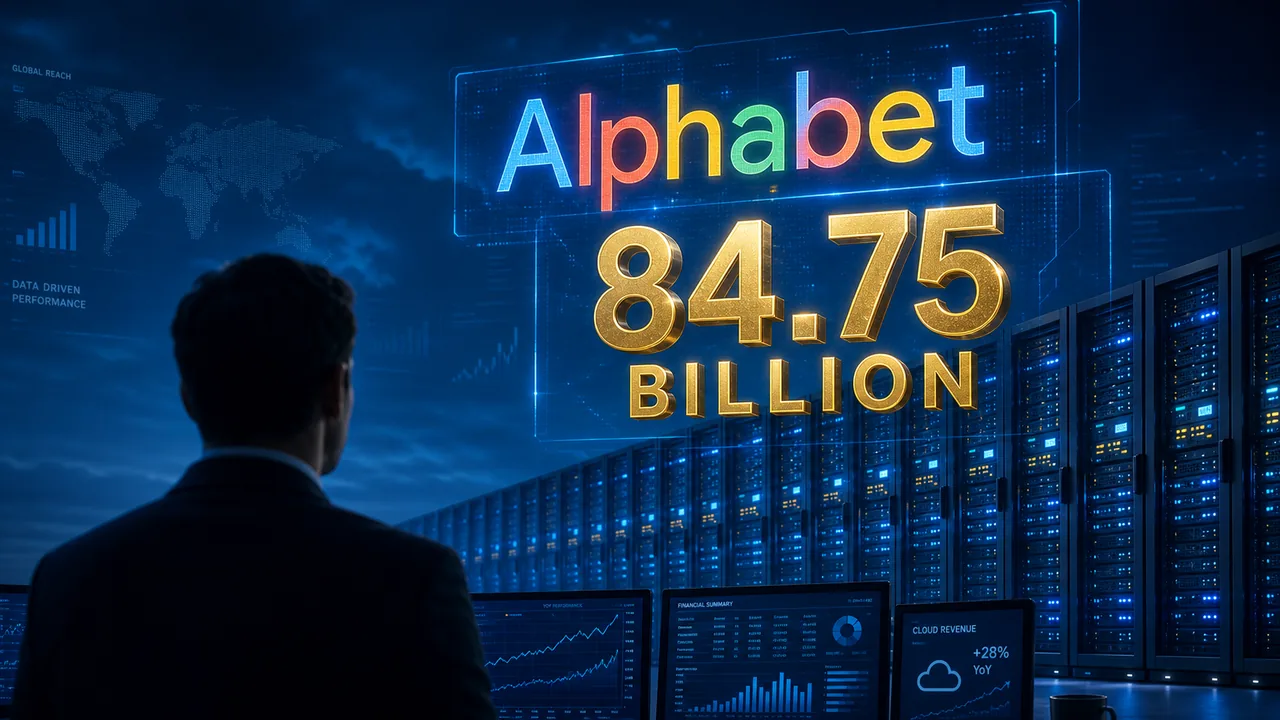
Alphabet priced an $84.75B equity raise — upsized from $80B — to fund its $180–190B 2026 capex plan for AI compute infrastructure. The package includes a $10B private placement from Berkshire Hathaway, an $18B common/Class C offering, $16.75B in depositary shares, and a $40B ATM program. GOOGL is trading around $363, down from recent highs, as the market weighs this new capital-allocation era for hyperscalers.
Oracle slid 9.59% to $213.68 heading into its Q4 fiscal 2026 earnings report tonight (June 10, after close), with Street consensus at $1.96 EPS on $19.1B revenue. The options market is pricing in a ±11.75% swing as investors question whether Oracle's $553B remaining performance obligation backlog — up 325% year over year — is converting to revenue fast enough. TD Cowen reiterated Buy with a $300 price target; ORCL has still gained over 40% in the past three months.
Meta fell roughly 6% after the Financial Times reported the company is weighing a sale of new stock — potentially tens of billions — to fund its AI buildout, with 2026 capex guidance already raised to $125–145B. Meta called the report "pure speculation" and said no banks have been hired. But with Alphabet having just executed history's largest equity raise, the market isn't taking the denial at face value.
IonQ jumped 13.46% after reporting quarterly revenue up 755% year over year to $64.7M and raising full-year 2026 guidance to $260–270M. The company became the first pure-play quantum computing firm in history to cross $100M in annual revenue. Remaining performance obligations surged 554% to $470M, underpinned by the U.S. government's $2.013B CHIPS Act quantum funding package announced in May.
Microsoft unveiled seven proprietary AI models at Build 2026, headlined by MAI-Thinking-1 (a reasoning model with a 256K token context window) and MAI-Code-1, in a clear push to reduce margin-draining dependence on OpenAI and Anthropic. Wall Street consensus stands at 41 Buy ratings with an average price target of $561. MSFT is trading around $415, still down over 13% YTD despite the AI product momentum.
ARM Holdings posted record Q4 FY2026 revenue of $1.49B, up 20% year over year, with management noting that demand for its AGI CPU — its first direct data center chip — is exceeding internal expectations. The stock was caught up in the post-AVGO chip selloff last week but is recovering with the broader semiconductor complex. ARM's data center ambitions represent its most significant pivot from pure licensing toward direct silicon.
AMD fell 10.86% to $466.38 on June 5 as Broadcom's guidance miss triggered forced sector selling, despite AMD's own strong Q1 2026 print — revenue of $10.3B (+38% YoY), EPS of $1.37 versus $1.29 estimated. The stock recovered 4.78% the following session, and analyst price targets have been moving higher since AMD's Q1 beat. The underlying AI chip demand picture remains intact.

 AI Stocks