Advanced Micro Devices surged about 8% after unveiling a multi-year, 6-gigawatt agreement with Meta worth roughly $60 billion over five years, deploying custom Instinct MI450 GPUs and 6th-gen EPYC CPUs starting in the second half of 2026. The win is a direct shot at Nvidia's data-center dominance and helps explain why AMD is up roughly 114% on the year.
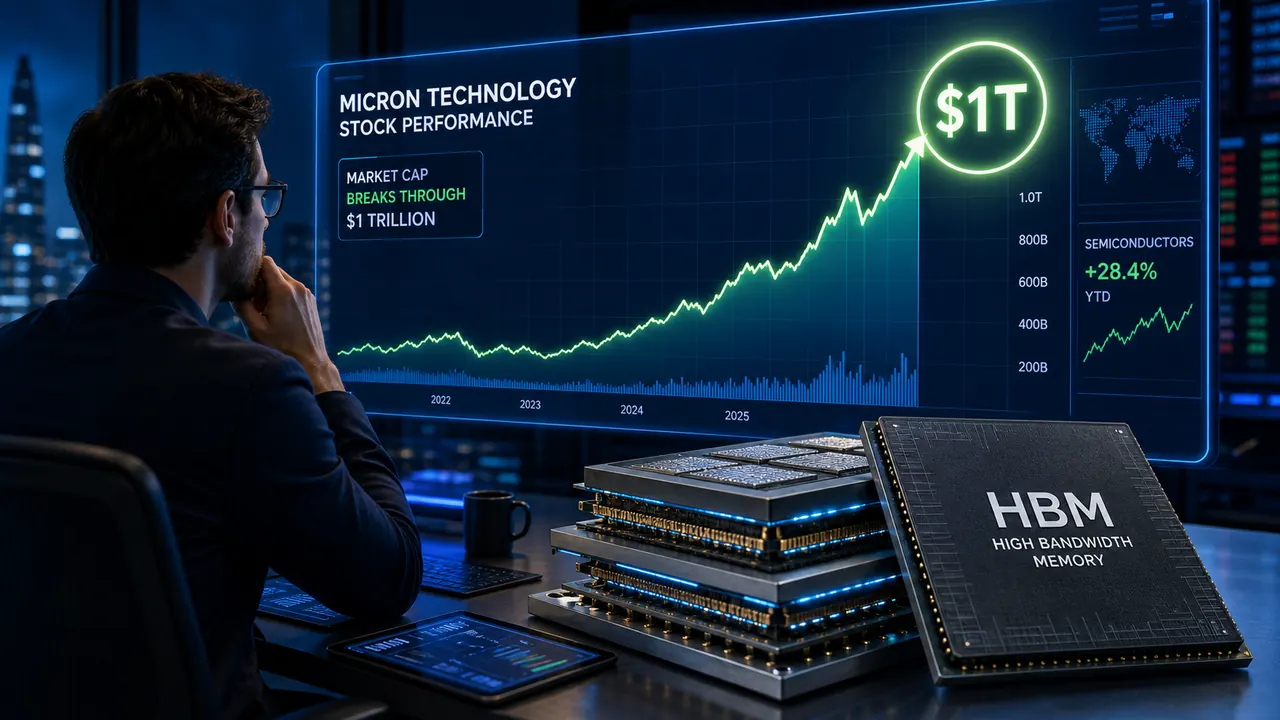
Micron, now around $1,088 and into the trillion-dollar club, drew a price-target war as analysts cited sold-out HBM supply and tight DRAM pricing. TD Cowen lifted its target to $1,500 from $660 and RBC to $1,200 from $525, both staying bullish. Micron guided fiscal Q3 revenue of about $33.5 billion with roughly 81% gross margins, reporting June 24.
Nvidia shares gained about 3.5% on June 15 after announcing plans to raise $25 billion via a high-grade bond offering, with chip names broadly lifted as a U.S.-Iran peace deal cooled oil and boosted futures. Even so, Nvidia is the relative laggard among AI leaders, up only about 18% year-to-date versus the broader semiconductor index.
Marvell Technology jumped more than 25% after Nvidia CEO Jensen Huang called the custom-silicon maker "the next trillion-dollar company" at Computex Taipei 2026. The endorsement supercharged the custom-ASIC trade as hyperscalers race to design their own AI accelerators.
Wall Street's Tuesday calls clustered around Apple, Tesla, Oracle, Palantir and CoreWeave. Cantor Fitzgerald reiterated CoreWeave at overweight, noting shares near 6.2x EV/EBITDA make "risk/reward very attractive" into Q2 results. The session set the tone for AI-adjacent megacaps heading into the back half of June.
Oracle posted record Q4 results with revenue up 21% to $19.2 billion and cloud revenue up 47% to $9.9 billion, driven by 93% growth in cloud infrastructure. Remaining performance obligations hit $523 billion on OpenAI, Meta and Nvidia contracts, and management guided fiscal Q1 2027 total revenue growth of 27% to 29%. Consensus sits at Buy with a roughly $272 target.
Broadcom reported Q2 revenue of $22.19 billion, up 48% year-over-year, with AI semiconductor revenue more than doubling to $10.8 billion on custom accelerators and networking. Despite the beat, shares slid more than 13% last week — its worst stretch since late 2024 — as investors weighed valuation against the AI capex narrative.
OpenAI and Broadcom are pushing a custom 10-gigawatt-class AI chip program, with deployment starting in the second half of 2026, while Anthropic locked in multi-gigawatt next-gen TPU capacity via Broadcom and Google coming online in 2027. The twist: reports say Broadcom is helping finance the very chips these labs need — a sign of how compute-hungry, and capital-intensive, the AI buildout has become.
With OpenAI, Anthropic and SpaceX edging toward public markets, analysts warn an IPO wave could add as much as $4 trillion of new supply and test investor appetite. If buyers can finally own these names directly, the scarcity premium baked into proxies like Nvidia, Broadcom and Tesla could fade. Worth flagging — these names are not yet publicly traded.
Palantir is up roughly 137% year-to-date after Q1 revenue jumped 85% to $1.6 billion, with U.S. commercial growth at 133%. One target sits at $162 with a bull case near $203, but investors are paying close to 67 times trailing sales — a multiple bears note has historically proven hard to sustain.

 AI Stocks