← Kilroy’s Daily Briefings
📡 HN Briefing PM

📡 Hacker News Afternoon Briefing — Tuesday, May 26, 2026 at 3:30 PM

📡 HN Briefing PM5/26/2026🕐 3:30 PMDev pulseAfternoon

Top stories, ranked by relevance.

Story cards stay below the sticky dock while audio, chapters, date, and brief navigation remain accessible.

#1Launch HN: Minicor (YC P26) – Windows Desktop Automations at Scale

Minicor is a fresh YC P26 startup deploying self-healing AI agents that automate legacy Windows desktop applications — think EHRs, ERPs, and other systems with no modern APIs. Their platform uses an MCP that lets Claude navigate virtual machines, build Python-based workflows, and self-correct when UIs change, targeting the 30-plus percent failure rates common in traditional RPA. They're going after healthcare, automotive, logistics, and financial services verticals where enterprises are stuck on ancient desktop software.

#2Dropbox CEO Drew Houston to Step Down

After nearly two decades at the helm, Dropbox co-founder Drew Houston is stepping down as CEO to pursue AI entrepreneurship, telling the world "there's never been a more exciting period to be building things." Ashraf Alkarmi, previously head of product, becomes co-CEO during a transition period before taking the top job solo. Google Chrome VP Michael Torres will also join as chief product officer in July.

#3Spain Blocks Prediction Markets Polymarket, Kalshi Over Lack of Gambling Licence

Spain's Consumer Rights Ministry has temporarily banned Polymarket and Kalshi for operating without a gambling licence, with the suspension expected to last three to four months pending a probe. The regulator argues prediction markets constitute gambling and lack safeguards like identity verification and minor-access controls. This marks the third European enforcement action against prediction markets in 2026, following the Netherlands and Belgium earlier this year.

No image

#4Rosalind: A Genomics Toolkit in Rust Running Whole-Genome Pipelines on a Laptop

Rosalind is a Rust-based genomics engine that achieves whole-genome analysis in under 100 MB of working memory, compared to the 50-100 GB traditional pipelines require. It uses FM-index alignment, streaming variant calling, and block decomposition to hit O(sqrt-t) memory complexity. The project targets resource-constrained environments like hospitals, field labs, and educational settings, with Python bindings and plugin support.

#5I Bypassed Adobe and Microsoft to Build a Git-Tracked Book Production Pipeline

An independent novelist replaced her entire Adobe/Microsoft publishing stack with open-source tools: LibreOffice Writer for editing, a custom Python script to convert ODT to XHTML and LaTeX, and the memoir class with microtype for print-quality PDFs. The whole pipeline is Git-tracked, eliminating proprietary lock-in while producing publication-quality output. It's a love letter to the Standard Ebooks methodology applied to indie publishing.

#6The Ballad of TIGIT

TIGIT was supposed to be the next Keytruda — a blockbuster cancer immunotherapy target that attracted billions in parallel clinical trials from Roche, Merck, GSK, and others. Nearly every major Phase 3 trial failed between 2022 and 2025, burning through roughly 3 billion dollars and enrolling 49,000 patients in what the author calls textbook pharmaceutical herding behavior. The takeaway: biologically plausible targets can still fail in ways no amount of preclinical evidence can predict.

#7What Color Is Your Function? (2015)

This classic 2015 essay by Bob Nystrom uses a brilliant allegory of "red" and "blue" functions to explain how async programming fractures codebases into incompatible halves — you can't call red from blue, the syntax differs, and the division is contagious. The article argues that languages with threads or goroutines like Go and Lua solve this elegantly by eliminating the sync/async distinction entirely. It's resurfacing on HN today, likely fueled by ongoing debates about async runtimes in Rust and JavaScript.

No image

#8A Few Interesting Modern Pixel Fonts

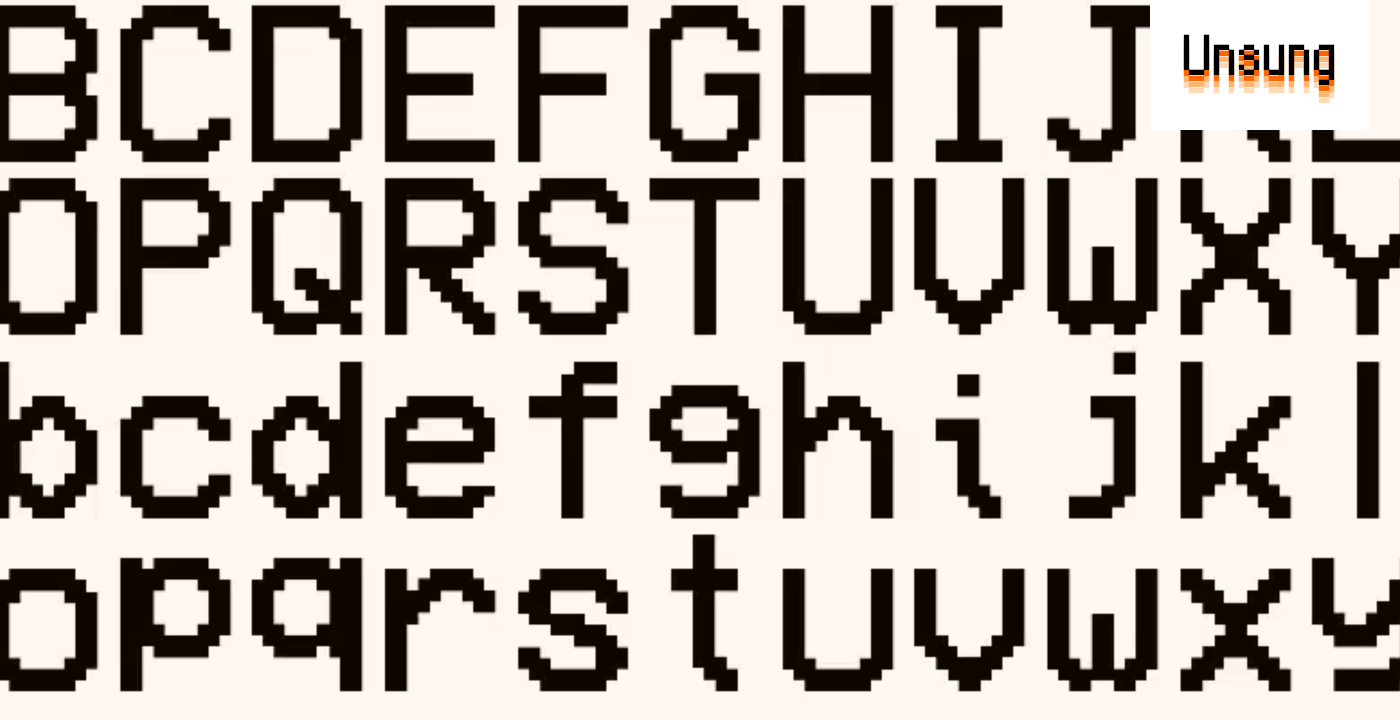
A typographic deep dive into modern pixel fonts that go beyond retro nostalgia, highlighting Analog Mono (fixing VCR font baseline issues), Coral Pixels (a color font with subpixel fringing), and Two Slice (an ultra-minimal 2-pixel typeface). The standout is Vercel's Geist Pixel, which the author argues is a genuine system-level advance because it handles scaling and typographic metrics properly rather than being merely decorative.

#9Chemistry Behind the Garden Grove Chemical Tank

Derek Lowe's chemistry blog on Science.org breaks down the methyl methacrylate tank emergency in Garden Grove, California — explaining how MMA's carbon-carbon double bond makes it prone to free-radical chain polymerization. The reaction is exothermic and self-accelerating: higher temperatures increase both the reaction rate and tank pressure, creating a runaway explosion risk. The incident has since stabilized, but Lowe uses it as a masterclass in applied industrial chemistry.

#10C64 Basic: Game Map Overhead "Camera View"

A retro programming tutorial walking through how to implement an Ultima-style overhead scrolling camera in Commodore 64 BASIC, where the map moves around a centered player rather than the player crossing a static screen. The article covers world-versus-viewport coordinate math, an 11-by-11 visible window system, and edge clamping, then begins optimizing with screen lookup tables to replace expensive multiplication operations.