← Kilroy’s Daily Briefings
🎬 AI Video Intel

🎬 AI Video Intel — Saturday, May 30, 2026 at 9:12 AM

🎬 AI Video Intel5/30/2026🕐 6:45 AMVideo modelsVisual AI

Top stories, ranked by relevance.

Story cards stay below the sticky dock while audio, chapters, date, and brief navigation remain accessible.

#1Google Drops Veo 3.1 and Veo 3.1 Lite — Same Day

Two Veo releases hit simultaneously on May 29. Veo 3.1 brings native portrait mode, 1080p/4K upscaling, and stronger character consistency across scene changes — live now in Gemini, YouTube Shorts, Flow, and Vertex AI. Veo 3.1 Lite is the real API story: under 50% the cost of Veo 3.1 Fast at identical speed, available immediately on the Gemini API and AI Studio.

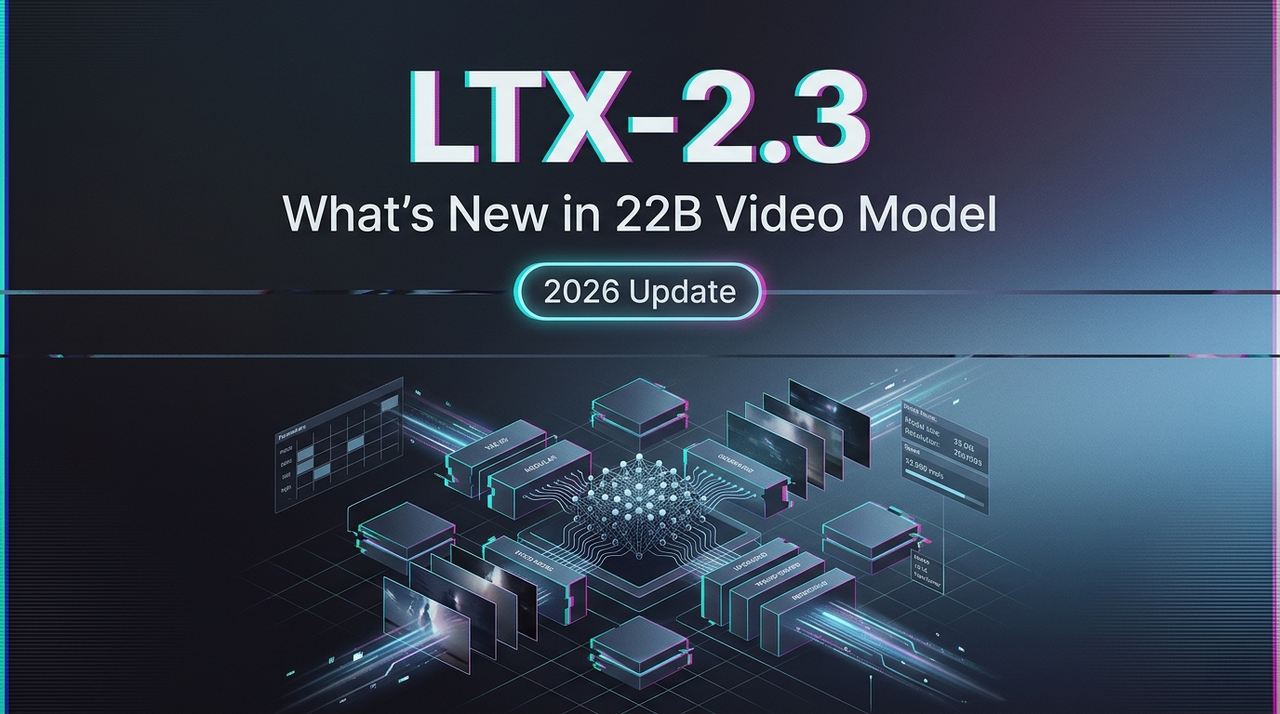
#2LTX-2.3 Launches Node Pipelines — Local 4K in 20 Seconds

LTX Studio's new Flows feature brings a Comfy-style node builder into the platform: prompt, image, video, and upscaling nodes wired together and run in one click. Paired with LTX-2.3 Fast mode on a consumer GPU via LTX Desktop, that pipeline produces 4K at 50fps in roughly 20 seconds with no API fees. ComfyUI v0.22.0 (May 20) ships native LTX-2.3 VRAM optimization and IC-LoRA downscaling support to bring these gains into existing local setups.

#3Hailuo 2.3 Rolls Out Globally — Better Quality, Same Price

MiniMax pushed Hailuo 2.3 to its website, mobile app, and open platform API. Improvements land on three fronts: more fluid body movement for complex actions, significantly stronger anime, illustration, and ink-wash style rendering, and sharper facial micro-expressions in live-action footage. Priced identically to Hailuo 2.2 — MiniMax is calling it a new global benchmark for cost-effectiveness, and the animation style delta is hard to argue with.

#4ComfyUI v0.22.0 Ships Stable Audio 3.0 and LTX Optimization

The May 20 ComfyUI release adds Stable Audio 3.0 integration, MoGe geometry processing models, HiDream-O1 with area conditioning, LTX-2.3 VRAM optimization, and LTXV IC-LoRA downscaling with optional attention_mask input. The community Image Workflows collection reached V35 on May 12. The main repo is sitting at approximately 114,000 GitHub stars.

#5Kling 3.5 Goes Browser-Based — 1080p/60fps, No Install

Kuaishou's Kling 3.5 now runs entirely in-browser with no app required, generating native 1080p at 60fps with real-time cloth simulation and fluid dynamics in the physics engine. Two Kling mobile apps went viral on the App Store this month. Kuaishou is reportedly planning to spin Kling AI out at a $20 billion valuation, and the model is already co-producing the animated feature Minibots with UK studio Evolutionary Films.

No image

#6TikTok AI Label Enforcement Goes Automatic — C2PA Live

TikTok is now auto-detecting AI-generated content using C2PA Content Credentials at the metadata level, with no reliance on creator self-disclosure. Realistic synthetic media of private individuals is banned outright regardless of labeling. YouTube (January 2026) and Meta/Instagram (February 2026) both require disclosure but keep AI content fully eligible for monetization at standard thresholds. The key asymmetry: TikTok's enforcement is now automated and stricter than both.

#7Wan 2.7 Is Fully Live on Together AI — Open Weights, 60fps

Alibaba's Wan 2.7 is now the established open-source baseline: flow-matching architecture, 40% improvement in physics-consistent motion over 2.6, native 60fps output, 30% less temporal flickering, nine-grid multi-angle input for multi-shot composition, and native audio generation. Full suite covers text-to-video, image-to-video, reference-to-video, and instruction-based editing. Open weights mean self-hosting and fine-tuning are on the table.

#9Grok Imagine 1.0 Tops DesignArena — 1.245 Billion Videos Per Month

xAI's Grok Imagine 1.0 is generating 1.245 billion videos monthly and holds the top Elo score (1,329) on the DesignArena image-to-video leaderboard. It produces 10-second clips at 720p with native audio generated alongside video rather than applied in post. Available via the xAI API and directly on the X/Grok platform.