Anthropic published a detailed account of how AI systems are now writing the majority of their own production code — over 80% of merged commits as of May 2026, authored by Claude. Engineers are reportedly producing 8x more code per quarter than in 2024, and Anthropic is explicitly tracking a progression toward systems that could eventually build and train models themselves. The piece is unusually candid about the risks, noting this transition "could come sooner than most institutions are prepared for."
Anthropic released a reference implementation for autonomous vulnerability discovery and remediation using Claude, complete with a full recon-to-patch pipeline targeting C/C++ memory vulnerabilities. The framework runs in Docker and gVisor sandboxes, uses ASAN to verify crashes, and exposes six Claude Code skills — from threat modeling to patch generation. It is designed as a working blueprint, not just a demo.
Huawei's CSL team released KVarN, a drop-in KV-cache quantization backend for vLLM that compresses key-value caches down to 4-bit keys and 2-bit values, yielding 3-5x more cache capacity and up to 1.3x throughput over FP16 baselines. Activation requires a single flag at startup — no model retraining or calibration needed. It uses Hadamard rotation and iterative variance normalization to maintain accuracy.
The most-upvoted story on HN today is a creative parody of Terry Bisson's 1990 sci-fi short "They're Made Out of Meat," reimagined for the LLM era — two characters marvel that AI systems reason via "eighty layers of floating-point numbers getting multiplied together." The piece raises genuine questions about whether matrix multiplication could give rise to something like consciousness, and ends on a persistent-memory note that sharpens the point. 1,358 points and 592 comments confirm the community felt it.
Cloudflare is acquiring VoidZero, the company that maintains Vite, Vitest, Rolldown, and Oxc — the front-end build infrastructure that millions of JavaScript developers depend on daily. Cloudflare is pledging to keep everything open-source and vendor-agnostic, and is putting $1M into a Vite ecosystem fund administered by the core team. It is a significant consolidation move in the JS tooling landscape.
A developer built a fully offline, browser-based FFmpeg editor using WebAssembly — 30-plus video operations, no file uploads, no server required. After the initial 31 MB WASM binary is cached, the app runs completely offline as a PWA with processing handled in a Web Worker. It is a clean demonstration of how far browser-native compute has come.
A tech-savvy parent makes the case for fighting algorithmic capture with intentional anachronism — CDs, DVDs, landlines, and offline family computers as a counterweight to engagement-optimized feeds and surveillance capitalism. It is less a rejection of technology than a deliberate curation of it, and it landed well with a community that remembers what pre-attention-economy computing felt like.
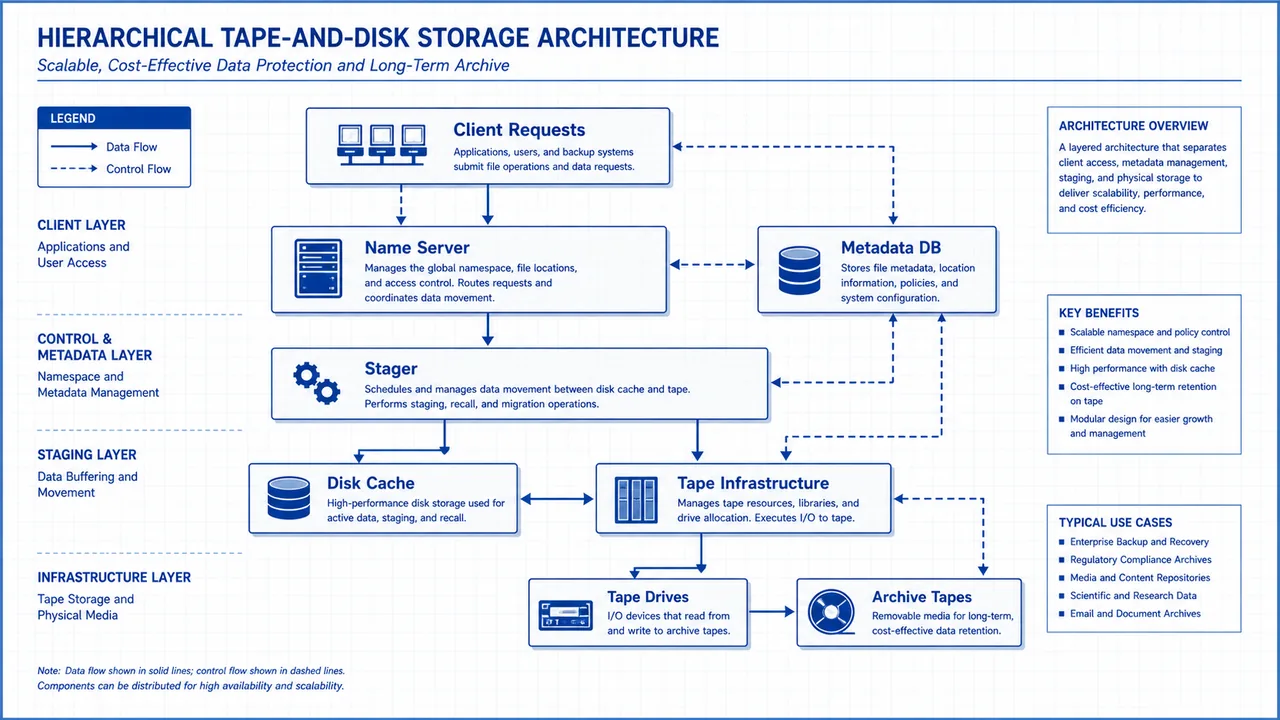
CERN surfaced documentation on CASTOR, its hierarchical storage management system that ran from 2005 to 2022 and managed roughly 100 petabytes of physics data at peak. The five-module architecture covered staging, naming, tape, client, and resource management — and it has since been succeeded by CTA, CERN Tape Archive. A solid piece of large-scale systems engineering history.
A hardware hacker documents wiring a JLink probe to a Pinecil soldering iron's breakout board for JTAG debug access on its Bouffalo Lab BL706 microcontroller, with full JLinkExe and gdb configuration walkthrough. The hook is that Zephyr RTOS recently added upstream BL706 support, opening real firmware development on a device many people already own. Niche but satisfying embedded reading.
The classic Ian's Secure Shoelace Knot — also known as the Double Slip Knot — resurfaced on HN with 426 upvotes and 161 comments. It requires roughly twice the force to untie as a standard knot, making it a favorite among athletes and hikers with slippery round laces. HN gonna HN.

 HN Briefing PM