Relevance 10/10Importance 10/10
Anthropic released two new frontier models today: Claude Fable 5 (broadly available, $10/M input, $50/M output) and Claude Mythos 5 (restricted to authorized cybersecurity and biology researchers via Project Glasswing). Both achieve state-of-the-art benchmarks in software engineering, scientific research, and autonomous long-horizon tasks — Stripe reportedly compressed months of codebase migration into days using it. Instead of hard-refusing flagged requests, Fable 5 silently falls back to Claude Opus 4.8 in under 5% of sessions.
Relevance 10/10Importance 9/10
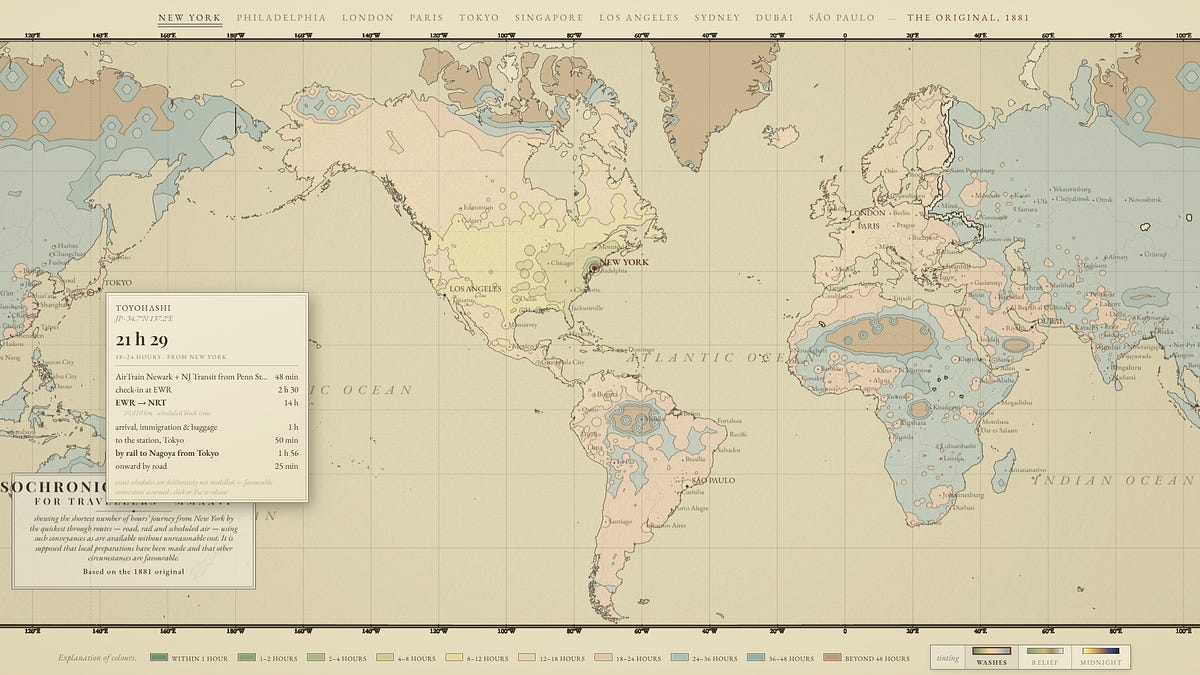
Ethan Mollick got early access to Claude 5 Fable and called it the best model he has used "by a considerable margin." On one mapping project it autonomously spawned sub-agents that researched 2,200+ flights and global train schedules while simultaneously coding and testing — entirely without steering. His framing: users are no longer drivers but patrons who commission outcomes, with much less visibility into intermediate decisions.
Relevance 9/10Importance 9/10
Apple confirmed the redesigned Siri AI will not ship in EU iPhones or iPads when iOS 27 launches this autumn, cutting off roughly 450 million users. Apple had proposed an 18-month Digital Markets Act exemption — including a sandboxed "Trusted System Agent" framework — but the European Commission rejected every version. Both sides are publicly blaming each other; no resolution is in sight.
Relevance 9/10Importance 7/10
Techdirt pushes back on executives mandating AI adoption or cutting headcount based on demo-quality impressions, with Box CEO Aaron Levie coining "AI psychosis" to describe the gap between seeing a polished prototype and understanding what production shipping actually requires. The piece argues that companies attributing layoffs to AI productivity gains are usually rationalizing prior overhiring. Token leaderboards measuring raw AI usage volume are singled out as producing waste rather than value.
Relevance 8/10Importance 6/10
KANs replace fixed neuron activations with learnable spline functions that map almost perfectly onto FPGA lookup tables, enabling nanosecond-latency inference. The approach achieves forward and backward passes 3-4 orders of magnitude faster than GPU-based alternatives, with an open-source co-design framework that compiles KAN models to FPGA bitstreams in seconds. Target applications include quantum computing control loops and nuclear fusion plasma control, where conventional accelerator latency is simply too slow.
Relevance 6/10Importance 7/10
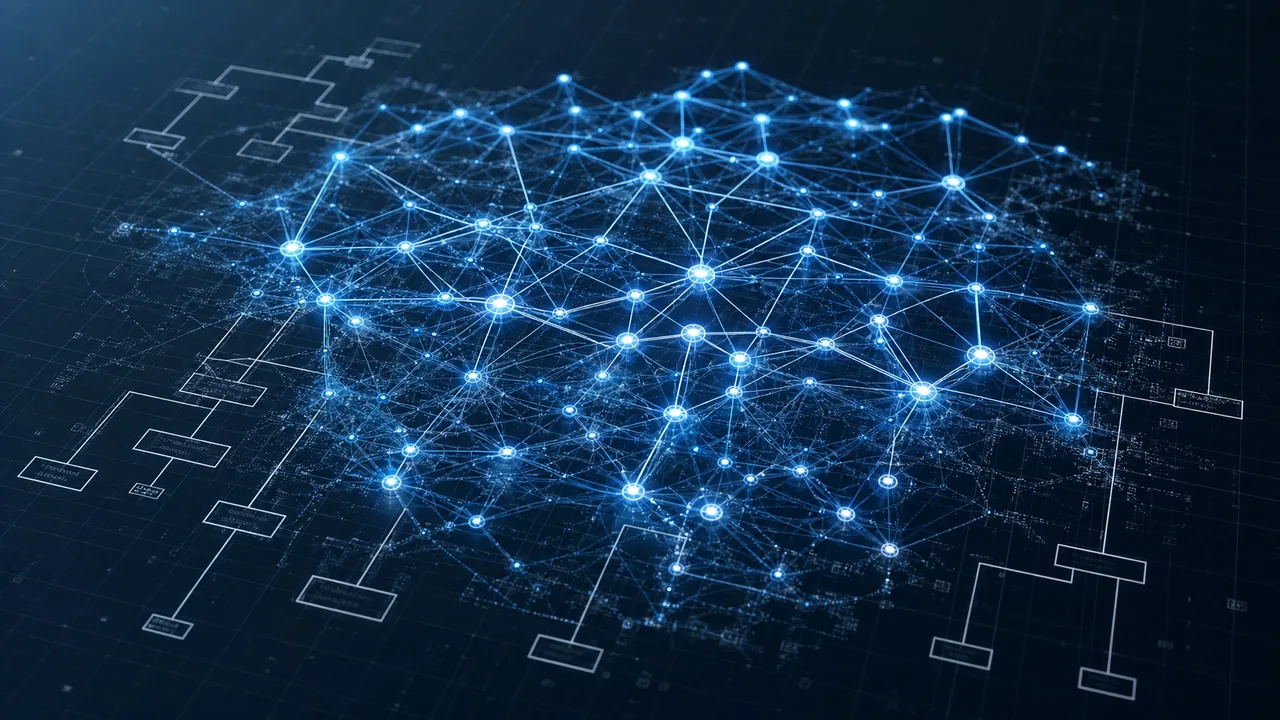
James Hamilton details Amazon's RNG (Resilient Network Graphs) architecture, a flat random-graph topology that replaced traditional fat-tree datacenter designs starting in 2024. The numbers are stark: 69% fewer routers, 33% higher throughput, 40% less power, 27% lower operating costs. RNG became Amazon's default new datacenter design in early 2026, with the key hardware trick being passive optical ShuffleBox devices that enable quasi-random physical cabling at scale.
Relevance 4/10Importance 6/10
A security research PoC on GitHub demonstrates embedding DLL payloads inside JPEG EXIF metadata, then extracting them via Chrome's browser cache using PowerShell — bypassing the direct network requests that endpoint detection monitors. The toolkit is end-to-end: Python embedder, PowerShell cache extractor, obfuscated ClickFix command builder, and a phishing page template. It's a fork of MalwareTech's original with additional delivery tooling added.
Relevance 3/10Importance 4/10
Laurence Tratt makes the case for test-case reduction — automatically shrinking a failing input to the smallest version that still triggers the bug — as a severely underused technique, typically achieving 95-99% input size reduction. The key requirement is writing a fast "interestingness test" that exits 0 when the bug is still present, and the approach handles nondeterministic bugs by running candidates multiple times. Tratt recommends Shrink Ray for its parallel execution and multiple reduction strategies.
Relevance 2/10Importance 5/10
Alpine 3.24.0 dropped today with major package bumps: LLVM 22, Rust 1.96, Go 1.26, GNOME 50, KDE Plasma 6.6, Qt 6.11, nginx 1.30, and GRUB 2.14. The COSMIC 1 desktop makes its debut in the community repo, while GTK 2, Qt5, and libsoup 2 are removed entirely. Upgraders should note that Python setuptools 82 dropped pkg_resources and GRUB users must reinstall the bootloader to disk.
Relevance 1/10Importance 5/10
Astronomers confirmed SN 2023vbw as a pair-instability supernova, a type of explosion so violent it leaves no remnant at all — no neutron star, no black hole, nothing. The progenitor was an estimated 170-350 solar mass blue supergiant, located 1.3 billion light-years away in a metal-poor dwarf galaxy, detected by the Zwicky Transient Facility in October 2023. Future surveys like Vera Rubin and Nancy Grace Roman are expected to find tens to hundreds more such events.

 HN Briefing PM