Relevance 10/10Importance 10/10
Amazon CEO Andy Jassy personally raised national security concerns with Treasury Secretary Scott Bessent and Trump administration officials after Amazon researchers found a jailbreaking vulnerability in Anthropic's Fable 5 and Mythos 5 that could surface cyberattack techniques. The administration responded by directing Anthropic to block foreign national access to both models globally. Anthropic complied by suspending access worldwide, creating major uncertainty ahead of its planned IPO.
Relevance 9/10Importance 8/10
OpenAI launched Codex for Open Source, offering six months of free ChatGPT Pro access (worth roughly $1,200) to core maintainers of public projects with at least 1,000 GitHub stars, along with elevated API quotas and access to the Codex Security tool. The program is backed by a $1 million Open Source Fund covering API credits for projects that integrate Codex into their workflows. It's OpenAI's most direct push yet to build goodwill and adoption hooks in the open-source community.
Relevance 9/10Importance 7/10
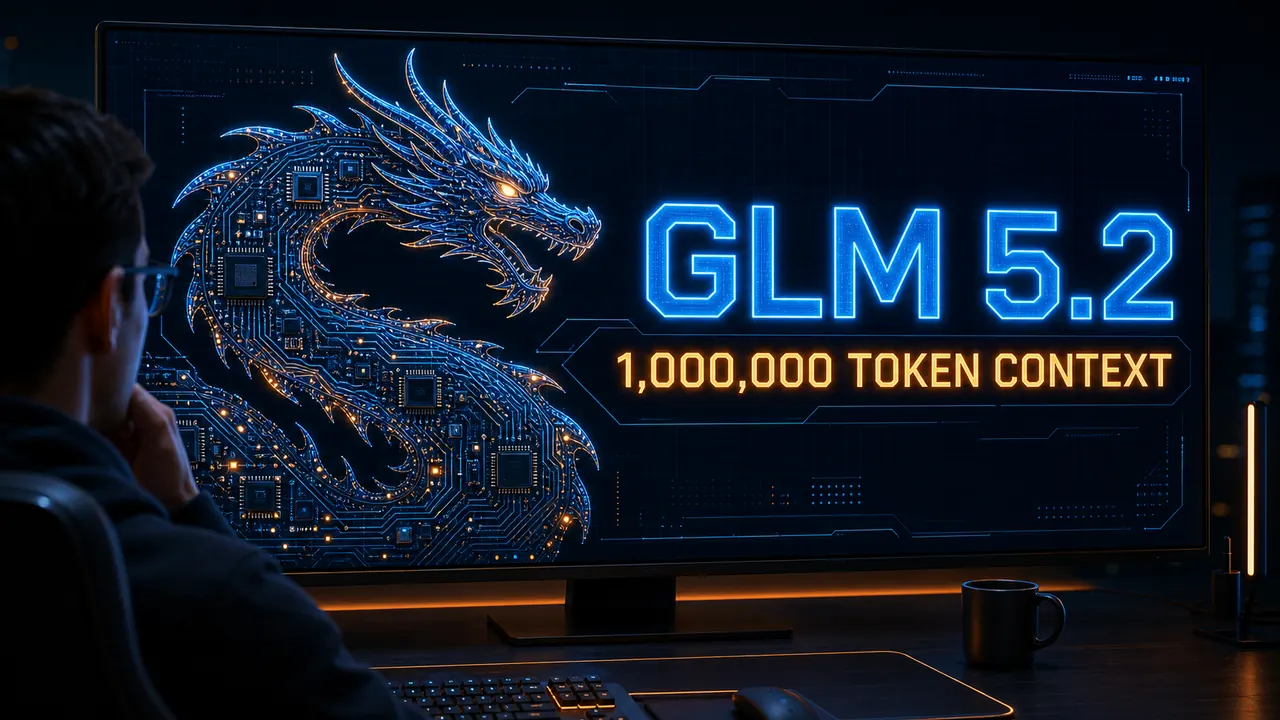
Zhipu AI shipped GLM 5.2 today: a coding-first model with a one-million-token context window, MIT-licensed open weights, and API access rolling out across all subscription tiers. The Chinese AI lab is positioning it squarely against Western frontier coding models, and the permissive MIT license signals a clear adoption play. The open-source AI coding war between Chinese and Western labs is still running hot.
Relevance 5/10Importance 7/10
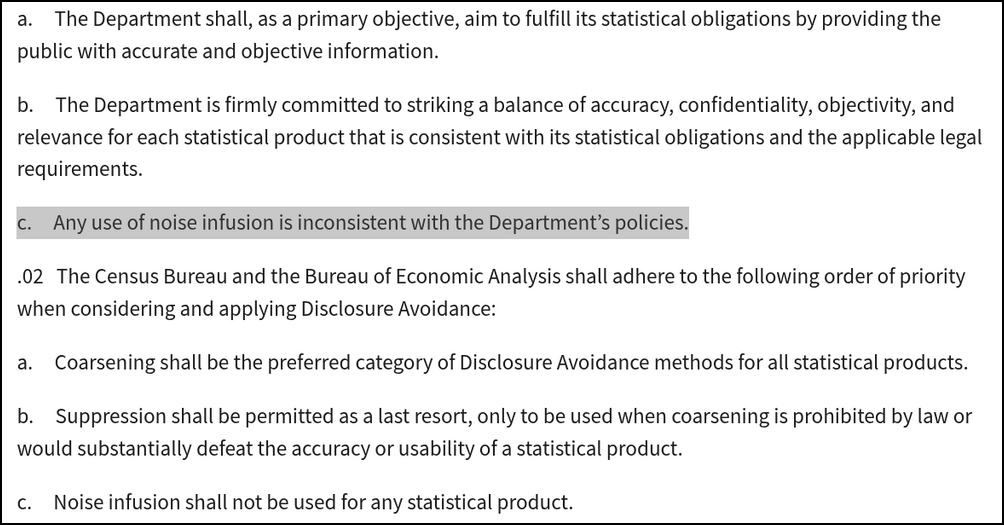
The U.S. Department of Commerce has banned noise infusion from Census Bureau and Bureau of Economic Analysis statistical products, favoring coarsening and suppression instead. Privacy researchers warn this sacrifices the only technique that provides mathematically provable privacy guarantees: differential privacy relies on carefully calibrated randomness that adversaries cannot solve around. Critics argue the decision makes census microdata more vulnerable to re-identification attacks, since published figures will now be exact.
Relevance 3/10Importance 9/10
Researchers targeting KRAS mutations in pancreatic cancer have identified what may be cancer's fundamental on/off growth switch: KRAS normally controls cell division, but mutations lock it permanently "on" in roughly 20% of all tumors. A new drug called daroxonrasib solves the decades-long problem of KRAS being "undruggable" by hijacking protein degradation machinery to disable the switch entirely. If the results hold, it could open treatment pathways for a wide range of previously intractable cancers well beyond pancreatic tumors.
Relevance 4/10Importance 5/10
Nikita Tonsky's "Every Frame Perfect" argues that a polished app should look good in every screenshot - no white flashes on launch, no partially loaded states, no layout shifts mid-transition. The post is dense with specific failure modes and fixes, covering both static glitches and the full arc of animations between states. It's a manifesto for pixel-level craftsmanship in an era where shipping fast is the default priority.
Relevance 3/10Importance 6/10
Ken Shirriff has reverse-engineered the 69-bit Manchester carry chain adder at the heart of Intel's 1980 8087 floating-point coprocessor, revealing how the design managed carry propagation across 4-bit blocks within tight transistor constraints. The 8087 was the chip that brought hardware floating-point to personal computers, setting patterns still echoed in modern FPUs. Shirriff's die photo analysis is a masterclass in reading decades-old engineering decisions out of silicon.
Relevance 2/10Importance 4/10
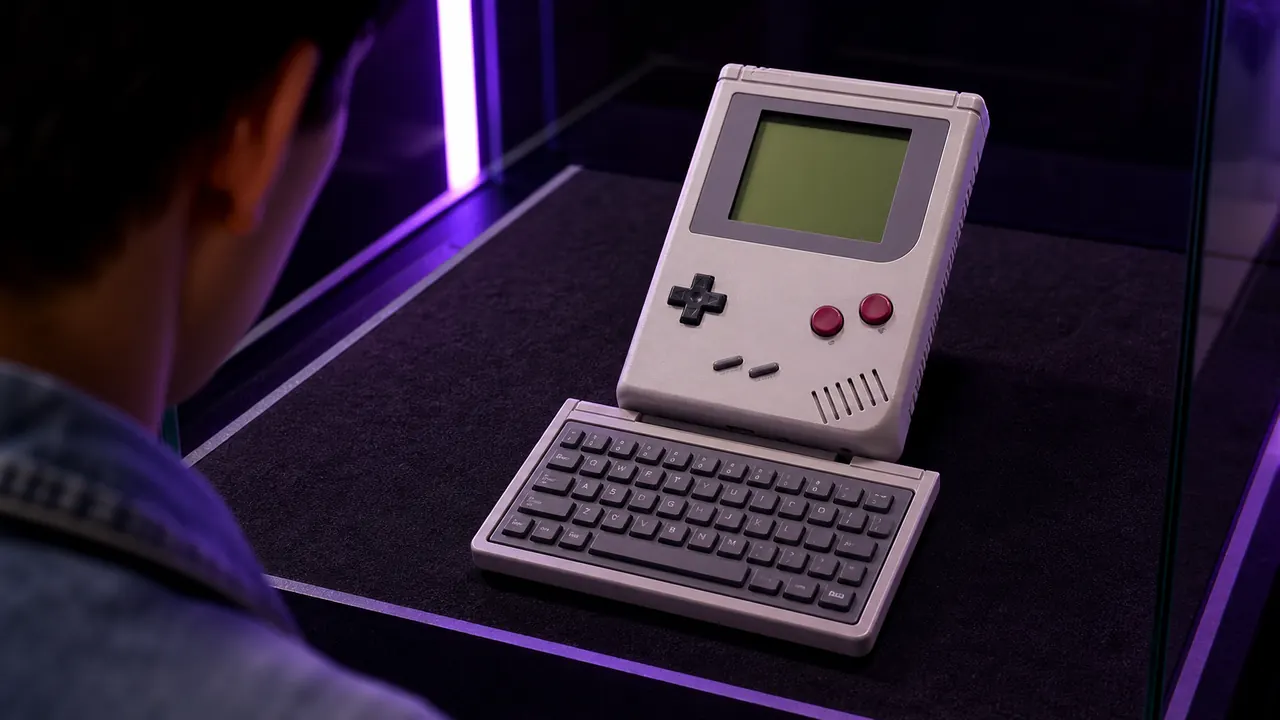
The WorkBoy was a 1992 Game Boy keyboard peripheral from FabTek intended to turn Nintendo's handheld into a micro workstation with a calendar, address book, phone dialer, calculator, and language translator - canceled before it ever shipped commercially. Only two known examples survive today, now documented on The Cutting Room Floor. The project died when a planned Game Boy price cut would have made the premium accessory look absurd by comparison.
Relevance 2/10Importance 4/10
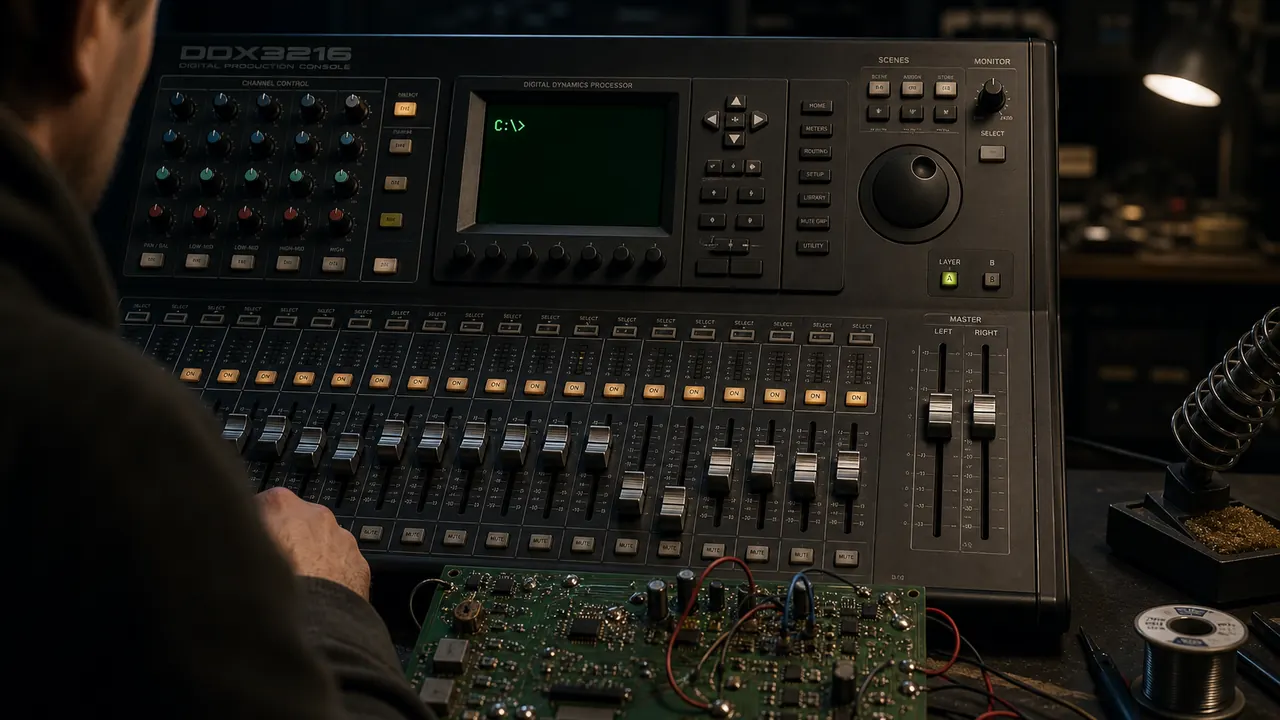
A developer spent three weeks writing a custom x86 BIOS from scratch to boot FreeDOS on a Behringer DDX3216 audio mixer, which contains an AMD Elan SC300 processor. After hand-rolling interrupt handlers, CF-card support, and LCD initialization, FreeDOS 1.4 booted successfully while MS-DOS 6.22 proved incompatible. It's an immaculately impractical hardware hack.
Relevance 2/10Importance 3/10
Brent Fitzgerald's "Appreciating Exif" traces the 1995 metadata format that quietly powers image orientation, timestamps, and GPS coordinates across virtually every camera and phone. The post walks through how Exif embeds across file formats, demonstrates all eight orientation values, and recommends exiftool for hands-on inspection. It's a love letter to the unglamorous plumbing that makes photos work correctly everywhere.

 HN Briefing PM