Relevance 9/10Importance 7/10
Developer Kyle Howells documents a complete offline AI coding stack after cloud outages left him without tools: llama.cpp with Metal acceleration, Gemma 4 26B, and Multi-Token Prediction speculative decoding hitting 72.2 tokens per second — a 24% improvement over baseline. He benchmarks competing setups (Qwen 3.6 35B is smarter but slower) and walks through full Pi terminal agent integration with config examples. A practical, battle-tested guide for cutting the API cord entirely.
Relevance 7/10Importance 8/10
Socket's threat research team uncovered 23 new malicious PyPI packages expanding the "Mini Shai-Hulud" supply chain campaign to over 471 total compromised packages across PyPI and npm. Payloads named Hades and Miasma are heavily obfuscated JavaScript stealers targeting GitHub tokens, SSH keys, and cloud credentials — with packages specifically disguised as bioinformatics tools and MCP ecosystem bait. Bizarrely, the authors embedded nuclear and biological weapons text directly inside the spyware code.
Relevance 9/10Importance 6/10
BitBoard, a Y Combinator P25 startup, lets teams build persistent analytics dashboards using Claude, ChatGPT, or Cursor as the construction tool. The core insight: AI chat analysis is disposable — BitBoard stores connections, queries, and generated code so results are traceable, repeatable, and shareable with the team via browser or Slack. It targets the gap between one-off AI analysis and durable business intelligence infrastructure.
Relevance 7/10Importance 6/10
Flask author Miguel Grinberg has had enough of LLM-generated pull requests flooding his open source projects and is now requiring contributors to open a discussion issue before submitting any PR. His framing is pointed: he refuses to become a "reverse centaur" — a human puppeteered by a machine — and states he'll close unannounced PRs without review if the contributor can only work via LLM. It's a model that other high-profile maintainers may adopt as AI-generated contributions become the norm.
Relevance 8/10Importance 5/10
One developer found that simply instructing an AI agent to style an interface like a Qt application nearly eliminates the generic "bubble and gradient" slop aesthetic common in vibe-coded UIs. The Qt constraint gives the model a specific, utilitarian visual language to target rather than defaulting to material design clichés. Simple prompt tweak, real results.
Relevance 8/10Importance 4/10
Someone used Claude Fable 5 as the primary developer to build a fully functional browser-based MMORPG complete with nine playable classes, real-time multiplayer, dungeon exploration, combo point mechanics, floating combat text, and a minimap. Both online and offline modes are available, and the project is open-source on GitHub. It's a striking demonstration of how far AI-assisted game development has come in a single model generation.
Relevance 5/10Importance 6/10
Palantir's attempt to suppress reporting by a Swiss investigative magazine has failed in court, marking a notable press-freedom win against the surveillance data analytics company. The case highlights the ongoing tension between powerful tech firms and independent journalism, particularly in Europe where legal costs alone can function as a chilling effect on investigative reporting.
Relevance 2/10Importance 8/10
Researchers at the Innovative Genomics Institute have developed a CRISPR-based technique that selectively shreds cancer cells — including cancers previously considered untreatable with existing drugs — while leaving healthy tissue unharmed. The method targets DNA sequences unique to malignant cells, offering a potential path for cancers that have resisted every conventional therapeutic approach. With 537 upvotes topping HN this afternoon, it's the highest-scoring story of the day by a wide margin.
Relevance 3/10Importance 5/10
Apple's security team rewrote the TrueType font hinting interpreter — a historically dangerous attack surface that parses untrusted data — from C to Swift, and landed a 13% performance improvement alongside the memory safety gains. The team validated correctness with 99.7% unit test coverage and fuzz-tested 27 million glyphs across 4,200 PDF documents. It's a compelling engineering case study for memory-safe language rewrites delivering on both safety and speed.
Relevance 1/10Importance 3/10
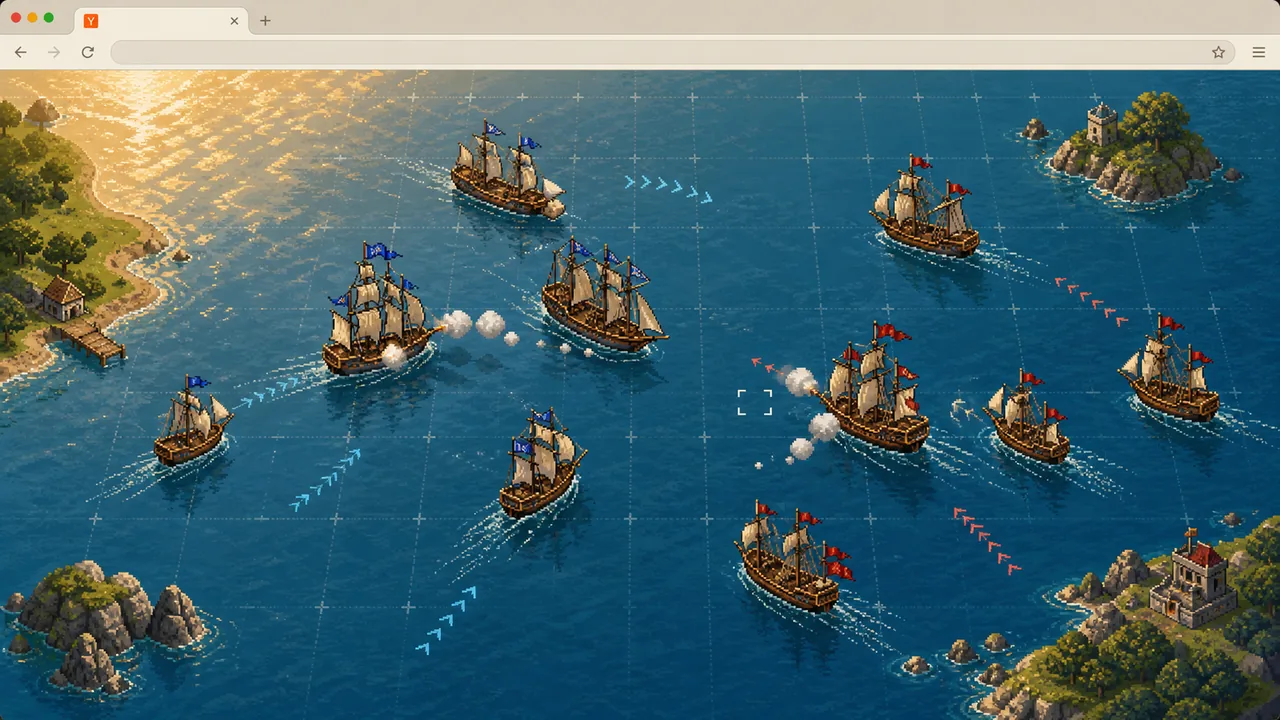
A fan-built browser game brings Sid Meier's classic naval combat experience to the modern web with no framework dependencies and no install required. It earned 129 upvotes and a warm comment thread full of nostalgia, proving that a well-crafted solo game project can still cut through an AI-dominated HN front page.

 HN Briefing PM