← Kilroy’s Daily Briefings
📡 HN Briefing AM

📡 Hacker News Briefing — Thursday, May 28, 2026 at 9:00 AM

📡 HN Briefing AM5/28/2026🕐 9:00 AMDev pulseMorning

Top stories, ranked by relevance.

Story cards stay below the sticky dock while audio, chapters, date, and brief navigation remain accessible.

#1I Think Anthropic and OpenAI Have Found Product-Market Fit

Simon Willison argues that both Anthropic and OpenAI have cracked product-market fit through enterprise coding agents like Claude Code and Codex, which burn vastly more tokens than consumer products. His evidence is compelling: both companies shifted to API-rate enterprise pricing in April 2026, enterprise hiring is surging, Anthropic's rumored Q2 revenue hit $10.9 billion, and major customers like Uber are blowing through their full-year AI budgets just months into 2026.

No image
#2Five Frontier LLMs Disagree on 67% of 1k Real-World Fact-Check Claims

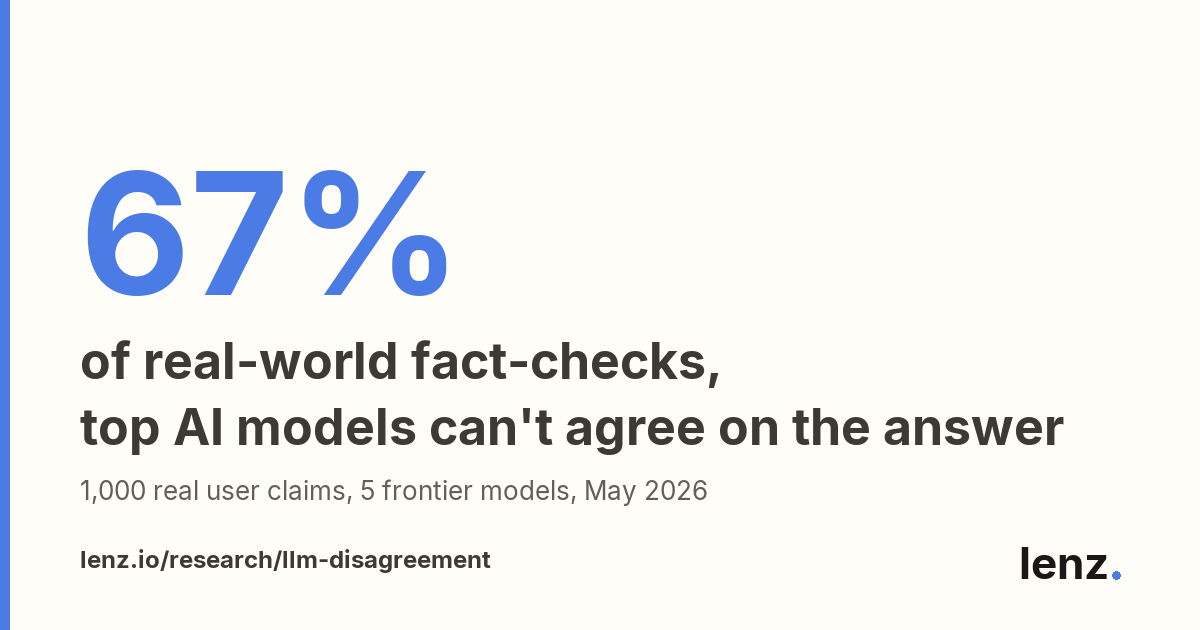
Researchers tested GPT-5.4, Claude Opus 4.7, Gemini 3 Pro, and others on 1,000 real user-submitted claims using a four-bucket verdict rubric, and found the models disagreed on two-thirds of them. The inter-rater reliability score (Krippendorff's α) was a modest 0.639, with 34% showing substantive disagreement spanning two or more verdict buckets. The takeaway: frontier LLMs still lack consistent factual judgment, and the disagreement reflects genuine inference differences, not just noise.

#3YouTube to Automatically Label AI-Generated Videos

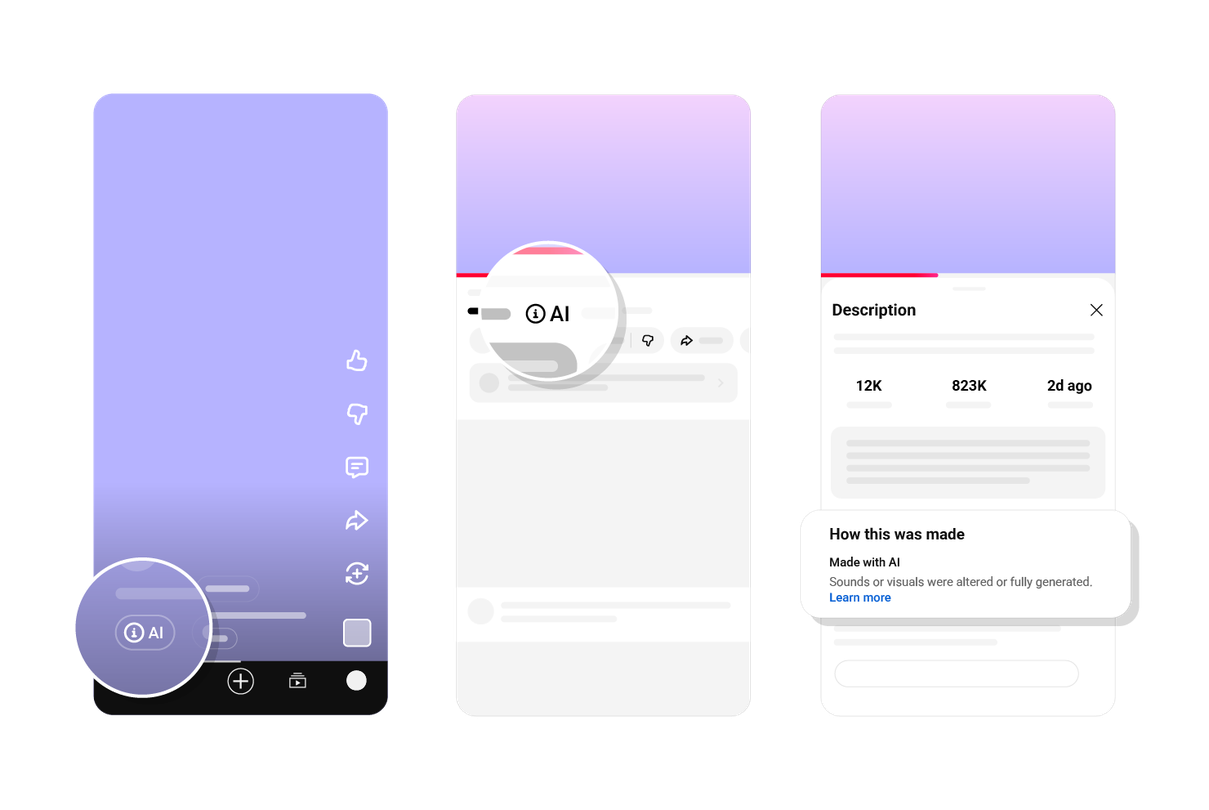
YouTube is rolling out two major transparency changes for AI content. Disclosure labels for photorealistic or meaningfully altered AI-generated content will now appear directly beneath video players and as overlays on Shorts. The platform is also introducing automatic detection that flags AI content even when creators don't disclose it — though creators can dispute incorrect flags, and labels won't affect monetization or recommendations.

#4A Eureka Machine That Thinks Like Nature and Explores What AI Cannot

Researchers at IISc have built a neuromorphic computer combining quantum-tunneling physics with brain-inspired architecture to solve complex combinatorial problems. Unlike conventional AI, this "Eureka machine" searches through energy landscapes the way biological systems find stable states, with a guarantee of asymptotic convergence to optimal solutions. It targets logistics, microchip routing, and cryptographic problems that remain intractable for traditional AI approaches.

#5Ruby vs. Java vs. TypeScript: Building a Cowork DOCX Plugin

A developer built the same Claude Cowork DOCX plugin three times in Ruby, Java, and TypeScript, comparing their strengths for processing zipped XML. Java won technically with robust built-in libraries, but TypeScript was chosen for its future MCP Bridge support and smaller binary size. Notably, Ruby's lack of type safety and bugs in third-party libraries made it the weakest option — a practical case study in language selection for AI-adjacent tooling.

#6Hallucinate – Massively Multiplayer Online Rave

Hallucinate is an open-source, browser-based virtual rave where users dance alongside animated characters to DJ sets streamed from YouTube. Built in TypeScript with custom shaders (Three.js was too slow), it uses dead-reckoning and client-authoritative networking to scale to hundreds of concurrent players. The creator used GPT-5.5 to AI-generate the animation player, and the project is MIT-licensed on GitHub.

#7EU Fines Temu €200M for Allowing Sale of Illegal Products

The European Commission hit Temu with a €200 million fine under the Digital Services Act after finding dangerous baby toys and faulty chargers widely sold on the platform. Investigators found chargers failing basic electrical safety tests and toys with chemicals above legal limits and choking-hazard parts. Temu must submit an action plan by August 28, 2026 to remedy its risk-assessment failures — a significant enforcement milestone for the DSA.

#8AMD Pulls a Bait-and-Switch on Linux Users with Vivado Licensing Changes

AMD has shifted its Vivado FPGA design suite from free access on both Windows and Linux to a tiered licensing model where the free tier is now Windows-only. Linux support now requires a paid "Core" tier at $1,200–$1,800/year, effectively locking out students, researchers, and hobbyists. Those who refuse to pay are stuck on the outdated, unsupported 2025.2 version indefinitely.

#9Citing 'Severe' Math Deficits, UC Faculty Demand a Return to SAT Tests for STEM

Over 600 University of California faculty members, led by UC Berkeley mathematicians, are demanding the system reinstate SAT/ACT math requirements for STEM applicants starting with the 2027 admissions cycle. Since test-free admissions began in 2020, the number of incoming students with below-high-school math skills has surged nearly thirtyfold, and nearly one-third of first-semester calculus students show severe preparation deficits. Faculty argue the math requirement is "not an obstacle to equity but a prerequisite for it."

#10Indoor Wi-Fi Roaming with OpenWRT

A deep-dive into improving Wi-Fi roaming across four OpenWRT access points using the usteer steering daemon and static-neighbor-reports for 802.11k. The author maintains separate 2.4GHz (WPA2) and 5GHz (WPA3) SSIDs to support legacy IoT devices while keeping modern clients on faster bands. Testing showed reduced "sticky client" problems where devices previously clung to distant, weak access points.