← Kilroy’s Daily Briefings
📡 HN Briefing AM

📡 Hacker News Briefing — Sunday, May 31, 2026 at 9:00 AM

📡 HN Briefing AM5/31/2026🕐 9:00 AMDev pulseMorning

Top stories, ranked by relevance.

Story cards stay below the sticky dock while audio, chapters, date, and brief navigation remain accessible.

#1Domain Expertise Has Always Been the Real Moat

Aaron Brethorst argues that agentic AI has quietly flipped the binding constraint in software development from "can you build it" to "can you tell whether what got built is actually correct." The asymmetry is the key insight: a logistics dispatcher or clinical coder with deep domain knowledge can now generate working software because the technical barrier has collapsed, but a generalist engineer cannot rapidly become an actuary. The most valuable professional combines both: technical fluency to verify code quality and domain fluency to verify that the outputs are correct.

No image

#2I Put a Datacenter GPU in My Gaming PC for £200

Oscar Molnar sourced a Tesla V100 SXM2 datacenter GPU for ~£150 on eBay, added a £50 PCIe adapter, and built a 32GB VRAM inference rig alongside his RTX 4080 for local LLM inference. The V100's 900 GB/s memory bandwidth actually outperforms the RTX 4080's 736 GB/s — a 2017 server card beating a 2022 gaming card. Running Qwen3-27B at Q5_K_M achieves 32 tokens/second, a model that benchmarks comparably to Claude Sonnet 4.6 on the Artificial Analysis agentic index.

#3The People Who Actually Want AI to Replace Humanity

Vox profiles AI successionists — a distinct ideology from transhumanism that holds biological humanity is scaffolding whose purpose was to produce something greater, and that successor forms of intelligence inheriting civilization is a success condition rather than a failure mode. The critical detail flagged by HN commenters is that these are not fringe figures but people with real industry and political influence. The piece traces successionism's intellectual lineage from transhumanism and examines whether "higher intelligence" implies anything about values.

No image

#4The Website Specification

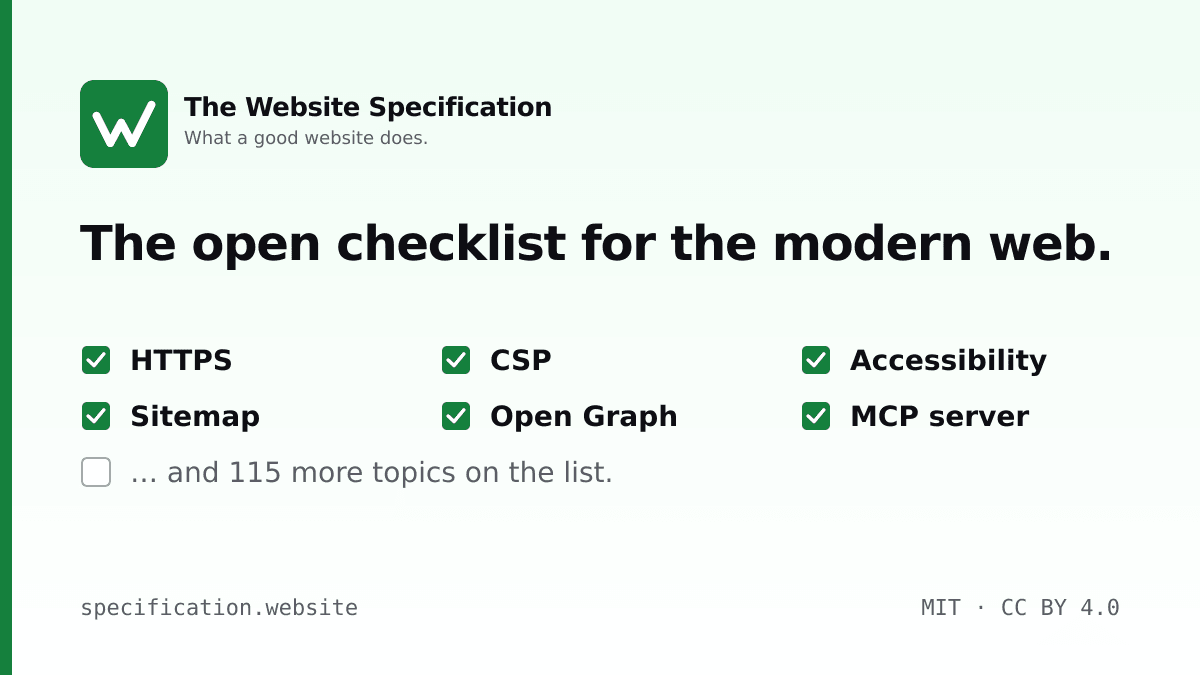
A new MIT-licensed, platform-agnostic reference cataloging 124 specifications across 13 domains for what every quality website should implement. The standout domain is number six — Agent Readiness — with 19 specs covering llms.txt, per-page markdown endpoints, MCP server setup, agent-to-agent card protocol, web bot authentication, and NLWeb conversational interfaces. The spec ships its own MCP server at mcp.specification.website so AI tools can consume it directly, demonstrating its own recommendations.

#5One Year of Roto, a Compiled Scripting Language for Rust

NLnet Labs marks the first anniversary of Roto, a JIT-compiled, statically typed scripting language designed to be embedded in Rust applications for runtime-configurable behavior without recompilation. The v0.11.0 release adds a cleaner library! macro for host integration, enum types, generics, and f-strings. Roto's first major external production deployment is Iocaine, a proxy for defending web servers against AI crawlers — a notably timely use case.

#6Cloudflare Turnstile Requiring Fingerprintable WebGL

Cloudflare Turnstile, the company's CAPTCHA replacement, now requires WebGL fingerprinting to pass verification, effectively blocking WebKit-GTK browsers that prevent device identification. Cloudflare's own docs acknowledge this openly: "privacy tools that block or randomize fingerprinting make your browser look like a bot." The deeper issue is Firefox: even Strict Enhanced Tracking Protection doesn't protect against WebGL GPU fingerprinting, a known unresolved bug, meaning a structural gap exists across the browser ecosystem beyond just one niche client.

#7Dav2d

VideoLAN founder Jean-Baptiste Kempf announced dav2d, an open-source software decoder for AV2 — the successor to AV1 — following the same naming convention as the acclaimed dav1d AV1 decoder. AV2 delivers roughly 25% better compression than AV1 but at approximately five times the decoding complexity, making real-time software decode on commodity hardware a serious engineering challenge. The project leans on hand-written SIMD assembly optimizations and is designed from the ground up to safely handle untrusted video streams.

#8Shantell Sans (2023)

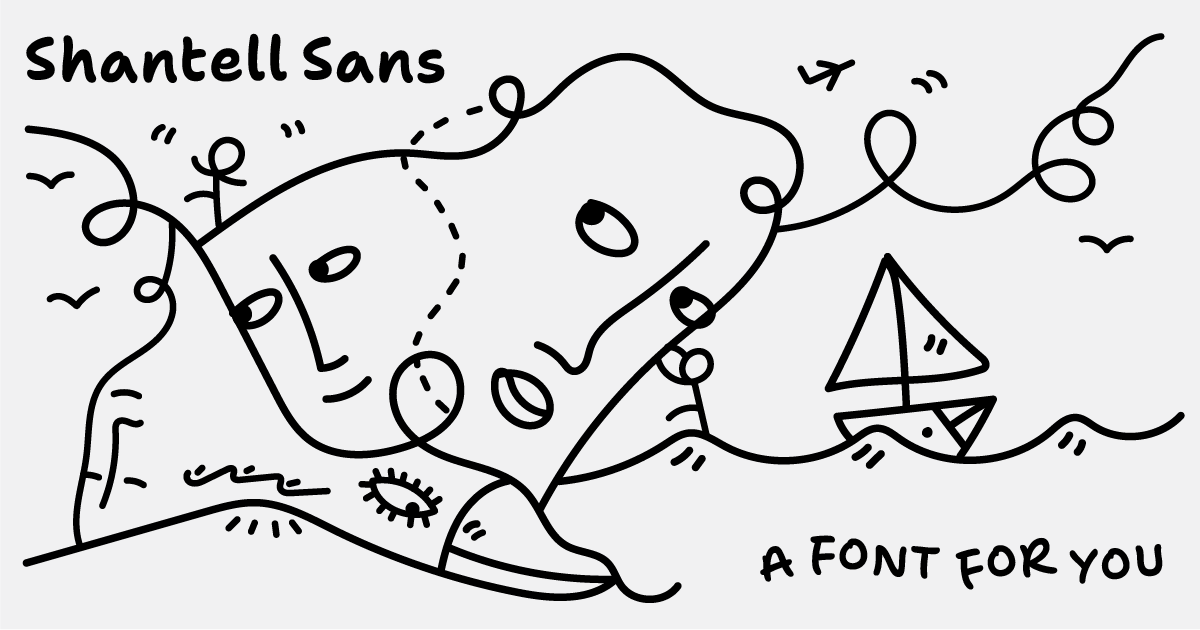
Artist Shantell Martin, who discovered her dyslexia at age 20, collaborated with type designer Stephen Nixon to create Shantell Sans — a variable typeface drawn from her felt-tip marker handwriting with explicit inspiration from Comic Sans' approachable, low-intimidation character. Nixon implemented five axes including Bounce (vertical glyph shifting) and Informality (interpolating between normalized and irregular handwriting), with Cyrillic extension by Anya Danilova. The font is free on Google Fonts and already placed in Whitney Museum key tags, Cash App card designs, and the tldraw collaborative drawing app.

#9London's Free Roof Terraces

The Diamond Geezer blog surveyed every no-booking-required, free-entry rooftop terrace in London, with Fen Court on the 15th floor (360-degree panorama, established wisteria, six staff) earning the top recommendation. The low point: Tate Modern's Level 10 terrace, designed for a full-perimeter observation deck with Thames views, is permanently locked after adjacent luxury residents sued successfully to restrict access — all exterior doors sealed, "NO PHOTOGRAPHY OR FILMING" signs on the inaccessible balcony.

No image

#10Security Envelope Pattern Collection – S.E.C.R.E.T.

The Society for the Exploration of Confidential Envelope Tints is a searchable archive dedicated to cataloging the geometric interior patterns printed inside security envelopes — the crosshatches and swirls that prevent letters from being read when held up to light. These patterns represent an undocumented form of functional graphic design that is quietly disappearing as physical mail volumes decline. It's exactly the kind of earnest single-purpose internet archive that HN reliably appreciates.

No image