← Kilroy’s Daily Briefings
📡 HN Briefing AM

📡 Hacker News Briefing — Monday, May 25, 2026 at 9:00 AM

📡 HN Briefing AM5/25/2026🕐 9:00 AMDev pulseMorning

Top stories, ranked by relevance.

Story cards stay below the sticky dock while audio, chapters, date, and brief navigation remain accessible.

#1Magnifica Humanitas — Pope Leo XIV's First Encyclical

Pope Leo XIV released his first encyclical, "Magnifica Humanitas: On Safeguarding the Human Person in the Time of Artificial Intelligence," arguing that AI must be "disarmed" — meaning we must reject the assumption that technical power automatically confers the right to govern. The document, signed on the 135th anniversary of Rerum Novarum, frames humanity's pivotal choice as building "a new Tower of Babel or the city in which God and humanity dwell together." It insists technology is never neutral and takes on the characteristics of those who devise, finance, regulate, and use it.

No image

#2Pope Leo XIV Says AI Must Serve Humanity, Not the Powerful Few

Religion News' analysis of the encyclical zeroes in on the Pope's demand that AI development serve all of humanity rather than concentrating power among a handful of tech giants. Leo XIV calls for robust governance frameworks and warns that unchecked AI deployment threatens human dignity, labor rights, and social justice. The piece positions this as the most significant papal statement on technology since the Vatican's early warnings about nuclear weapons.

#3Pope Leo Warns Opaque AI Risks "New Forms of Dehumanization"

Variety covers the encyclical from an entertainment and media angle, highlighting the Pope's warning that opaque algorithms controlled by a small number of firms risk creating "new forms of dehumanization." The piece emphasizes the encyclical's implicit challenge to Big Tech's AI rollout strategy and the call for algorithmic transparency as a moral imperative.

No image

#4Six Search Engines Worth Trying Now That Google Isn't Google Anymore

TechCrunch profiles six alternatives — Kagi, DuckDuckGo, Startpage, the &udm=14 workaround, Brave, and Ecosia — as Google doubles down on AI Overviews following I/O 2026. The piece lands amid a booming AI search market where Exa Labs just raised $250M at a $2.2B valuation. The core argument: Google's "AI-first" transformation is alienating users who want control, privacy, and results without mandatory AI-generated summaries.

#5Leave Me Behind — A Developer's Case Against AI Dependency

Android developer Adam McNeilly argues that over-relying on LLMs in software development erodes the human-centered learning, mentorship, and community-building that make the craft meaningful. He distinguishes between automating repetitive tasks (fine) and automating problem-solving itself (dangerous), warning that delegating critical thinking to AI stunts developer growth. The piece is a love letter to conference hallway conversations, Stack Overflow rabbit holes, and the joy of struggling alongside peers.

No image

#6IBM Spins Off the First Pure-Play Quantum Chip Foundry

IBM is launching "Anderon," America's first dedicated quantum chip foundry, backed by $1B from the CHIPS Act and $1B of IBM's own cash, headquartered in Albany, New York. The Commerce Department is distributing $2B total across nine quantum companies including D-Wave, Rigetti, PsiQuantum, and Quantinuum. IBM's 300mm fabrication approach promises 30x faster device output than 200mm, and the company is developing four custom ASICs to solve the classical control bottleneck, targeting convergence around 2029.

#7Hive (YC S14) Is Hiring Senior Back-End Developers

Hive, the YC Summer 2014 graduate that provides marketing solutions for live event promoters, is hiring senior back-end engineers (CA/US remote OK). Their stack runs on AWS with Python, Django, MySQL, MongoDB, Elasticsearch, and ClickHouse, processing data from 20+ integrations including Ticketmaster and Eventbrite and delivering over 200 million emails and SMS messages monthly.

No image

#82026 HIPAA Security Rule Update

The most significant HIPAA overhaul since 2003 mandates encryption for all ePHI (removing the old "addressable" loophole), requires multi-factor authentication across all systems, and imposes annual risk assessments and penetration testing. HHS estimates $9B in year-one compliance costs and $34B over five years. The implementation window gives organizations 180 days after the 60-day effective period, with HHS targeting May 2026 for final guidance.

#9Netherlands Seizes 800 Servers, Arrests 2 for Aiding Cyberattacks

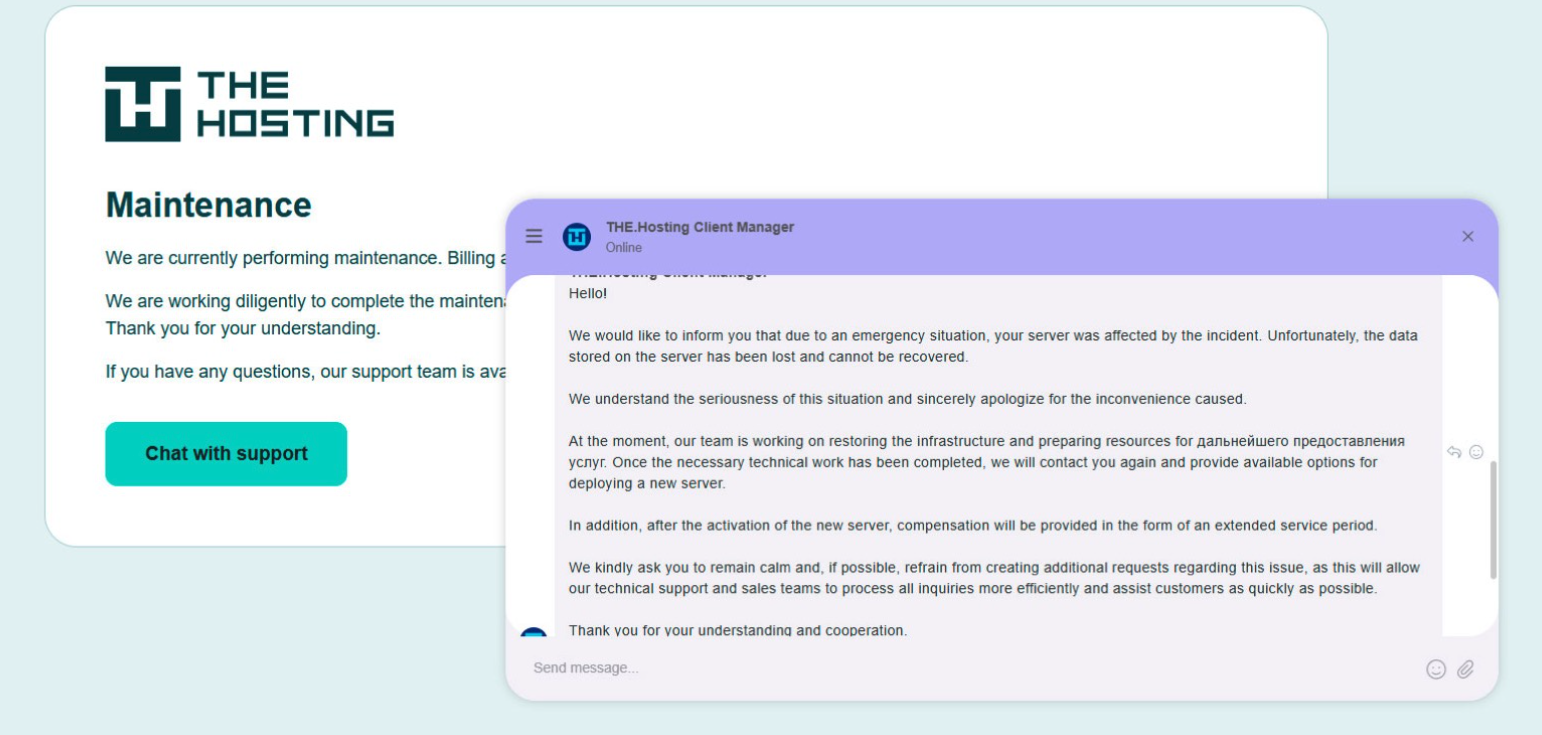
Dutch authorities arrested Andrey Nesterenko (39, Russian-born, running MIRhosting) and Youssef Zinad (57, controlling WorkTitans BV) for operating hosting infrastructure used by Russia to conduct cyberattacks and disinformation campaigns against EU targets. The network, connected to Stark Industries Solutions — created two weeks before Russia's Ukraine invasion — was "the most-used infrastructure in pro-Russian attacks on Danish government bodies" during November 2025 elections. Over 800 servers, laptops, and phones were seized from three businesses and two data centers.

#10C Extensions, Portability, and Alternative Compilers

A compiler developer documents the painful reality that real-world C code is riddled with GCC and Clang-specific extensions — packed structs, builtin intrinsics, include_next, nullability annotations — making life extremely difficult for anyone building an alternative compiler. The article catalogs specific portability traps in glibc, SDL, OpenBSD headers, and Android's bionic, concluding that the only realistic path for new compilers is to emulate GCC (as Clang does by defining __GNUC__=4), since upstream patching is a losing battle.

No image